Endocrine System
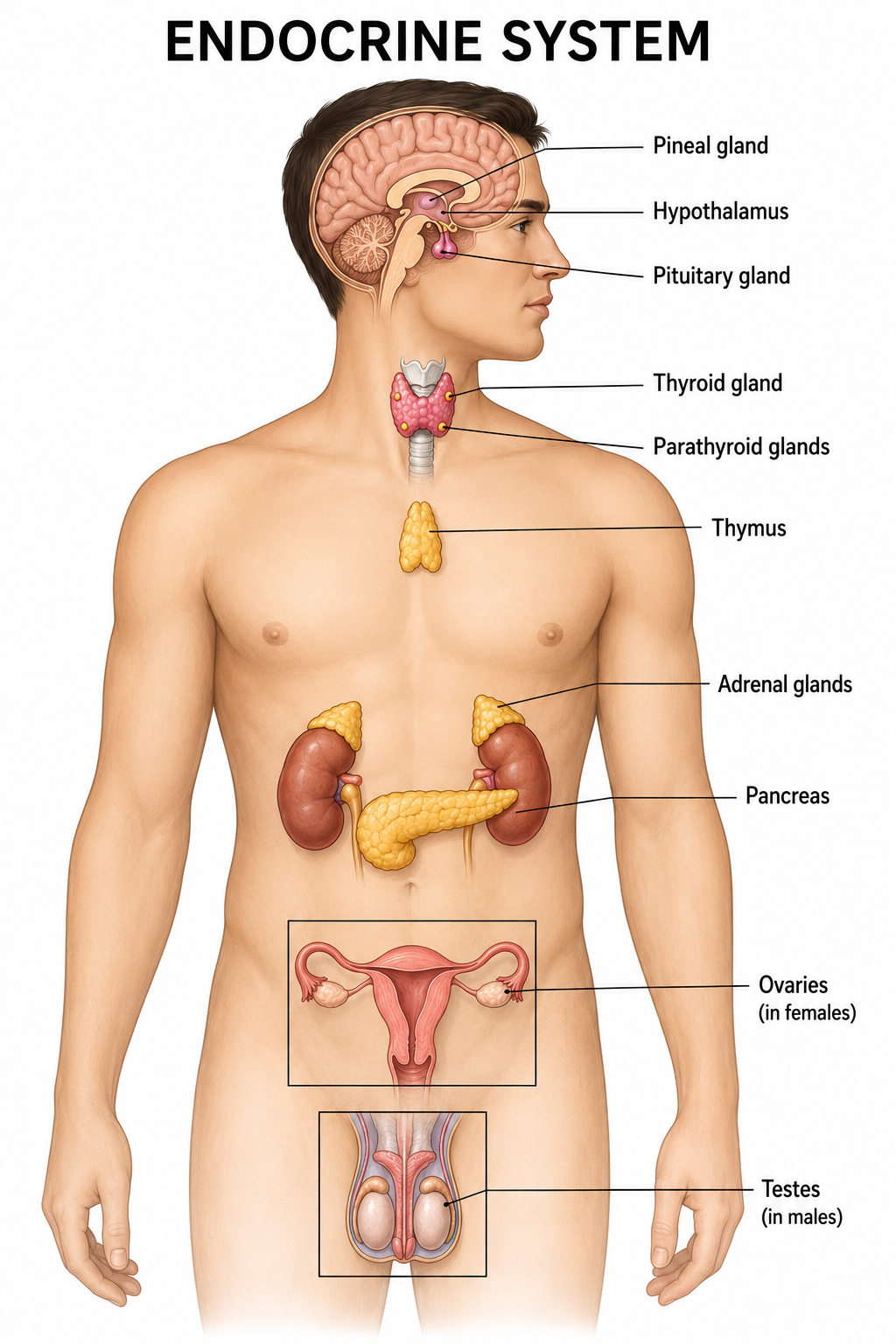
The endocrine system, also known as the hormonal system, is a network of specialized endocrine glands that produce and release chemical messengers called hormones. Unlike the nervous system, which sends rapid electrical signals, the endocrine system communicates through hormones that travel in the bloodstream to reach specific target organs and tissues. These hormones regulate and coordinate many essential body functions, including growth, metabolism, reproduction, blood sugar levels, stress responses, sleep, and the maintenance of the body's internal balance (homeostasis). Major endocrine glands include the pituitary gland, thyroid gland, parathyroid glands, adrenal glands, pancreas, pineal gland, and the reproductive glands (ovaries and testes). Working together, these glands ensure that different organs communicate effectively, allowing the body to function in a coordinated and balanced manner.
What is the Endocrine System?
The endocrine system, or hormonal system, is the body's chemical communication network. It consists of a group of endocrine glands that produce and secrete hormones directly into the bloodstream. Hormones are chemical messengers that travel to specific target cells and regulate their activities. An endocrine gland is an organ that manufactures and releases hormones, whereas a hormone is the chemical substance produced by that gland. In simple terms, the gland is the producer, and the hormone is the messenger. The endocrine system is essential because it controls and coordinates many long-term body processes, including growth, development, metabolism, reproduction, mood, and maintaining homeostasis, ensuring that all organs work together efficiently.