Interactive Male Reproductive System Labelled Illustration
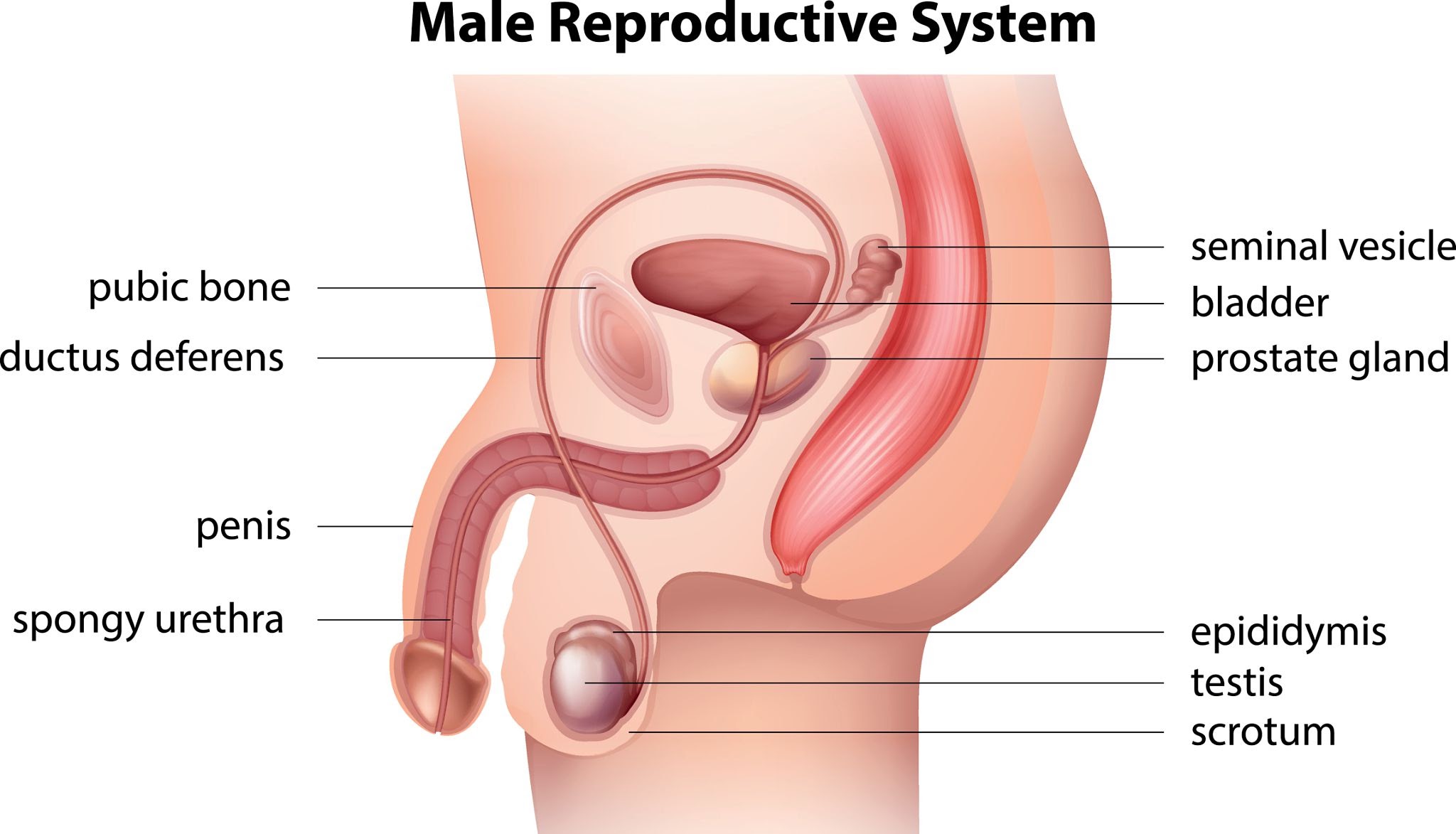
The male reproductive system is a specialized organ system responsible for reproduction, sexual function, and the production and transport of sperm cells. It consists of both external organs, including the penis, scrotum, and testes, and internal organs, such as the epididymis, vas deferens, seminal vesicles, prostate gland, and urethra. These organs work together to produce, store, nourish, and transport sperm for reproduction. The male reproductive system also produces the hormone testosterone, which is essential for the development of male secondary sexual characteristics, reproductive health, and fertility. In addition, because the urethra is shared by both the reproductive and urinary systems, the male reproductive system also plays a role in urination.
The external male reproductive parts, known as the external genitalia, are the visible parts of the male reproductive system located outside the body. They include the penis, scrotum, testes, glans penis, and prepuce (foreskin). These organs work together to produce, protect, and deliver sperm cells, while also producing the male sex hormone testosterone. The scrotum maintains the testes at an optimal temperature for sperm production, whereas the penis functions as the organ of copulation and also serves as the passage for urine and semen. Together, these organs play an essential role in human reproduction and the development of male secondary sexual characteristics.
The penis is the primary external organ of the male reproductive system. It is composed of erectile tissues that become filled with blood during sexual arousal, causing erection. The penis functions as both the male copulatory organ and the passage through which urine and semen leave the body via the urethra.
The glans penis is the enlarged, rounded tip of the penis. It contains numerous sensory nerve endings, making it highly sensitive to touch and an important organ for sexual stimulation. The external opening of the urethra is located at its tip.
The prepuce, also known as the foreskin, is a fold of skin that covers the glans penis. It protects the glans from drying and mechanical injury, helps maintain moisture, and reduces friction. In some individuals, the foreskin is removed through a surgical procedure called circumcision.
The scrotum is a loose muscular pouch of skin located beneath the penis. It encloses and protects the testes while regulating their temperature. The scrotum keeps the testes about 2–3°C below body temperature, which is essential for normal sperm production.
The testes are a pair of oval-shaped male gonads located inside the scrotum. They contain numerous seminiferous tubules, where sperm cells are produced. The testes also secrete the male sex hormone testosterone, which regulates spermatogenesis and is responsible for the development of male secondary sexual characteristics.
The internal male reproductive organs are located inside the body and work together to transport, nourish, and deliver sperm cells. They include the epididymis, vas deferens, ejaculatory ducts, urethra, seminal vesicles, prostate gland, and bulbourethral (Cowper's) glands. These organs ensure the proper maturation, storage, transportation, and protection of sperm by producing nutrient-rich secretions that form semen. Together, they play a vital role in successful reproduction.
The epididymis is a long, highly coiled tube attached to the back of each testis. It serves as the site where sperm mature, gain the ability to swim, and are temporarily stored before entering the vas deferens.
The vas deferens, also known as the sperm duct, is a thick muscular tube that carries mature sperm from the epididymis to the ejaculatory duct during ejaculation. Its muscular walls help propel sperm forward by rhythmic contractions.
The paired seminal vesicles are glands located behind the urinary bladder. They secrete a thick, alkaline fluid rich in fructose, which provides energy for sperm. Their secretion forms a major portion of the semen.
The ejaculatory ducts are formed by the union of the vas deferens and the duct of the seminal vesicle. They transport semen into the urethra during ejaculation.
The prostate gland lies just below the urinary bladder and surrounds the upper part of the urethra. It secretes a thin, slightly alkaline fluid that helps activate sperm and neutralizes acidity in the female reproductive tract, improving sperm survival.
The paired bulbourethral glands, also called Cowper's glands, produce a clear alkaline mucus before ejaculation. This secretion lubricates the urethra and neutralizes traces of acidic urine, making the passage safer for sperm.
The urethra is a tube that extends from the urinary bladder through the penis. It serves as the common passage for both urine and semen, although they are never released at the same time.
The accessory glands of the male reproductive system are glands that do not produce sperm but secrete various fluids that combine with sperm to form semen. These secretions nourish, protect, lubricate, and transport sperm while increasing their chances of successful fertilization. The three main accessory glands are the seminal vesicles, prostate gland, and bulbourethral (Cowper's) glands.
The paired seminal vesicles are elongated glands located behind the urinary bladder. They secrete a thick, alkaline fluid rich in fructose, which provides energy for sperm. Their secretion also contains prostaglandins and proteins that enhance sperm motility and survival. The seminal vesicles contribute approximately 60–70% of the total volume of semen.
The prostate gland is a walnut-shaped gland located below the urinary bladder and surrounding the upper part of the urethra. It secretes a thin, milky, slightly alkaline fluid containing enzymes and minerals that activate sperm and help neutralize the acidic environment of the female reproductive tract. The prostate contributes about 25–30% of the semen volume.
The paired bulbourethral glands, also called Cowper's glands, are small pea-sized glands located below the prostate gland. They release a clear, alkaline mucus before ejaculation that lubricates the urethra and neutralizes traces of acidic urine remaining in the passage. This secretion prepares the urethra for the safe passage of sperm.
After being produced in the testes, sperm travel through a series of organs where they mature, mix with glandular secretions, and are finally expelled from the body during ejaculation.
Sperm are produced in the seminiferous tubules.
Sperm mature and are temporarily stored.
Mature sperm are transported.
Sperm mix with seminal vesicle secretions.
Prostatic fluid is added to form semen.
Bulbourethral glands add mucus, then semen leaves the body.
Semen is a whitish fluid released during ejaculation. It consists of sperm cells and secretions from the seminal vesicles, prostate gland, and bulbourethral glands. These secretions provide nourishment, protection, lubrication, and an ideal environment for sperm to survive and reach the female reproductive tract.
Sperm cells are the male reproductive cells produced in the testes. They carry the father's genetic material (DNA) and are responsible for fertilizing the female ovum.
This fluid is rich in fructose, which provides energy for sperm. It also contains prostaglandins and proteins that improve sperm movement and increase the chances of fertilization.
The prostate gland secretes a thin, slightly alkaline fluid containing enzymes and minerals. This secretion activates sperm and helps neutralize the acidic environment of the female reproductive tract, improving sperm survival.
The bulbourethral (Cowper's) glands produce a clear alkaline mucus before ejaculation. This fluid lubricates the urethra and neutralizes traces of acidic urine, ensuring a safe passage for sperm.
Spermatogenesis is the process by which sperm cells are produced from spermatogonial stem cells inside the seminiferous tubules of the testes. The process begins at puberty and continues throughout a man's life under the influence of the hormone testosterone.
Diploid spermatogonia divide continuously by mitosis. Some remain as stem cells while others develop into primary spermatocytes.
The primary spermatocyte undergoes the first meiotic division (Meiosis I) to produce two haploid secondary spermatocytes.
Each secondary spermatocyte undergoes Meiosis II, producing two haploid spermatids.
Spermatids are immature sperm cells. They undergo spermiogenesis, during which they develop a head, midpiece, and tail.
The mature spermatozoa are released into the epididymis, where they complete maturation and are stored until ejaculation.
Here are some fascinating facts about the Male Reproductive Systemss!
A single healthy man can produce more than 500 billion sperm cells during his lifetime. However, despite releasing hundreds of millions of sperm in a single ejaculation, only one sperm normally succeeds in fertilizing the egg.