OVERVIEW

What Is the Reproductive System?

The reproductive system, also known as the genital system, is the organ system responsible for the production of offspring and the continuation of a species. It consists of specialized reproductive organs, along with various glands, hormones, and reproductive fluids that work together to support reproduction. Unlike most other organ systems, the reproductive system differs significantly between males and females, with each having unique structures and functions that contribute to the reproductive process. During sexual reproduction, the male and female reproductive systems work together to produce offspring by combining genetic material from both parents, resulting in genetically unique individuals. Besides reproduction, the reproductive system also plays an important role in the development of secondary sexual characteristics and the production of sex hormones, which influence growth, development, and reproductive health throughout life.

Interactive 3D Human Reproductive System

Rotate, zoom and inspect the human Reproductive System to explore its structure from every angle.

Reproductive System Labelled Illustrations

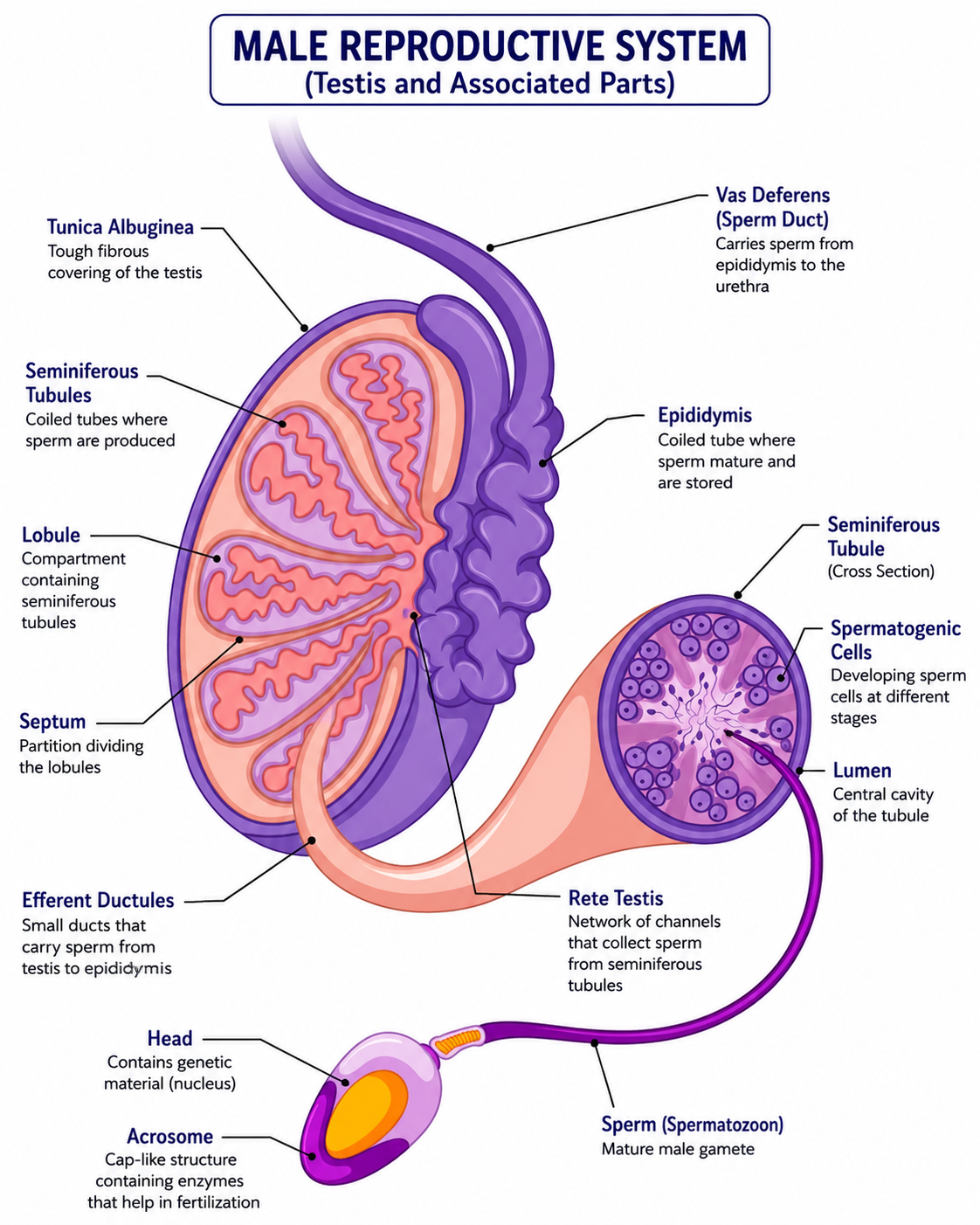
Male Reproductive System

Male Reproductive System

Female Reproductive System
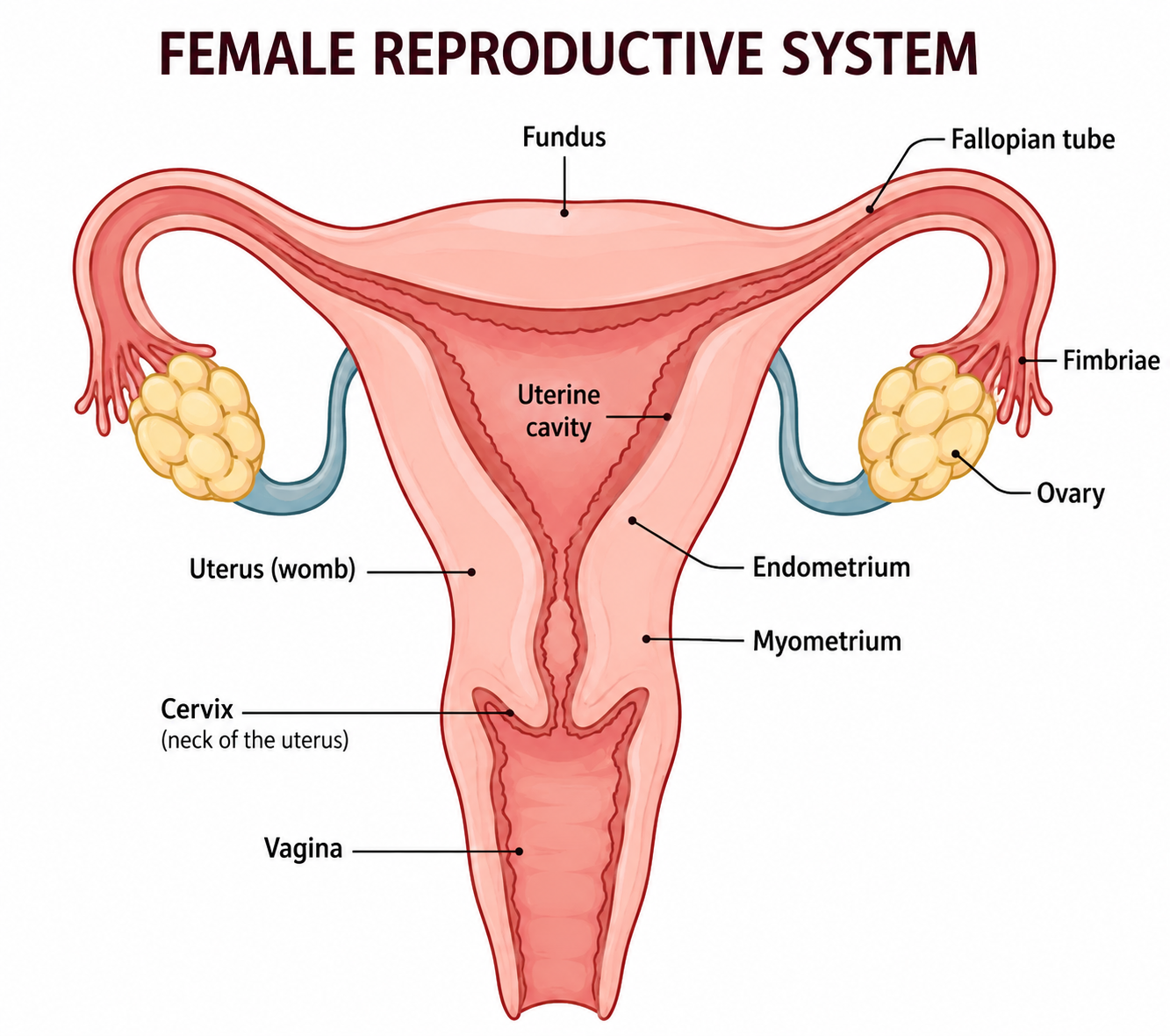
Female Reproductive System

Divisions of the Reproductive System

โ™‚ Male Reproductive System

The male reproductive system consists of organs that produce, store, and transport sperm cells. It also secretes the hormone testosterone, which is responsible for the development of male reproductive organs and secondary sexual characteristics. Its primary role is to deliver sperm for fertilization.

โ™€ Female Reproductive System

The female reproductive system produces egg cells (ova) and the hormones estrogen and progesterone. It provides the environment for fertilization, supports the development of the embryo and fetus during pregnancy, and enables childbirth.

Male vs Female Reproductive System

Although both reproductive systems work together to ensure human reproduction, they differ in structure, function, hormones, and the gametes they produce.

Feature Male Reproductive System Female Reproductive System
Primary Function Produces and delivers sperm. Produces ova and supports fertilization, pregnancy, and childbirth.
Gamete Produced Sperm Cell Ovum (Egg Cell)
Primary Gonads Testes Ovaries
Main Hormones Testosterone Estrogen & Progesterone
Location of Organs Mostly external. Mostly internal.
Gamete Production Continuous after puberty. Usually one ovum is released during each menstrual cycle.
Accessory Glands Present (Seminal Vesicles, Prostate & Cowper's Glands). Absent (No accessory glands that contribute to gamete transport).
Role in Fertilization Delivers sperm to the female reproductive tract. Receives sperm and provides the site for fertilization.
Pregnancy Does not support pregnancy. Supports embryo and fetal development in the uterus.
Birth Canal Absent Vagina serves as the birth canal.

Human Reproduction Process

Human reproduction is a continuous biological process that begins with the formation of male and female gametes and ends with the birth of a new individual. The following flowchart summarizes the major stages.

๐Ÿงฌ

Gamete Formation

The testes produce sperm through spermatogenesis, while the ovaries produce ova (egg cells) through oogenesis.

โžœ
๐Ÿฅš

Fertilization

A sperm cell fuses with an ovum in the fallopian tube, forming a single-celled zygote.

โžœ
๐Ÿงซ

Zygote Formation

The zygote undergoes repeated mitotic divisions as it travels toward the uterus.

โžœ
๐Ÿ‘ถ

Embryonic Development

The embryo implants in the uterus, where organs and body systems gradually begin to develop.

โžœ
๐Ÿคฐ

Fetal Growth

The embryo develops into a fetus, which grows and matures throughout pregnancy.

โžœ
๐ŸŽ‰

Birth

After approximately 38โ€“40 weeks, the fully developed baby is delivered through the birth canal.

Hormonal Control of the Reproductive System

The reproductive system is controlled by hormones produced by the brain and the gonads. These hormones regulate the production of gametes, the development of reproductive organs, and the appearance of secondary sexual characteristics.

๐Ÿง 

Follicle-Stimulating Hormone (FSH)

FSH is secreted by the anterior pituitary gland. It stimulates spermatogenesis in males and promotes the maturation of ovarian follicles in females.

โšก

Luteinizing Hormone (LH)

LH stimulates the production of testosterone in males and triggers ovulation as well as the formation of the corpus luteum in females.

๐Ÿ’ช

Testosterone

Produced by the testes, testosterone is responsible for sperm production, the growth of reproductive organs, and the development of male secondary sexual characteristics.

๐ŸŒธ

Estrogen

Produced mainly by the ovaries, estrogen regulates the menstrual cycle and promotes the development of female secondary sexual characteristics.

๐Ÿคฐ

Progesterone

Progesterone prepares the uterus for implantation and helps maintain pregnancy by supporting the uterine lining.

๐Ÿง 

Gonadotropin-Releasing Hormone (GnRH)

GnRH is secreted by the hypothalamus. It stimulates the anterior pituitary gland to release FSH and LH, thereby initiating and regulating reproductive functions.

Importance of the Reproductive System

The reproductive system is essential for the survival and continuation of the human species. Besides reproduction, it also produces hormones that regulate growth, development, and many body functions.

๐Ÿ‘ถ

Continuation of Human Life

The reproductive system enables the production of offspring, ensuring the continuation of the human species.

๐Ÿงฌ

Production of Gametes

It produces the sperm in males and ova (egg cells) in females that are required for fertilization.

โš–๏ธ

Hormone Production

The reproductive organs produce hormones such as testosterone, estrogen, and progesterone, which regulate reproduction and body development.

๐Ÿ’ช

Development of Secondary Sexual Characteristics

Reproductive hormones are responsible for the physical changes that occur during puberty in both males and females.

๐Ÿคฐ

Supports Pregnancy and Birth

In females, the reproductive system provides a suitable environment for the development, nourishment, and birth of a baby.

โค๏ธ

Maintains Reproductive Health

A healthy reproductive system contributes to normal fertility, hormonal balance, and overall physical well-being.

Interesting Statistics

Here are some fascinating facts that highlight the incredible capabilities oh the Reproductive-system.

2

Sexes in Humans

23

Chromosomes in Each Gamete

300M+

Sperm Released per Ejaculation

1

Egg Released per Menstrual Cycle

38โ€“40

Weeks of Pregnancy

64โ€“74

Days for Sperm Formation

400โ€“500

Eggs Released During a Lifetime

9

Major Reproductive Hormones Covered

10โ€“12 cm

Average Length of a Fallopian Tube

2โ€“3ยฐC

Cooler Than Body Temperature for Healthy Sperm Production

Did You Know?

๐Ÿงฌ