Digestive System
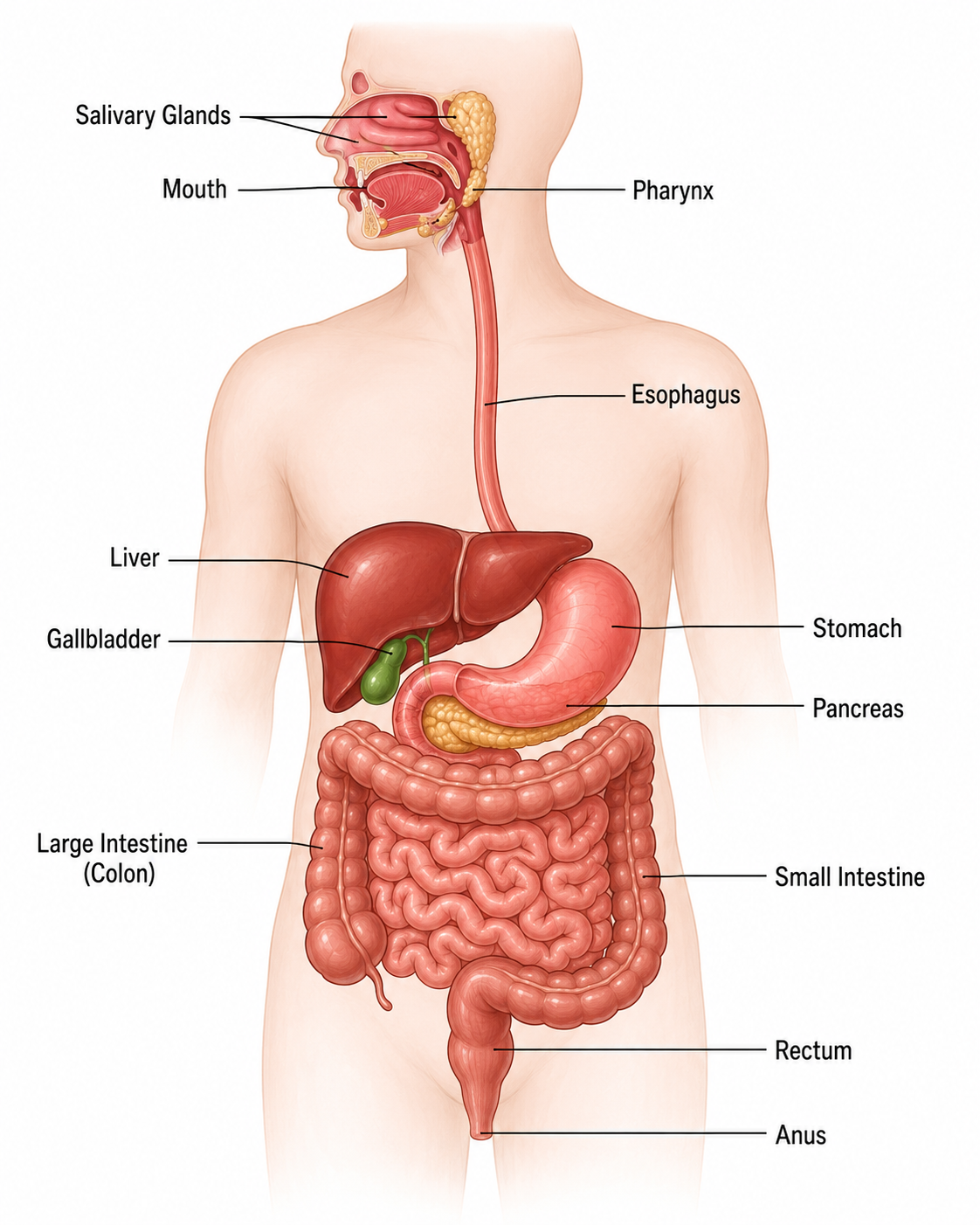
The digestive system is a vital organ system responsible for breaking down food into smaller, usable nutrients that provide the body with energy, support growth, and repair body tissues. It consists of a series of organs, including the mouth, esophagus, stomach, small intestine, large intestine, rectum, and anus, along with accessory organs such as the liver, pancreas, and gallbladder. As food passes through the digestive tract, it is mechanically and chemically broken down into nutrients that are absorbed into the bloodstream and transported to body cells. Any undigested or indigestible material is then removed from the body as feces. By supplying essential nutrients and eliminating waste, the digestive system plays a crucial role in maintaining overall health and supporting the body's daily functions.
The digestive system is the body's food-processing system. It breaks food into nutrients, absorbs these nutrients into the bloodstream for use by the body's cells, and eliminates undigested waste from the body. This process ensures that the body receives the energy and nutrients needed for growth, repair, and normal functioning.