Interactive Brain Labelled Illustration
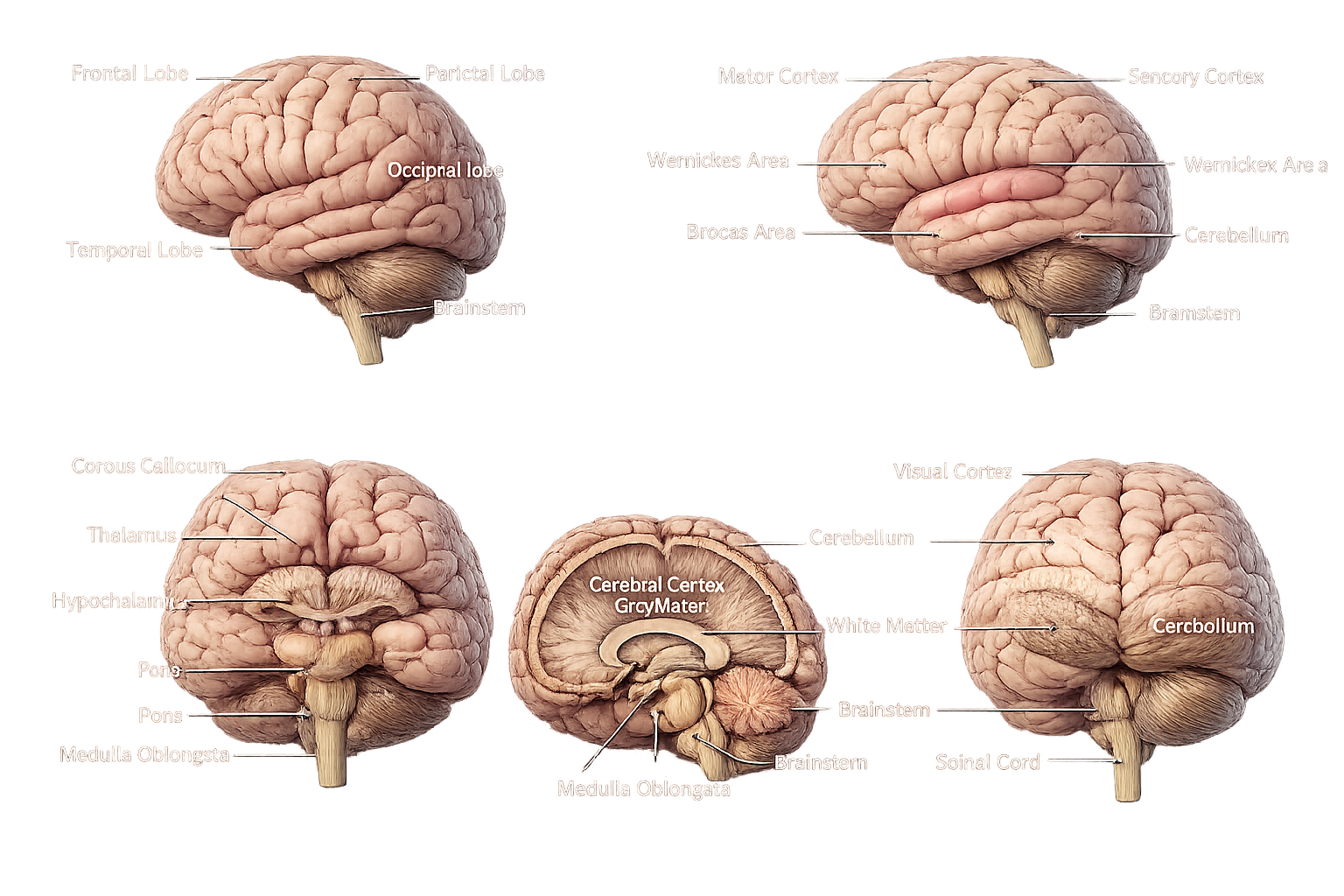
The brain is the body's main control center and the most complex organ of the Central Nervous System (CNS). Weighing about 1.4 kg, it contains approximately 86 billion neurons connected through trillions of synapses, allowing rapid communication throughout the body. The brain receives and processes sensory information, controls both voluntary movements and involuntary functions such as breathing, heartbeat, and blood pressure, while also enabling thinking, learning, memory, language, emotions, and decision-making. Structurally, it is divided into the forebrain, midbrain, and hindbrain. The cerebrum, the largest part, is responsible for intelligence, reasoning, and voluntary actions; the cerebellum maintains balance and coordination; and the brainstem, which includes the midbrain, pons, and medulla oblongata, regulates essential life-supporting activities. The brain works continuously with the spinal cord and the Peripheral Nervous System (PNS) to coordinate every action and response, making it the body's ultimate command and communication center.
The human brain performs thousands of tasks every second, controlling everything from breathing and heartbeat to thinking, learning, and decision-making. Every function of the body depends on the brain receiving, processing, and sending information through billions of interconnected neurons.
The brain enables us to think, solve problems, reason logically, plan ahead, and make decisions. These higher mental functions are mainly controlled by the cerebrum, particularly the frontal lobe.
The brain receives information from the eyes, ears, nose, tongue, and skin. It processes signals related to vision, hearing, touch, taste, smell, temperature, and pain.
The brain sends electrical impulses through the nervous system to control walking, running, writing, speaking, and every voluntary movement. The cerebellum ensures movements remain smooth, balanced, and coordinated.
Without conscious effort, the brain controls heartbeat, breathing, blood pressure, body temperature, digestion, sleep cycles, and water balance. These essential functions are mainly managed by the brainstem and hypothalamus.
The brain stores experiences and information, allowing us to learn new skills, remember facts, recognize faces, and recall past experiences. The hippocampus plays a major role in forming new memories.
Feelings such as happiness, fear, anger, love, and sadness are processed by the limbic system, especially the amygdala.
The brain allows us to speak, read, write, and understand language. Areas such as Broca's area and Wernicke's area work together to make communication possible.
The brain works with the spinal cord to produce rapid protective actions such as blinking, sneezing, and pulling your hand away from a hot object. These quick responses help protect the body from injury.
The cerebellum controls balance, posture, coordination, and the precise timing of muscle movements, allowing us to perform smooth and accurate actions.
Through the hypothalamus and pituitary gland, the brain regulates growth, metabolism, reproduction, stress responses, hunger, and thirst, helping maintain the body's internal balance.
The brain regulates the body's sleep-wake cycle, also known as the circadian rhythm. It determines when we feel awake or sleepy, controls the release of melatonin, and ensures the body gets enough rest for growth, repair, learning, and memory consolidation.
The brain constantly learns from experience and adapts to new situations through a process called neuroplasticity. It forms new neural connections, improves problem-solving skills, develops creativity, and helps us acquire new knowledge and motor skills throughout life.
The human brain is made up of several specialized regions, each performing unique functions. Together, these structures enable us to think, move, learn, remember, and maintain essential life processes.
The largest part of the brain responsible for thinking, memory, learning, speech, voluntary movement, and sensory perception.
Coordinates balance, posture, muscle coordination, and ensures smooth, precise body movements.
Connects the brain with the spinal cord and controls vital functions like breathing, heartbeat, and blood pressure.
Acts as the brain's relay station, directing sensory information to the appropriate parts of the cerebral cortex.
Maintains homeostasis by regulating body temperature, hunger, thirst, sleep, and hormone release.
Often called the "Master Gland", it controls growth, metabolism, reproduction, and many other endocrine functions by releasing important hormones.
"Curious Cats Bake Tasty Hot Pizzas."
"Clever Children Build Tall Happy Palaces."
"Cool Cooks Bake Tasty Honey Pancakes."
The human brain is full of incredible surprises. Here are some fascinating facts!
It contains around 86 billion neurons.
Your brain stays active even while you sleep.
The average adult brain weighs about 1.4 kg (3 pounds).
Your brain generates enough electrical activity to power a small LED light.
The human brain is made of approximately 73% water.
Although it is only 2% of your body weight, the brain uses nearly 20% of your oxygen and energy.
Some nerve impulses travel as fast as 120 meters (394 feet) per second.
Your brain never truly rests—it remains active while you sleep, dream, and recover.
The brain can continuously form new neural connections throughout life, a property called neuroplasticity.
No two human brains have the exact same pattern of folds and grooves.
The brain itself has no pain receptors, so it cannot feel pain directly.
By the age of five, a child's brain has reached about 90% of its adult size.
Listening to music activates multiple areas of the brain at the same time.
Laughter stimulates several brain regions involved in emotions, memory, and movement.
The occipital lobe processes everything you see in just fractions of a second.
The brain receives about 15% of the heart's blood supply every minute.
Your brain contains around 86 billion neurons connected by hundreds of trillions of synapses.
The hypothalamus constantly monitors your body temperature and keeps it close to 37°C (98.6°F).
Smell is the only sense that reaches the brain without first passing through the thalamus.
Your brain removes waste products more efficiently while you are asleep than when you are awake.
Regular exercise improves brain function by increasing blood flow and supporting the growth of new brain cells.
Scientists consider the human brain to be the most complex organ in the human body.
The cerebrum is the largest and most highly developed part of the human brain. It forms the upper portion of the brain and is responsible for higher mental functions such as thinking, memory, intelligence, learning, reasoning, emotions, and voluntary movements.
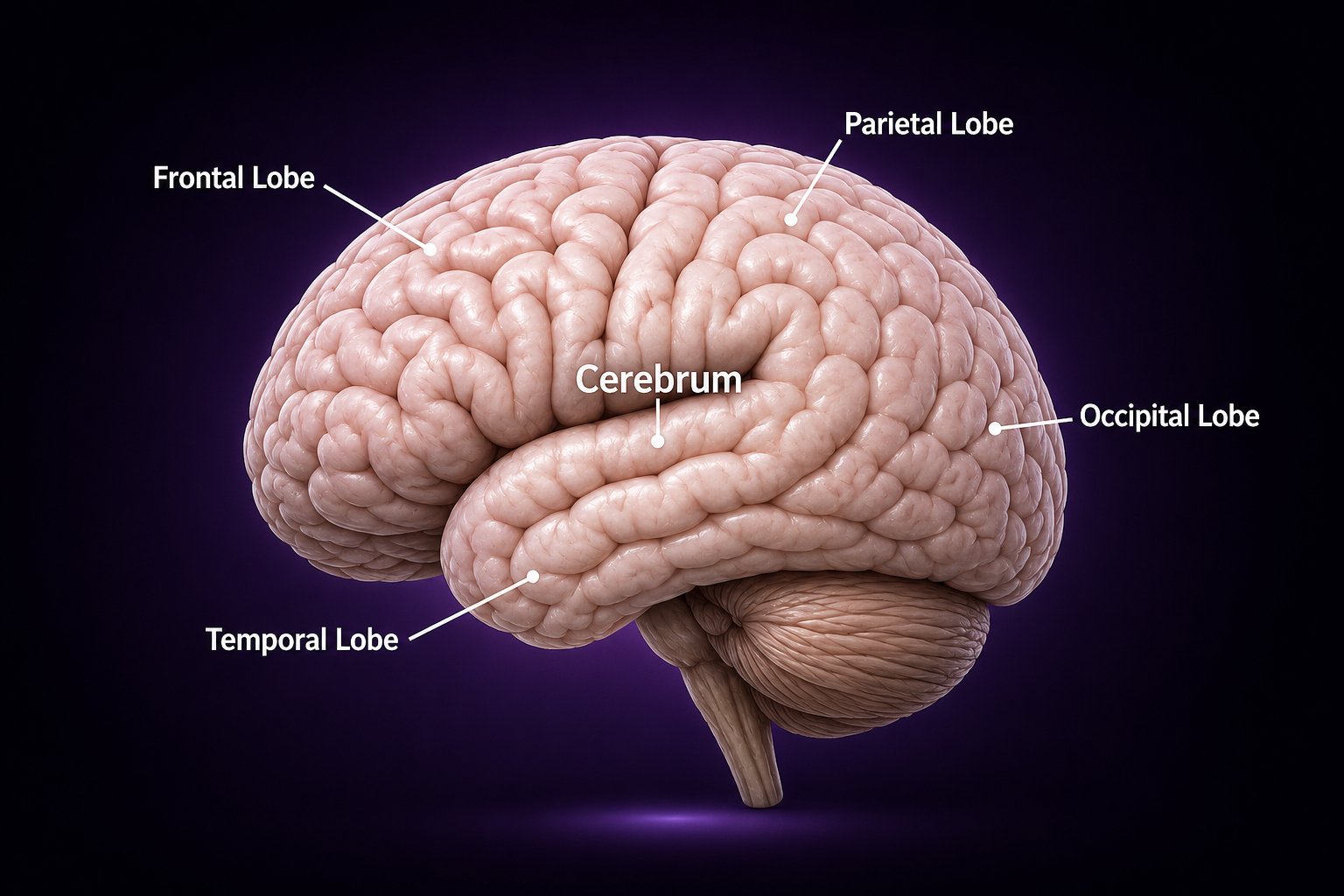
The Frontal Lobe is located at the front of the cerebrum, just behind the forehead. It is the largest lobe and is responsible for higher mental activities such as thinking, reasoning, planning, decision-making, speech, personality, and voluntary muscle movements. It also contains Broca's area, which controls speech production.
The Parietal Lobe is located behind the frontal lobe near the top of the brain. It processes information received from the body's sensory receptors, allowing us to detect touch, pressure, pain, and temperature. It also helps us understand the body's position and spatial awareness.
The Temporal Lobe is located on both sides of the brain near the ears. It is mainly responsible for hearing, memory, language comprehension, and learning. It contains Wernicke's area, which helps us understand spoken and written language, and the hippocampus, which is important for forming memories.
The Occipital Lobe is located at the back of the brain. It is the brain's primary visual processing center. It receives information from the eyes and interprets colors, shapes, movement, and distance, allowing us to understand what we see.
The cerebrum is the largest and most advanced part of the human brain. It serves as the center of conscious thought, intelligence, memory, learning, language, emotions, and voluntary movement. Its four lobes work together to process sensory information, control body movements, and enable higher mental abilities, making the cerebrum the primary center for human thinking, behavior, and decision-making.
The cerebellum is the second largest part of the brain. It is located below the cerebrum at the back of the brain. It controls balance, posture, muscle coordination, and smooth body movements.
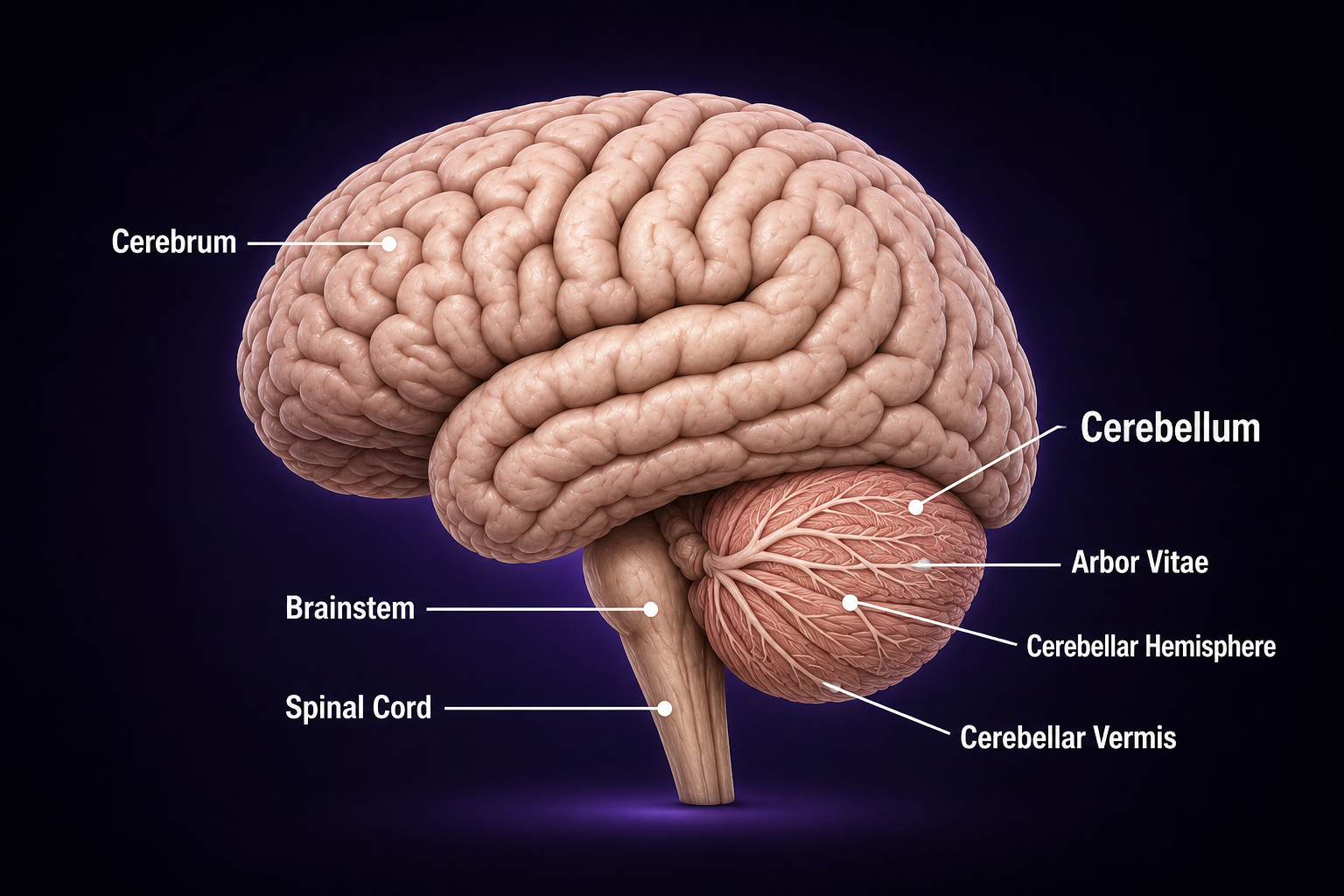
The cerebellum is divided into two cerebellar hemispheres, one on the left and one on the right. These hemispheres coordinate the movements of the limbs on the same side of the body and ensure that movements are smooth, accurate, and well-coordinated.
The vermis is the narrow, worm-like structure located in the middle of the cerebellum, connecting the two cerebellar hemispheres. It plays an important role in maintaining the body's posture, balance, and coordinating movements of the trunk and neck.
The Arbor Vitae, meaning "Tree of Life", is the tree-like pattern of white matter found inside the cerebellum. It carries nerve impulses between the cerebellar cortex and other regions of the brain, allowing information to be transmitted rapidly for proper coordination of movement.
The cerebellum is often called the body's coordination center. Although it does not initiate movements, it ensures that every movement is smooth, balanced, and accurate. The cerebellar hemispheres, vermis, and arbor vitae work together to maintain posture, coordinate muscle activity, and help us perform everyday tasks with precision.
The brain stem is the lowest part stalk-like of the brain. It connects the brain to the spinal cord and controls many automatic functions that are essential for life, such as breathing, heartbeat, and blood pressure.
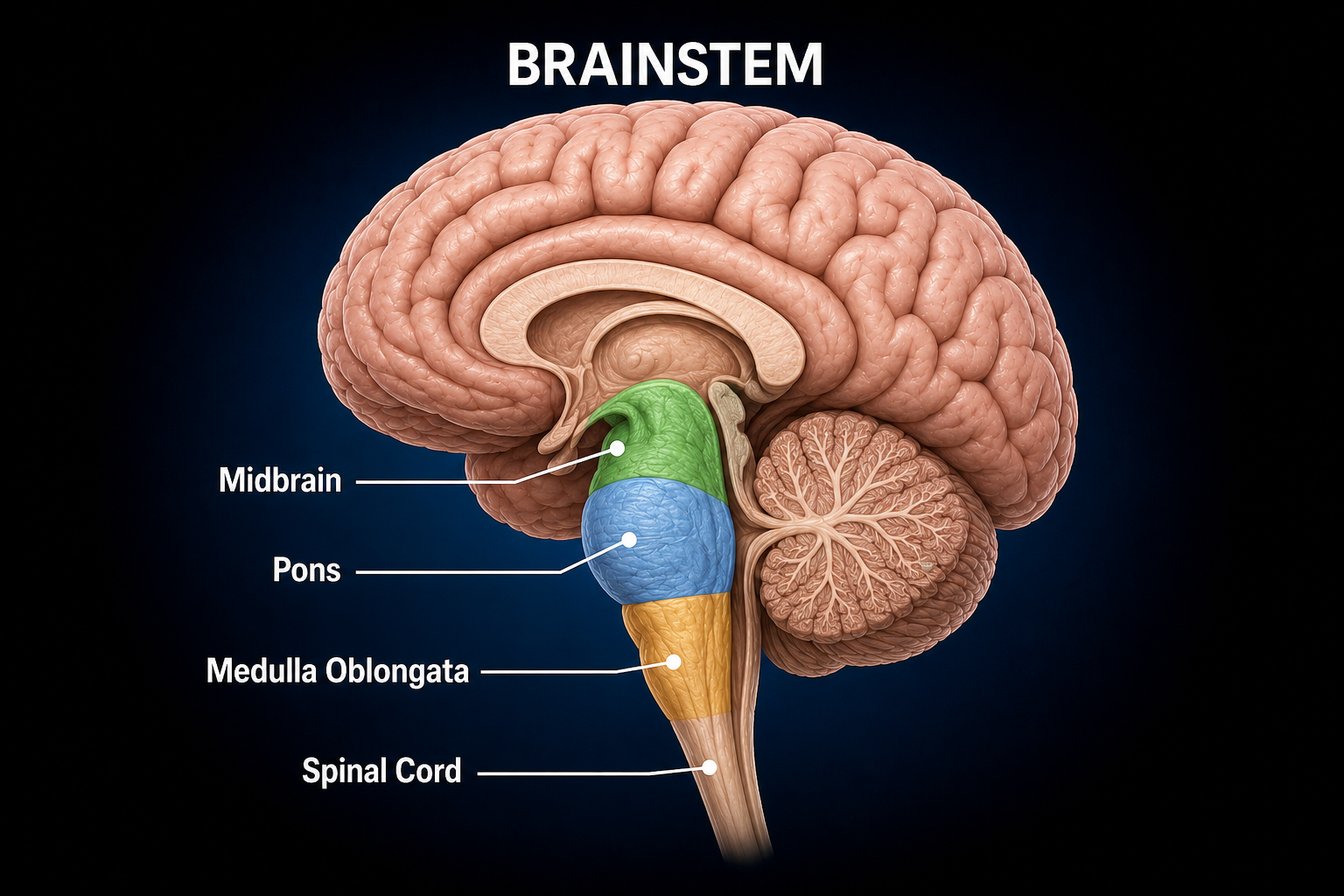
The midbrain is the uppermost part of the brainstem, located between the forebrain and the pons. It acts as an important communication center, transmitting information between different regions of the brain and spinal cord.
The pons is the middle part of the brainstem. It serves as a bridge connecting the cerebrum, cerebellum, and medulla oblongata, allowing them to communicate efficiently.
The medulla oblongata is the lowest part of the brainstem and connects directly with the spinal cord. It controls the body's most essential automatic functions necessary for survival.
Although the brainstem is much smaller than the cerebrum, it is one of the most vital parts of the brain. It serves as the body's life-support center, connecting the brain with the spinal cord while controlling essential automatic functions such as breathing, heartbeat, blood pressure, and reflexes. Damage to the brainstem can seriously affect these critical functions, making it indispensable for survival.
The thalamus is a small, egg-shaped structure located deep inside the brain. It acts as the brain's relay center, receiving and sending sensory information to the appropriate areas of the cerebrum.
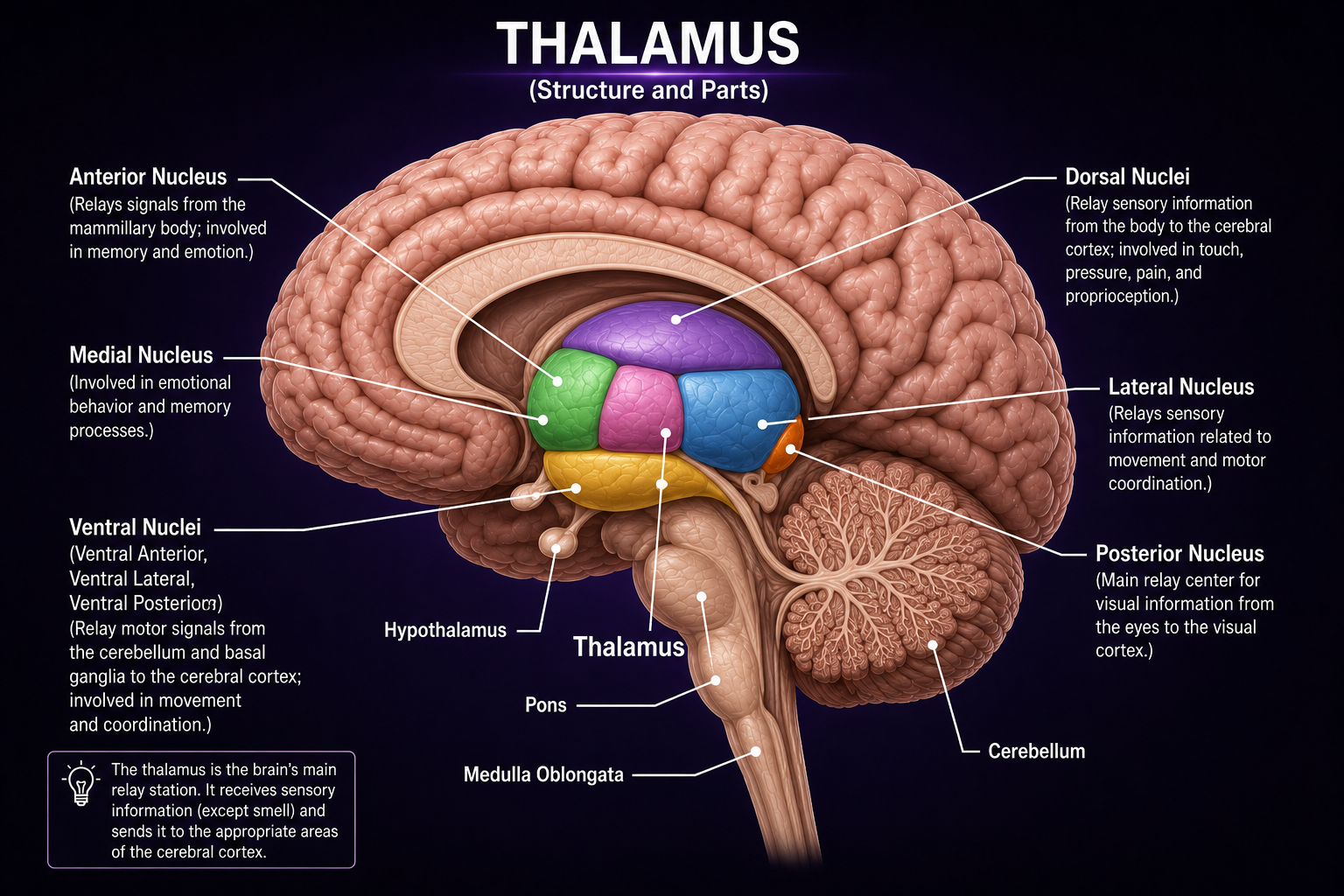
The Anterior Nucleus is located at the front of the thalamus. It forms part of the limbic system and is closely connected with the hippocampus and mammillary bodies. It plays an important role in memory, learning, and emotional behavior.
The Medial Nucleus, also called the Mediodorsal Nucleus, lies near the center of the thalamus. It communicates with the prefrontal cortex and is involved in thinking, decision-making, memory, and emotional responses.
The Lateral Nuclei are found along the outer side of the thalamus. They receive information from different parts of the body and relay it to the appropriate areas of the cerebral cortex for processing.
The Ventral Nuclei are located in the lower region of the thalamus. They receive information from the cerebellum and basal ganglia before sending it to the motor areas of the cerebral cortex.
The Posterior Nuclei are located at the back of the thalamus. They include structures involved in processing visual and auditory information, helping us interpret what we see and hear.
The thalamus is the brain's primary sensory relay center. Its different groups of nuclei work together to transmit sensory and motor information, regulate memory, emotions, movement, and alertness. By directing information to the correct parts of the cerebral cortex, the thalamus plays a vital role in ensuring the brain functions efficiently.
The hypothalamus is a small but important part of the brain located below the thalamus. It helps maintain the body's internal balance (homeostasis) by regulating many automatic functions and controlling the pituitary gland.
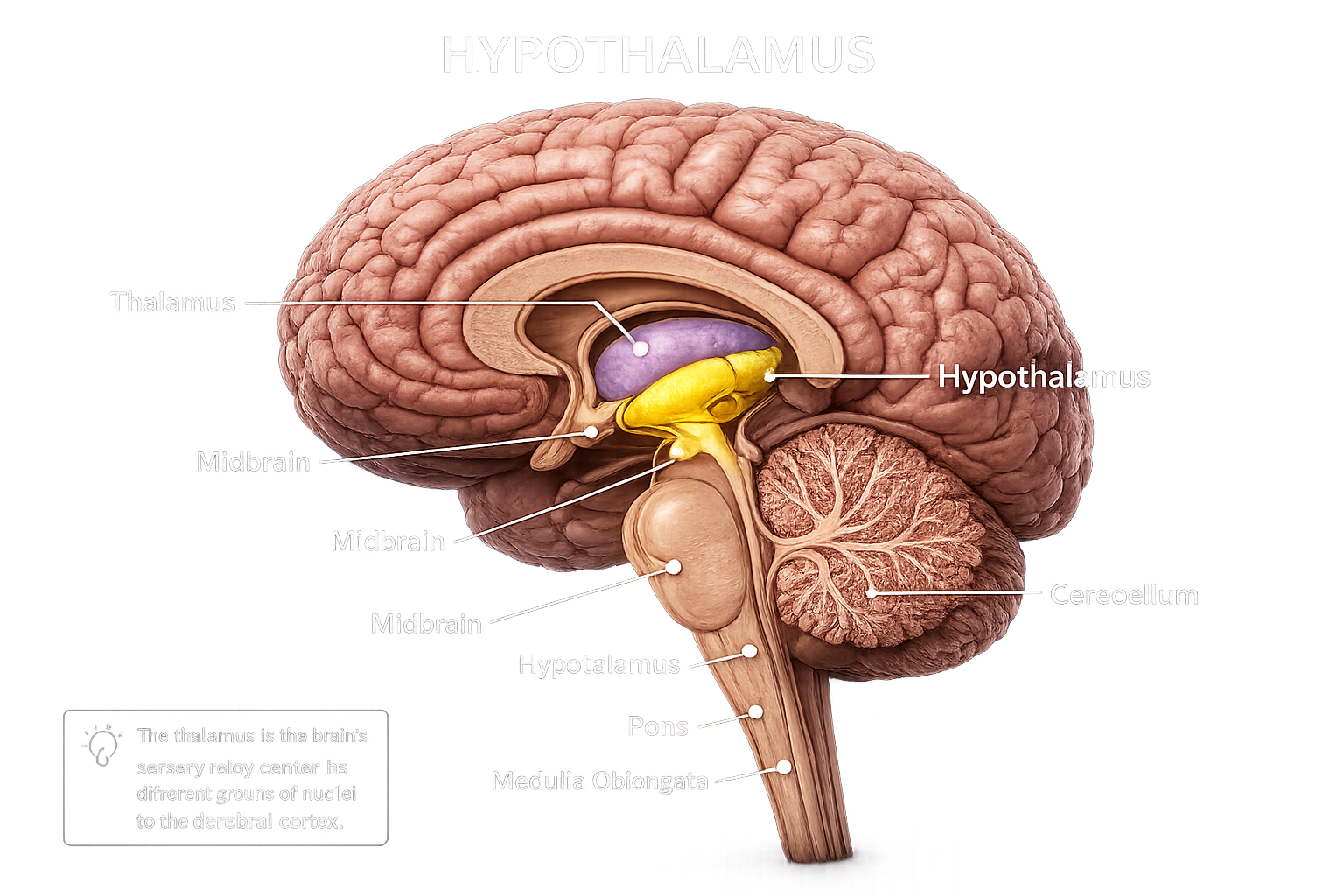
Unlike the cerebrum, the hypothalamus is divided into regions and nuclei rather than large visible parts.
The Anterior Region is located at the front of the hypothalamus. It helps regulate body temperature, controls parasympathetic activities, and plays an important role in maintaining the body's internal balance.
The Tuberal Region forms the middle part of the hypothalamus. It contains several important nuclei that regulate hunger, metabolism, and hormone secretion.
The Posterior Region is located at the back of the hypothalamus. It is responsible for conserving body heat and regulating several automatic body functions.
The Ventromedial Nucleus is known as the satiety center. It signals the body when enough food has been eaten and helps prevent overeating.
The Lateral Hypothalamic Area is often called the hunger center. It stimulates appetite and encourages food intake when the body requires energy.
These two important nuclei produce hormones that are transported to the posterior pituitary gland. They help regulate water balance, childbirth, and milk production.
The hypothalamus is a small but extremely important part of the brain. Its different regions and nuclei work together to regulate body temperature, hunger, thirst, sleep, hormones, and many other automatic body functions. By maintaining homeostasis, the hypothalamus helps keep the entire body functioning properly.
The pituitary gland is a small, pea-sized endocrine gland located at the base of the brain, just below the hypothalamus. It is known as the "master gland" because it controls the activity of many other endocrine glands in the body.
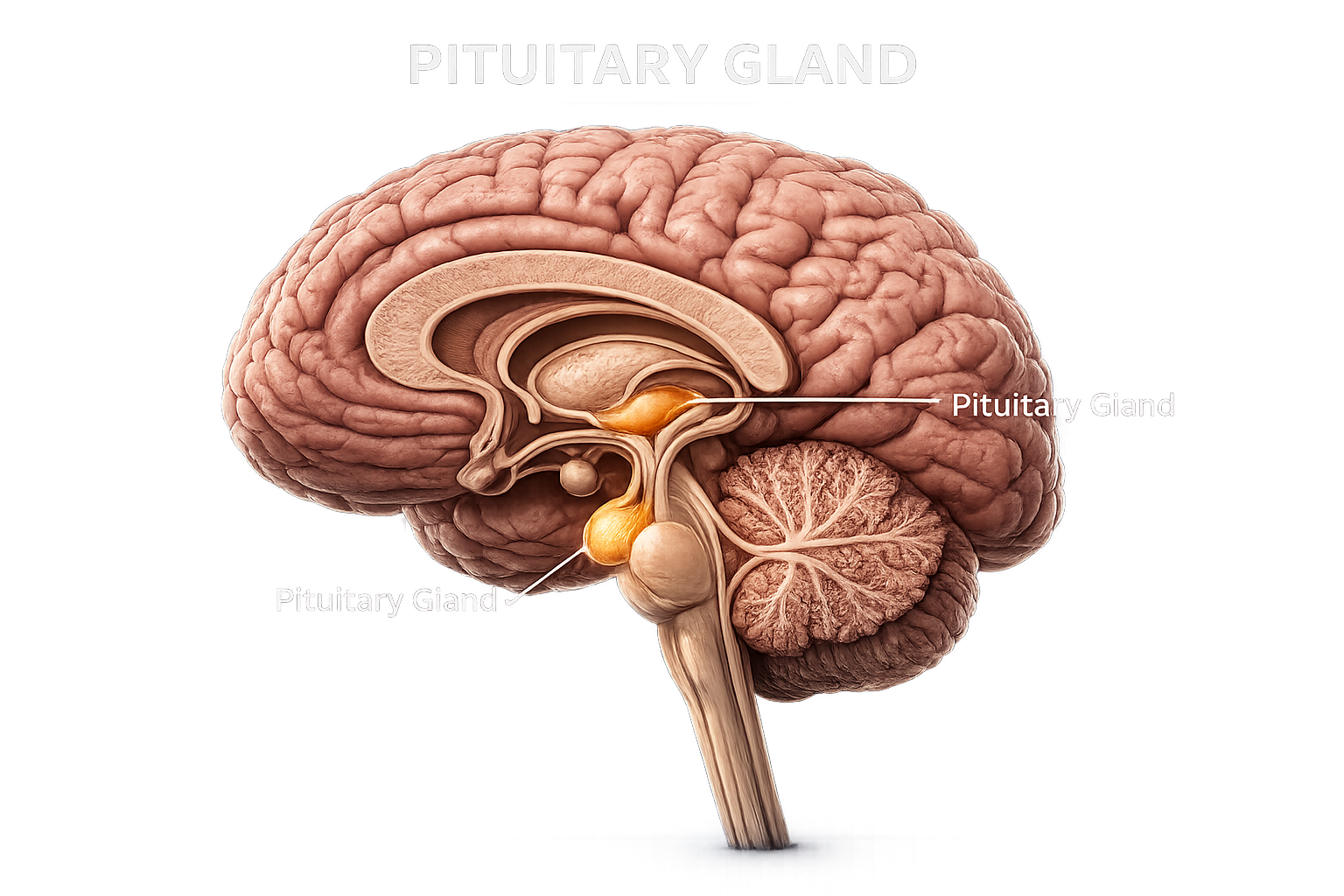
The Anterior Lobe, also called the Adenohypophysis, is the largest part of the pituitary gland. It produces and releases several important hormones that regulate growth, metabolism, reproduction, and the activities of other endocrine glands.
The Posterior Lobe, or Neurohypophysis, does not produce hormones itself. Instead, it stores and releases hormones made by the hypothalamus.
The Infundibulum, commonly called the pituitary stalk, is a thin stalk that connects the pituitary gland to the hypothalamus. It allows communication between these two structures.
The Pars Intermedia is a thin layer located between the anterior and posterior lobes. It is relatively small in humans but still contributes to hormone production.
The pituitary gland is known as the body's "master gland" because it controls the activity of many other endocrine glands. Its different parts work together with the hypothalamus to regulate growth, metabolism, reproduction, water balance, and many other vital body functions, helping maintain the body's homeostasis.