OVERVIEW

What Is the Nervous System?
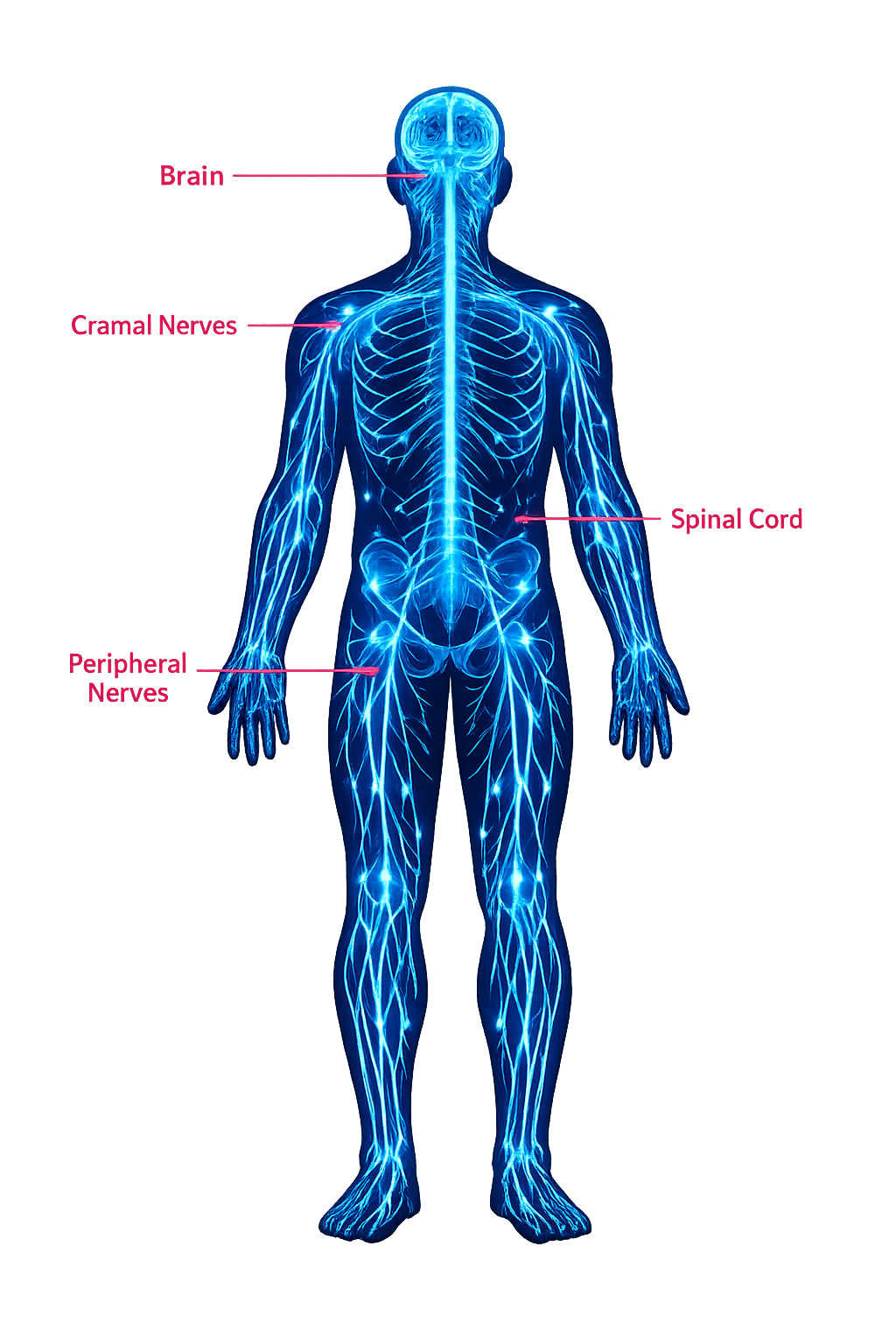
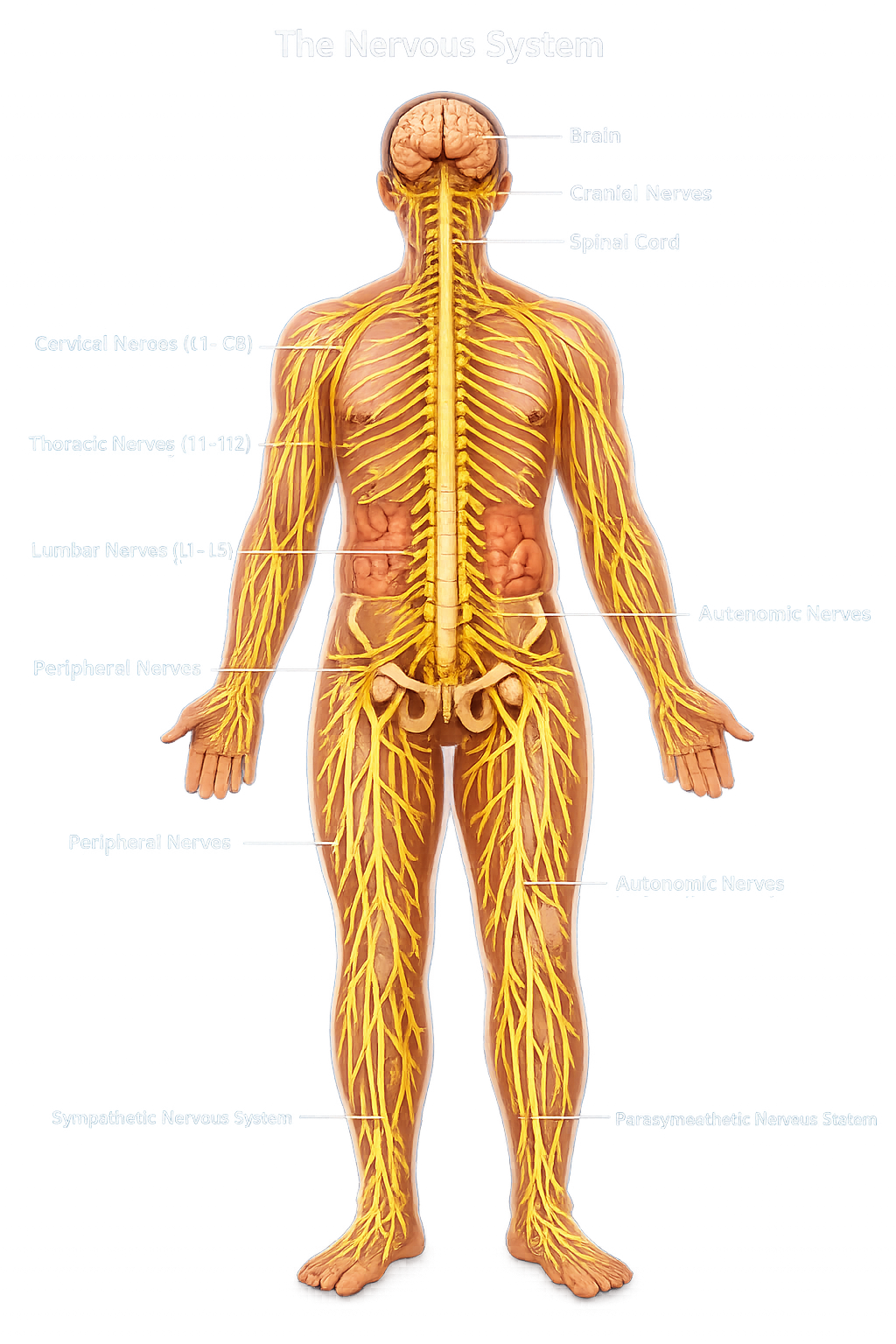
The nervous system is the body's communication and control system. It is made up of the brain, spinal cord, and nerves, which work together to receive information, process it, and send signals throughout the body. The nervous system controls voluntary actions, such as walking and speaking, as well as involuntary actions like breathing and heartbeat. It also helps the body respond quickly to changes in the environment, allowing us to think, learn, feel emotions, and maintain coordination and balance.

Human Nervous System

Interactive 3D Human Nervous System

Rotate, zoom and inspect the human Nervous System to explore its structure from every angle.

Nervous System Labelled Illustration

Full body Nervous system

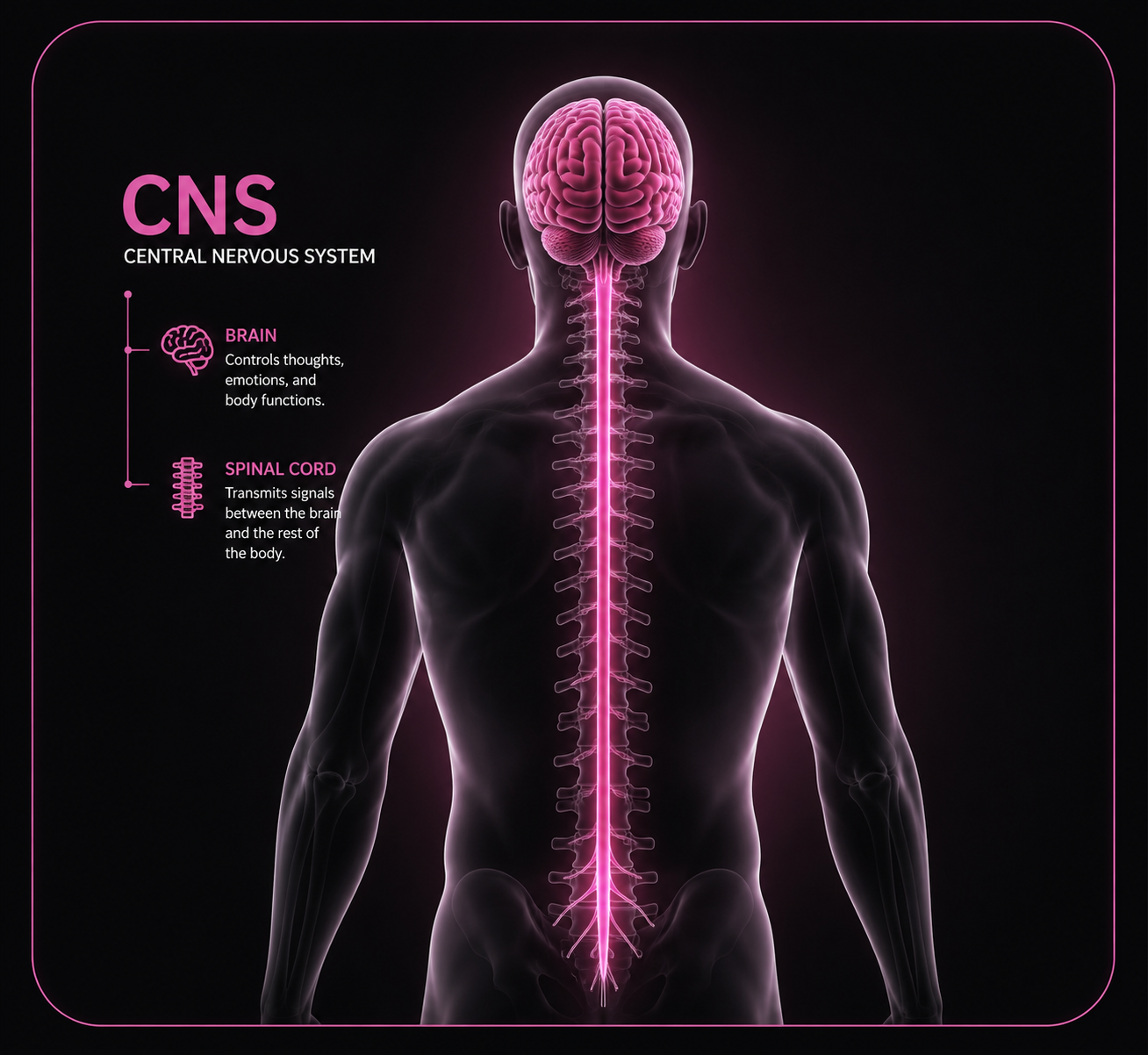
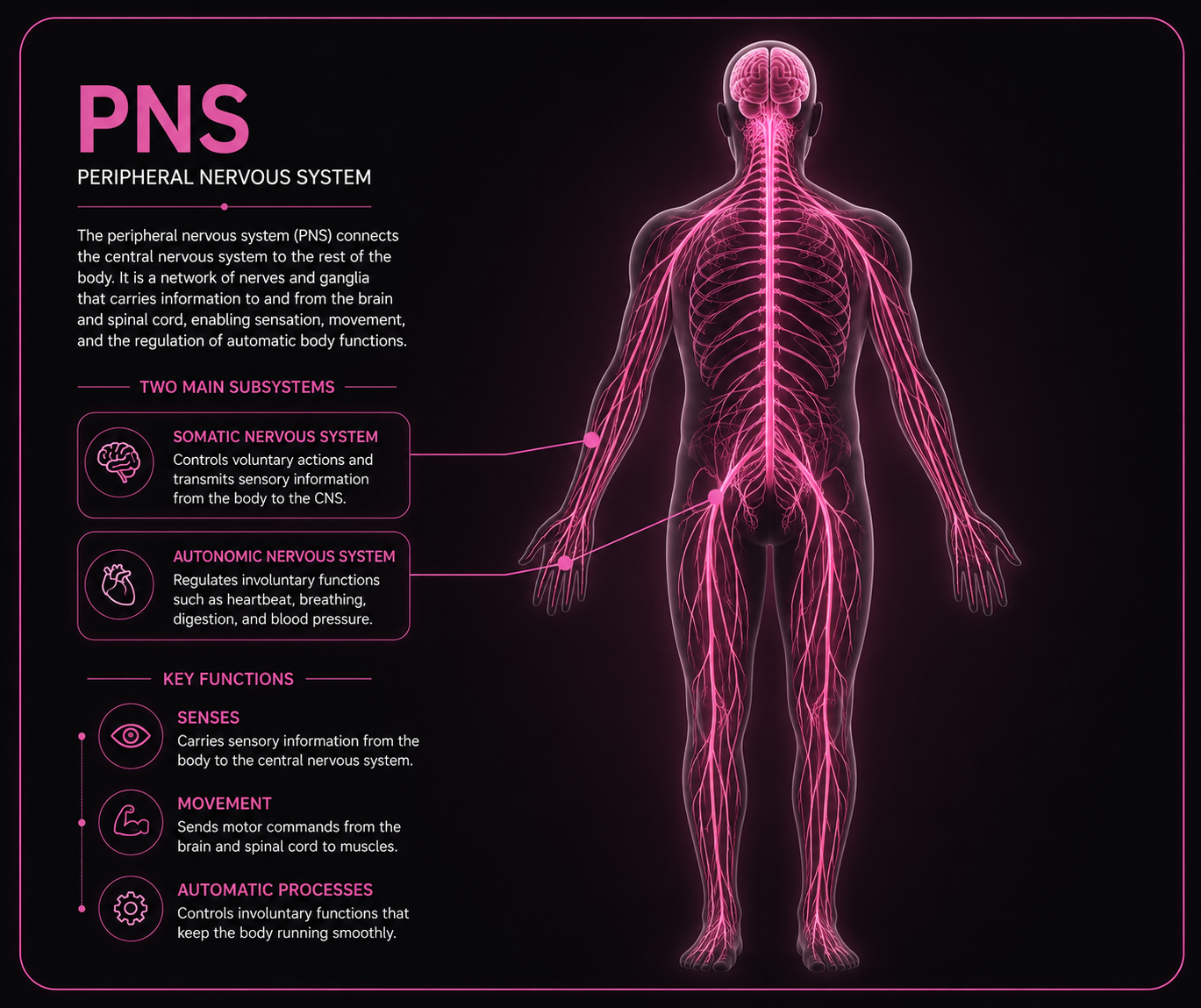
Major Divisions of the Nervous System

Major Components of the Nervous System

The nervous system consists of several interconnected components that work together to receive information, process it, and coordinate the body's responses. Each component performs a unique but essential role in maintaining normal body functions.

Brain

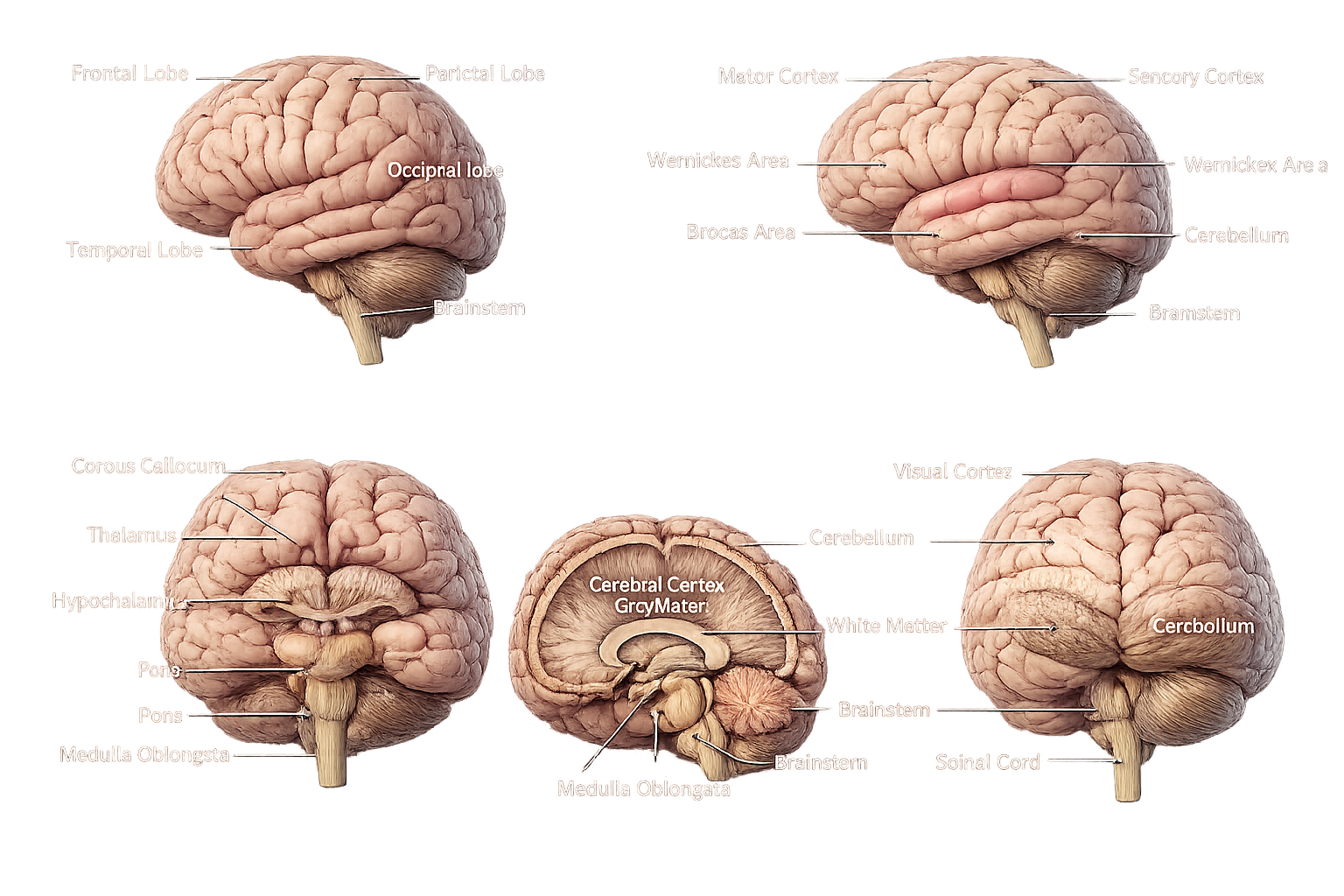
Brain

The brain is the body's main control center. It processes sensory information, controls voluntary and involuntary activities, stores memories, and regulates emotions, learning, and decision-making.

Explore Brain β†’
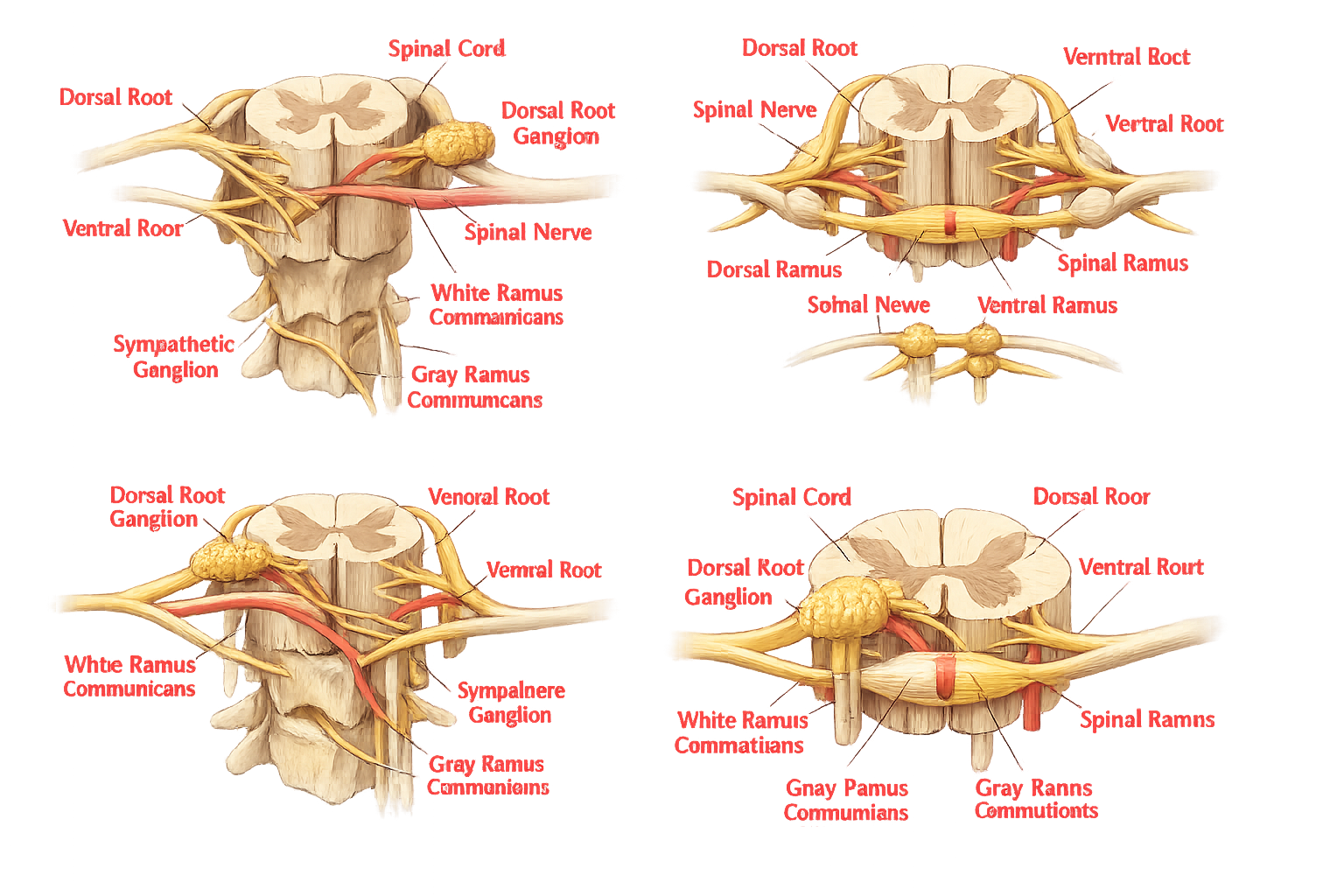
Spinal Cord

Spinal Cord

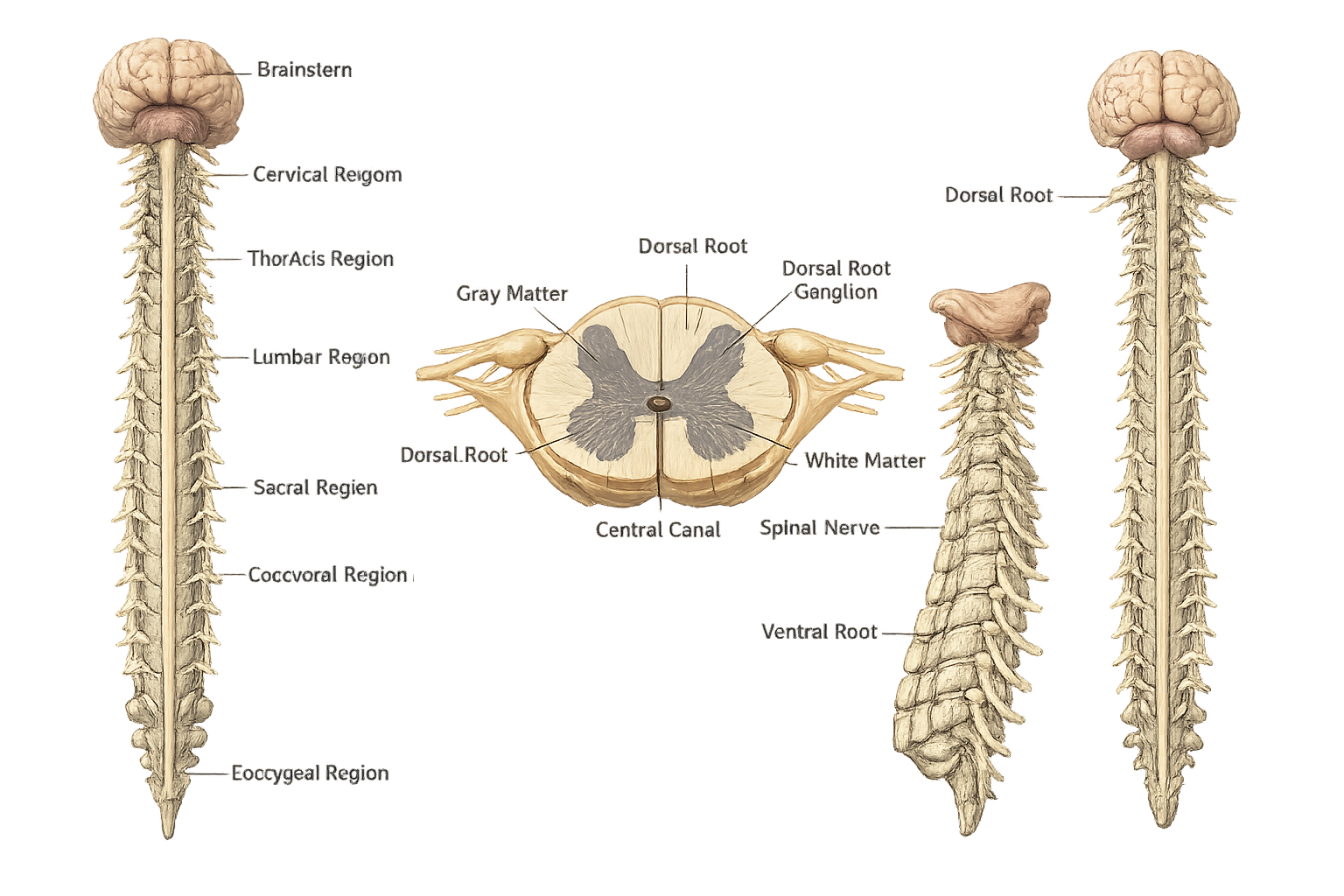
The spinal cord is the primary communication pathway between the brain and the rest of the body. It also coordinates many reflex actions.

Explore Spinal Cord β†’
Cranial Nerves

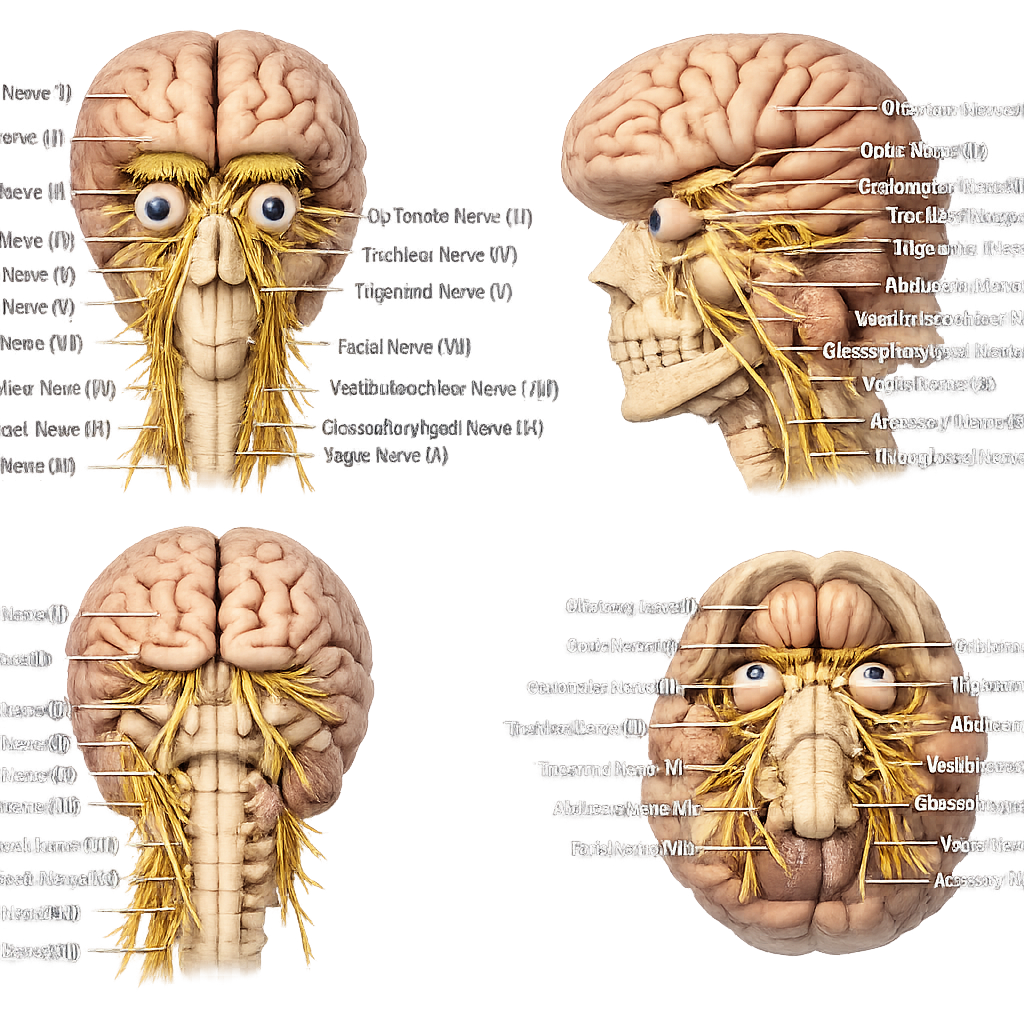
Cranial Nerves

The 12 pairs of cranial nerves arise directly from the brain and carry sensory, motor, or mixed signals between the brain and different parts of the head and neck.

Explore Cranial Nerves β†’
Spinal Nerves

Spinal Nerves

The 31 pairs of spinal nerves connect the spinal cord with the entire body, transmitting sensory information to the CNS and motor commands back to muscles and organs.

Explore Spinal Nerves β†’

Protection Provided by the Nervous System

The Nervous System is one of the most delicate and important systems in the human body. To prevent injury and ensure proper functioning, it is protected by several specialized structures that provide physical support, shock absorption, and infection resistance.

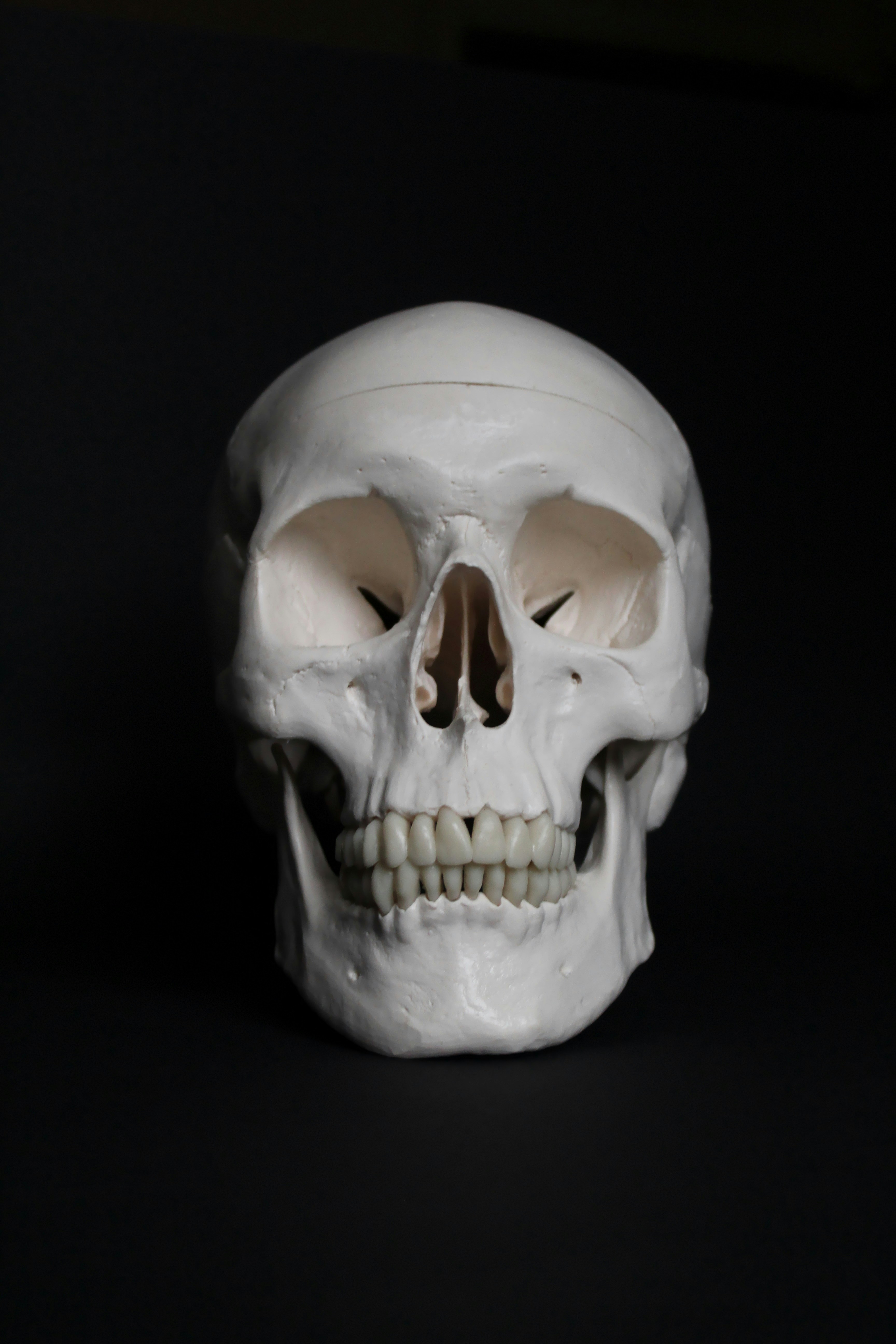
Skull

Skull (Cranium)

The skull is a strong bony structure that surrounds and protects the brain from physical injury while providing support to the head.

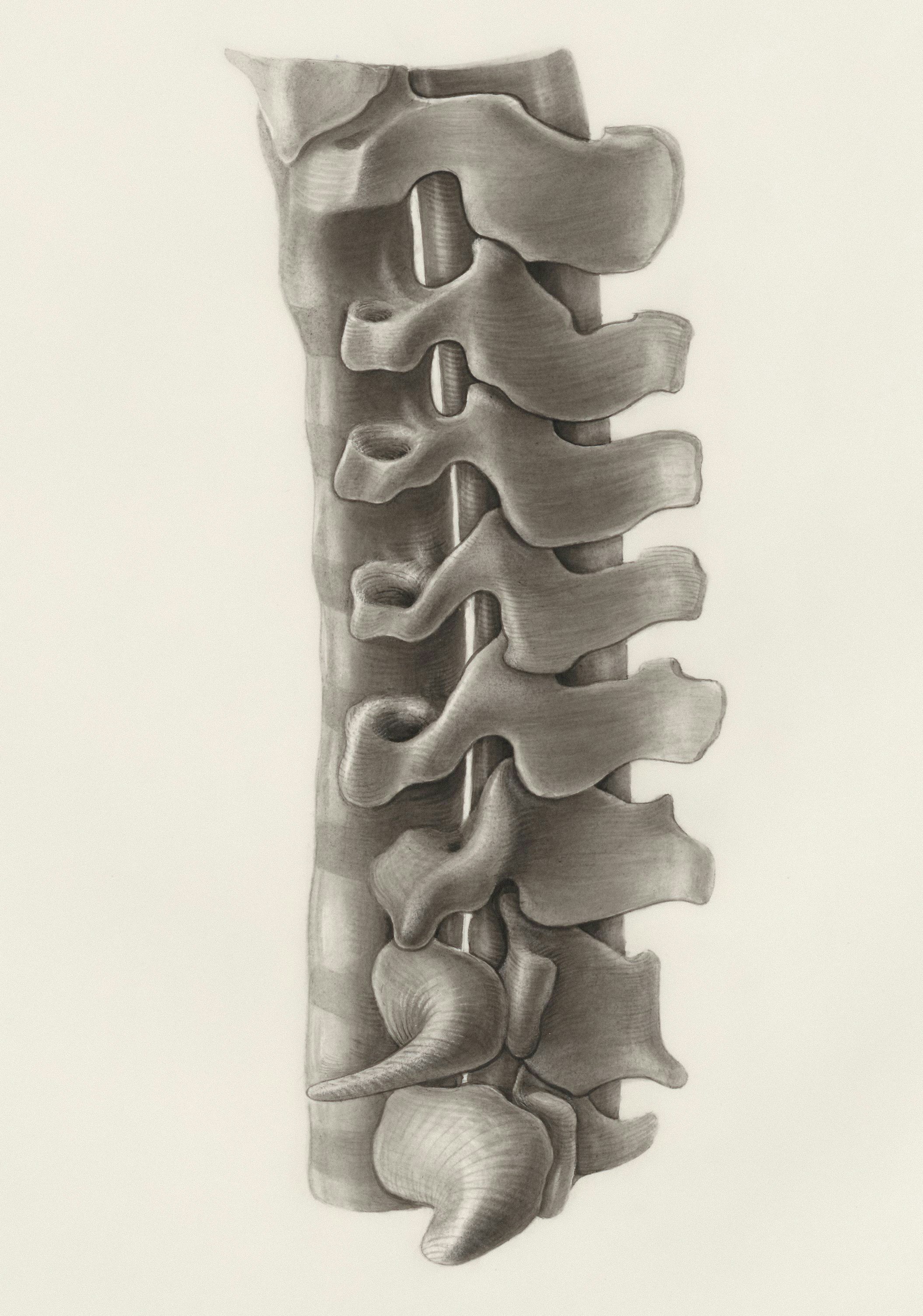
Vertebral Column

Vertebral Column

The vertebral column, also known as the backbone, encloses and protects the spinal cord while allowing flexibility and movement.

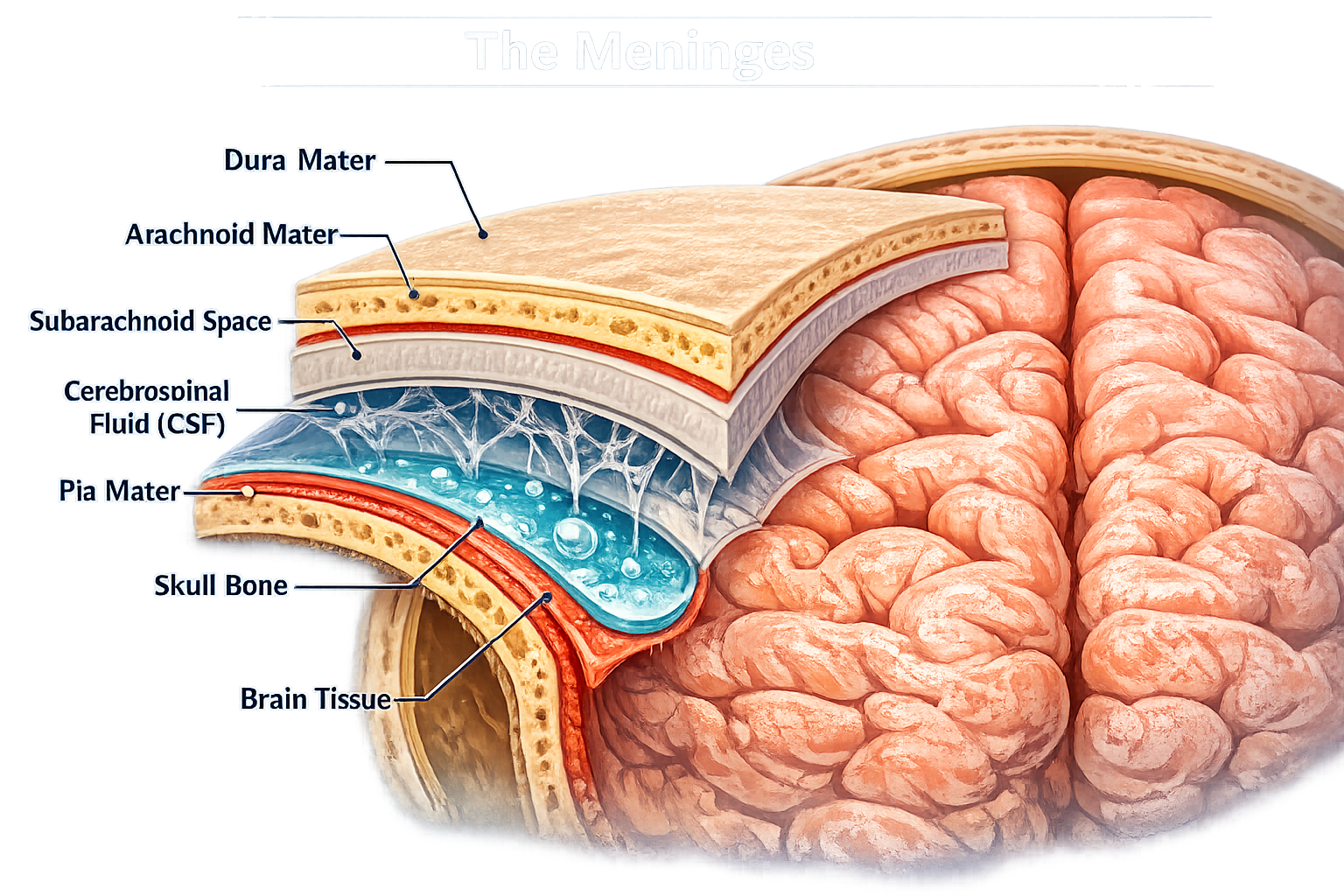
Meninges

Meninges

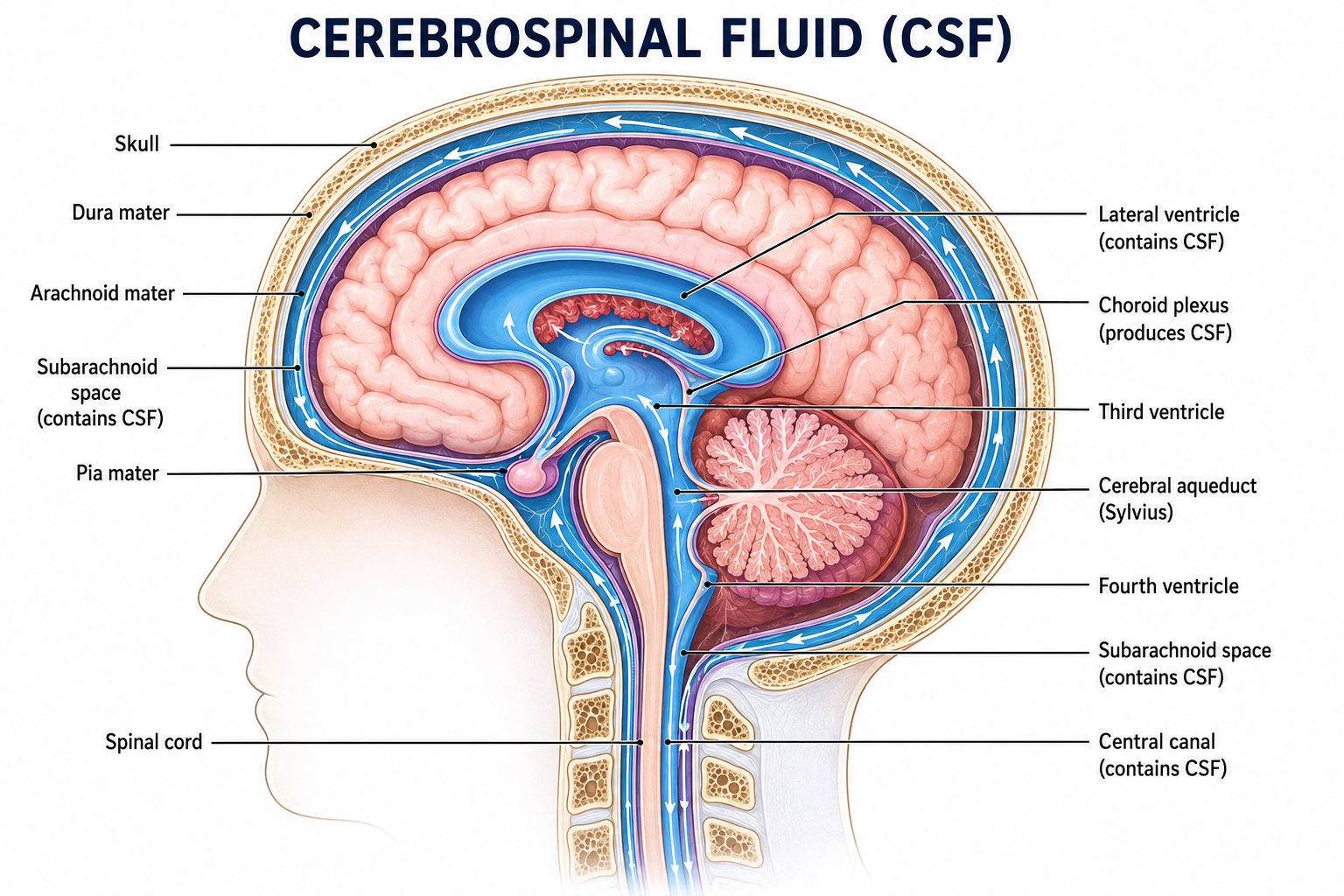
The meninges are three protective membranes (dura mater, arachnoid mater, and pia mater) that surround the brain and spinal cord, providing protection and structural support.

Cerebrospinal Fluid

Cerebrospinal Fluid (CSF)

Cerebrospinal fluid (CSF) surrounds the brain and spinal cord, acting as a shock absorber, supplying nutrients, removing waste products, and helping maintain a stable environment for the Central Nervous System.

Signal Pathway

The nervous system processes information through a sequence of steps, allowing the body to detect changes, interpret them, and produce an appropriate response.

Stimulus

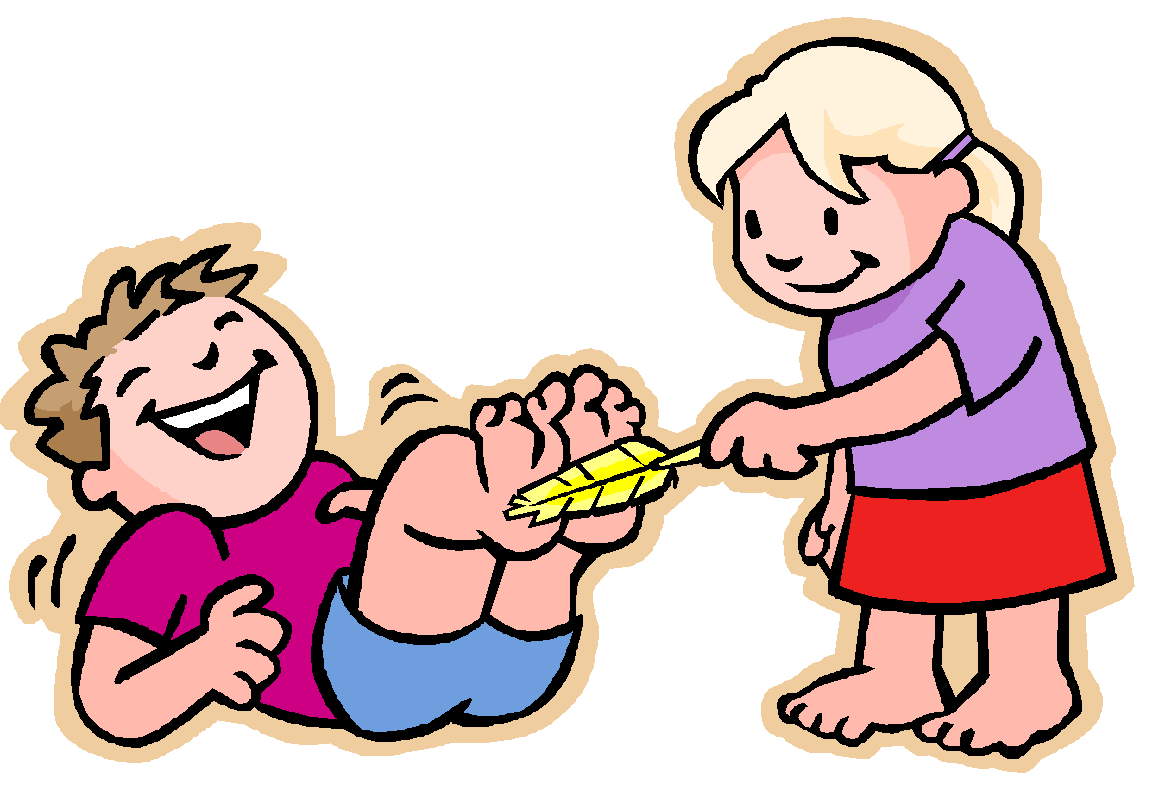
1. Stimulus

An internal or external change that triggers a response.

➜
Receptor

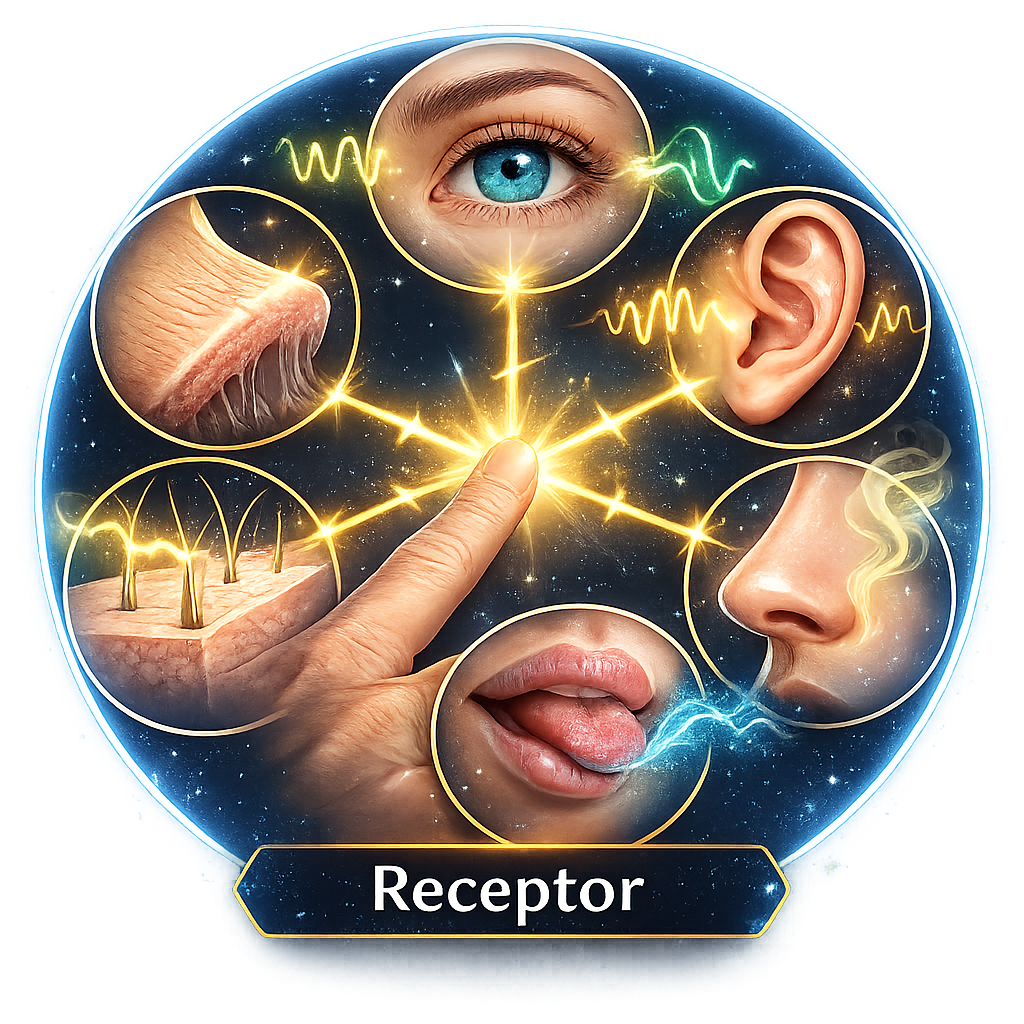
2. Receptor

Sensory receptors detect the stimulus.

➜
Sensory Neuron

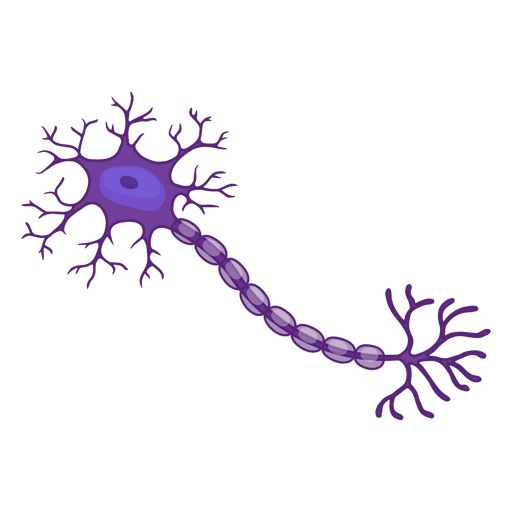
3. Sensory Neuron

Carries impulses to the CNS.

➜
CNS

4. CNS

The brain or spinal cord processes the information.

➜
Motor Neuron

5. Motor Neuron

Carries commands from the CNS.

➜
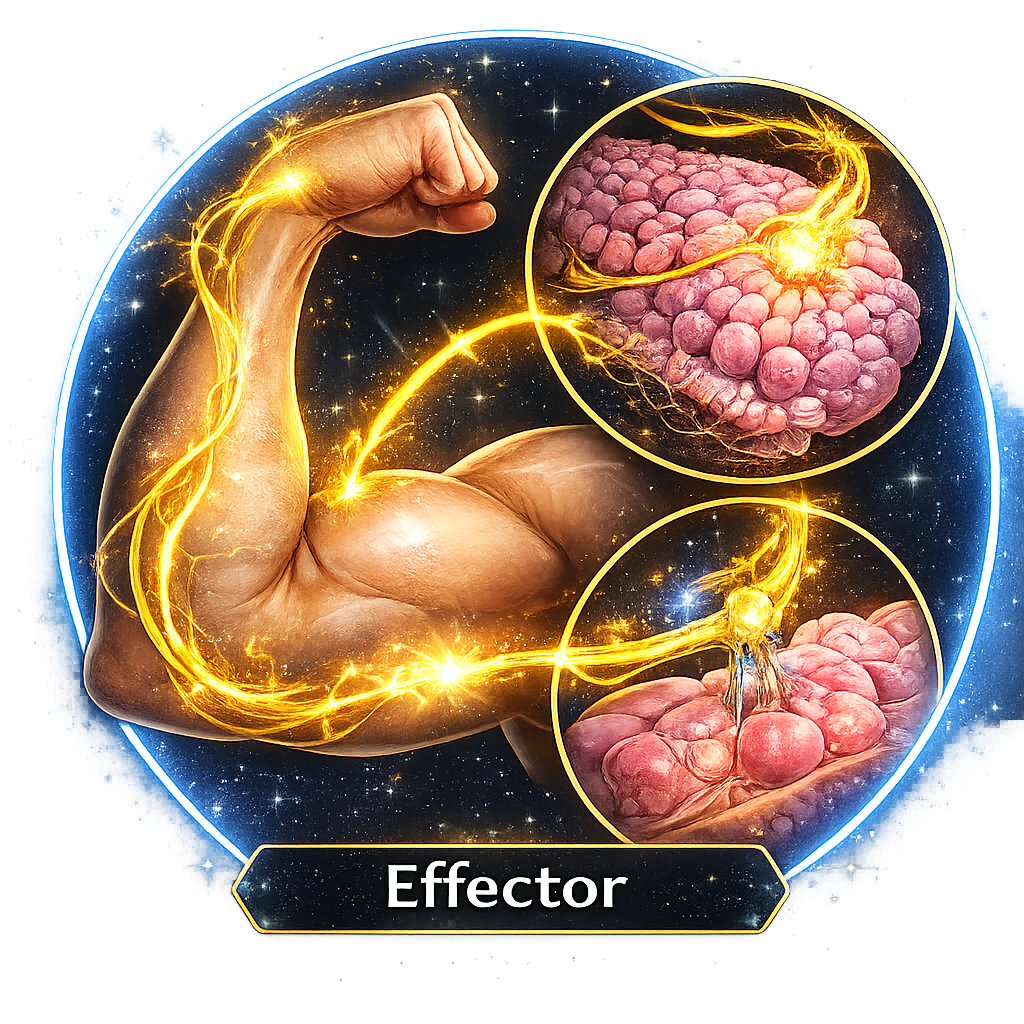
Effector

6. Effector

A muscle or gland performs the required action.

➜
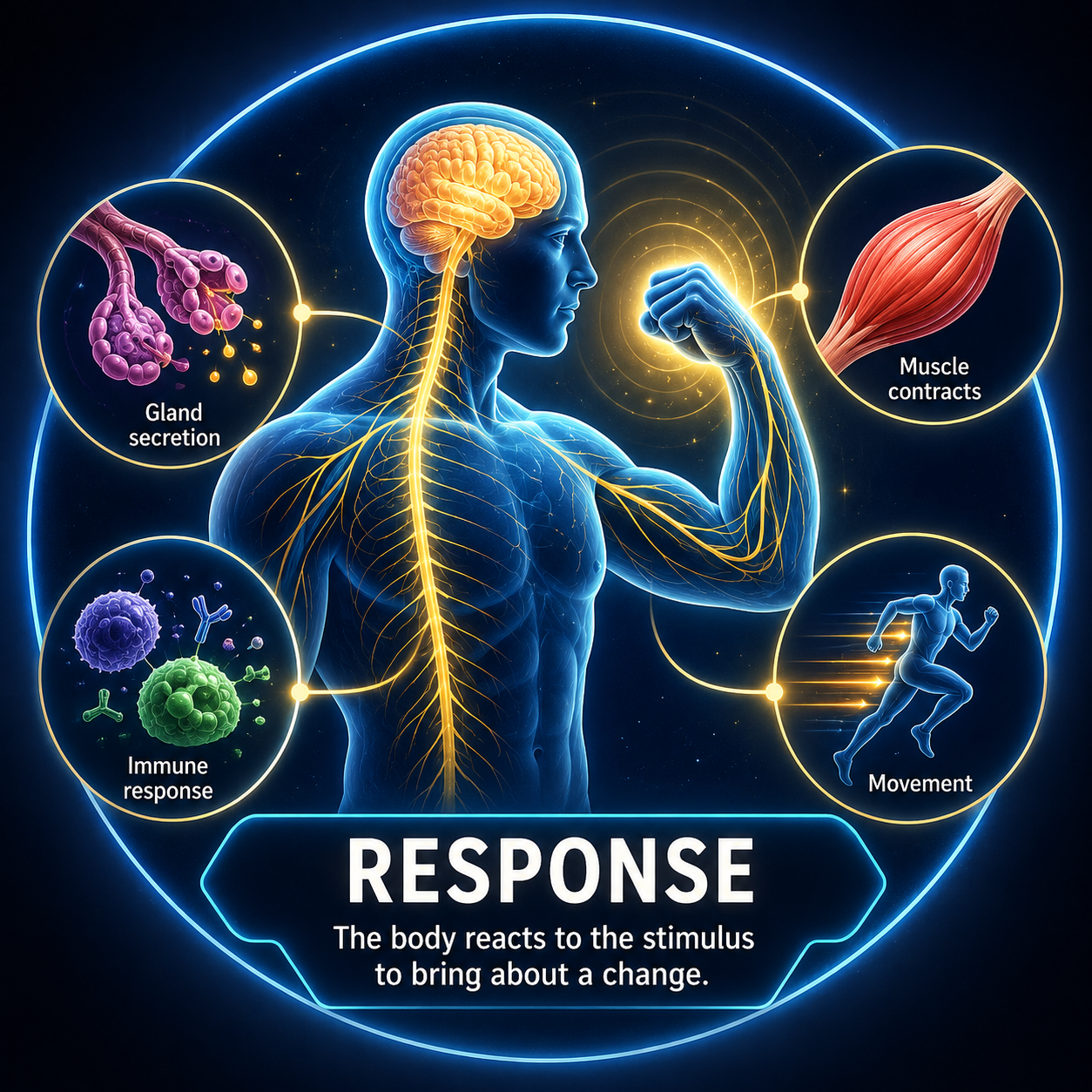
Response

7. Response

The body reacts to the original stimulus.

Interesting Statistics

The human nervous system is one of the most complex biological networks ever discovered. Here are some fascinating facts that highlight its incredible capabilities.

86 Billion

Approximate number of neurons in the human brain.

120 m/s

Maximum speed at which nerve impulses can travel.

20%

The brain consumes about 20% of the body's oxygen despite making up only about 2% of body weight.

12 Pairs

Number of cranial nerves arising directly from the brain.

31 Pairs

Number of spinal nerves emerging from the spinal cord.

100 Trillion+

Estimated number of synaptic connections in the human brain.

2%

The brain makes up only about 2% of the body's weight, yet it consumes nearly 20% of the body's energy.

600+

The human body contains over 600 skeletal muscles, most of which are controlled by the nervous system.

1 Million+

The optic nerve contains more than 1 million nerve fibers, transmitting visual information from the eye to the brain.

24/7

Your nervous system works continuously, controlling vital functions such as breathing, heartbeat, and body temperature even while you sleep.

Did You Know?

πŸ§