Overview

πŸ›‘οΈ Immune & Lymphatic Systems

Although the immune system and lymphatic system are different, they work together to protect the body from diseases, maintain fluid balance, and keep the body healthy.

Immune System

πŸ›‘οΈ What Is the Immune System?

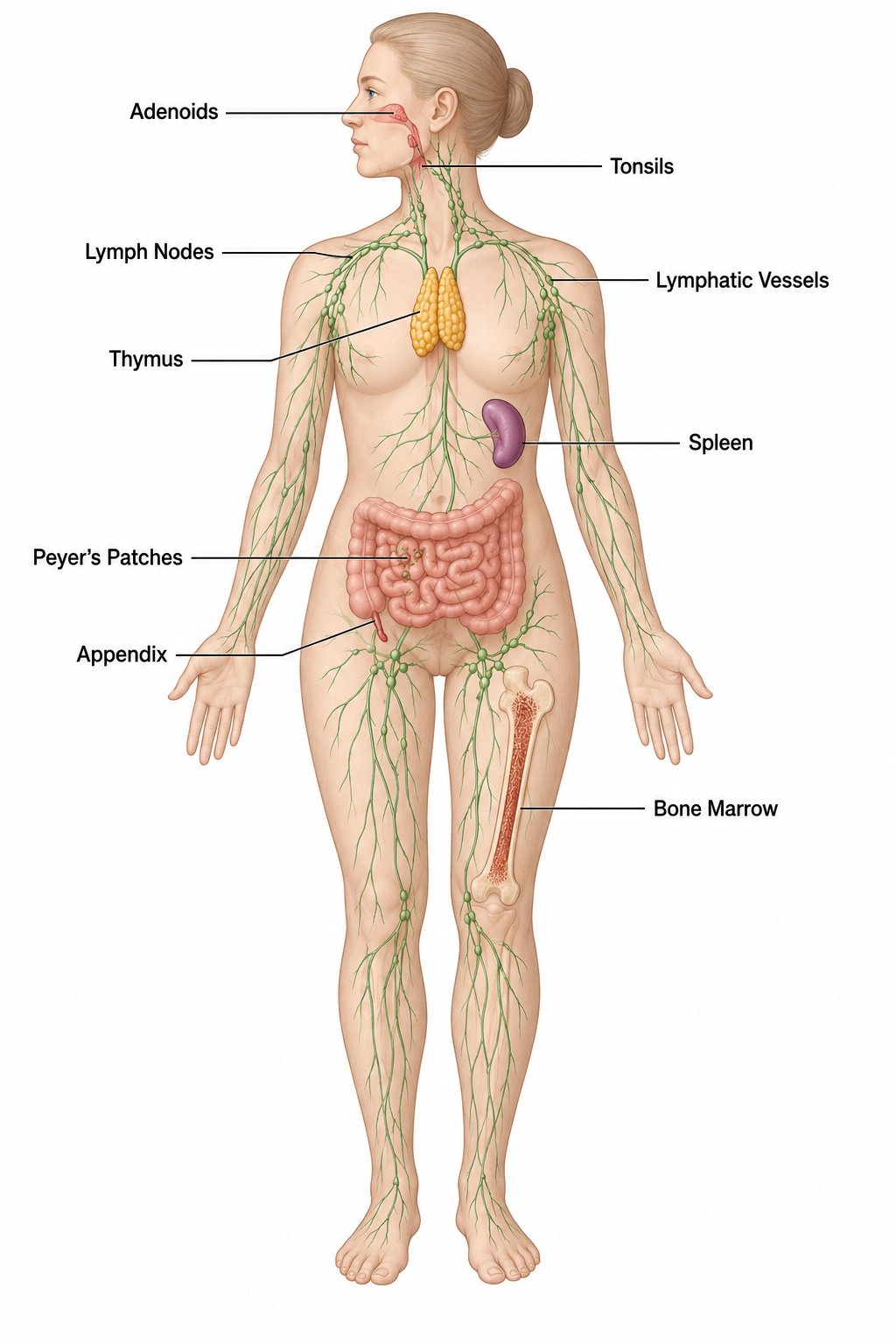
The immune system, also known as the body's defense system or the immune defense system, is a complex network of organs, tissues, cells, and proteins that protects the body from harmful pathogens such as bacteria, viruses, fungi, and parasites. It also helps identify and destroy abnormal or damaged cells while preventing the spread of infections. The immune system includes important organs such as the bone marrow, thymus, spleen, and lymph nodes, along with specialized white blood cells and antibodies that work together to recognize and eliminate foreign invaders. In addition to defending against disease, the immune system plays a vital role in maintaining the body's homeostasis, supporting tissue repair, and developing immunity by remembering previously encountered pathogens for faster and stronger responses in the future. Working continuously throughout life, the immune system is essential for protecting the body, maintaining overall health, and ensuring survival.

Lymphatic System

πŸ§ƒ What Is the Lymphatic System?

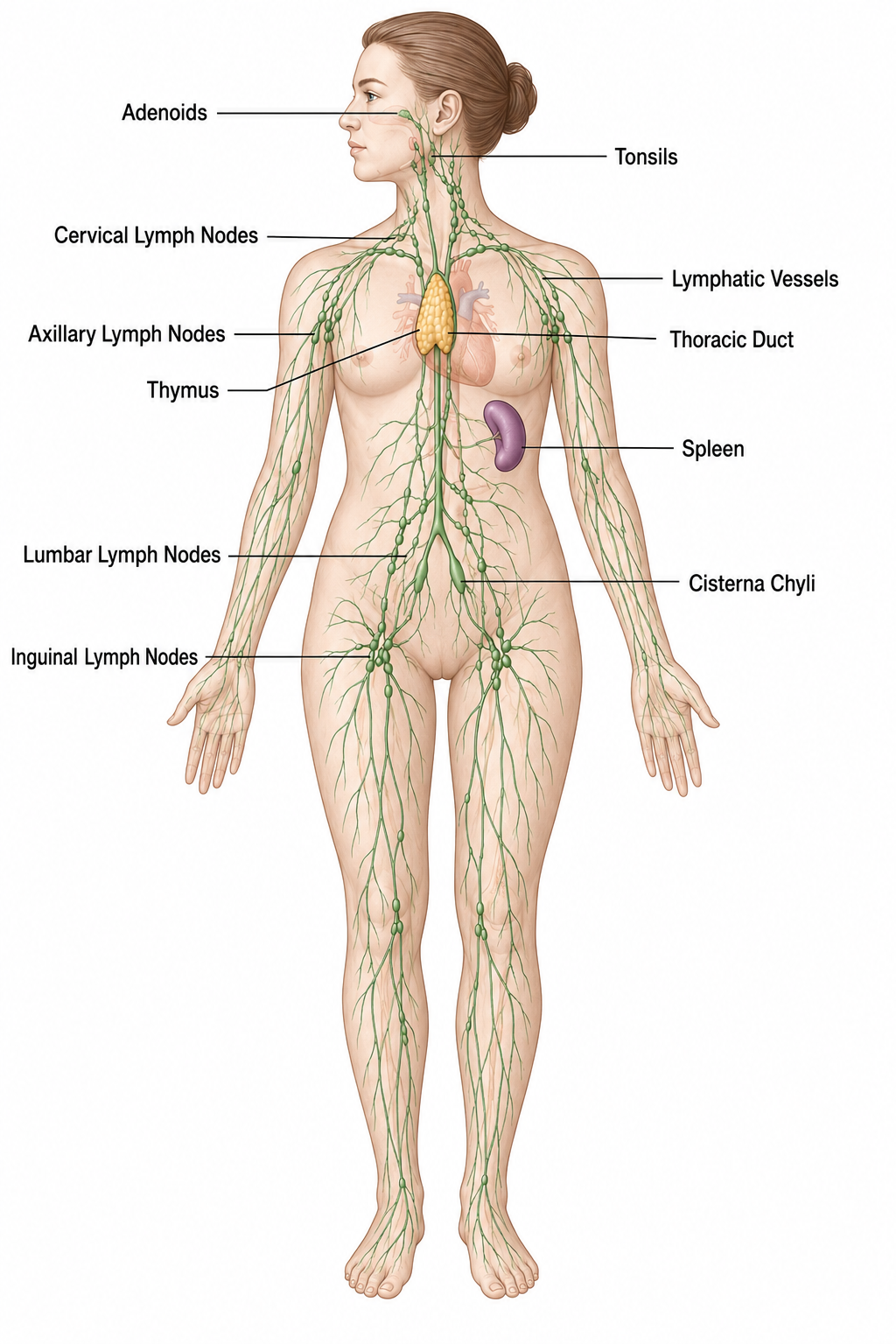
The lymphatic system, also known as the lymph system, is a vital part of both the immune system and the circulatory system. It is a network of lymphatic vessels, lymph nodes, and organs such as the thymus, spleen, tonsils, and bone marrow, which work together to protect the body from infections and diseases. The lymphatic system transports a clear fluid called lymph, which contains white blood cells (lymphocytes) that help identify and destroy harmful pathogens, including bacteria, viruses, and other foreign substances. In addition to defending the body, the lymphatic system collects excess fluid from body tissues and returns it to the bloodstream, helping maintain the body's fluid balance and preventing swelling. It also absorbs dietary fats and fat-soluble vitamins from the small intestine through specialized lymphatic vessels called lacteals. By supporting immunity, maintaining fluid balance, and assisting in nutrient absorption, the lymphatic system plays an essential role in preserving homeostasis, overall health, and the body's natural defense against disease.

3D Models

πŸ›‘οΈ Explore in 3D

Rotate, zoom, and explore the Immune and Lymphatic Systems in interactive 3D.

πŸ›‘οΈ Immune Cell

Rotate, zoom, and inspect the Immune Cell from every angle.

πŸ§ƒ Human Lymphatic System

Rotate, zoom, and inspect the human lymphatic system from every angle.

Purpose

🎯 Main Purposes

Although the immune and lymphatic systems are closely connected, each has its own primary responsibilities that help maintain health and protect the body.

πŸ›‘οΈ

Immune System

  • 🦠 Protects the body from harmful pathogens.
  • βš”οΈ Detects and destroys bacteria, viruses, fungi, and parasites.
  • 🧬 Produces antibodies to fight infections.
  • βšͺ Uses white blood cells to eliminate foreign invaders.
  • 🧠 Creates memory cells for faster future immune responses.
  • ❀️ Removes damaged and abnormal body cells.
  • πŸ›‘οΈ Maintains the body's natural defense against disease.
πŸ§ƒ

Lymphatic System

  • πŸ’§ Returns excess tissue fluid to the bloodstream.
  • βšͺ Transports lymph and immune cells throughout the body.
  • 🟒 Filters harmful microorganisms inside lymph nodes.
  • 🧈 Absorbs dietary fats from the small intestine through lacteals.
  • ❀️ Supports the immune system by transporting lymphocytes.
  • βš–οΈ Maintains the body's fluid balance.
  • 🌿 Helps remove cellular waste and toxins from tissues.
Similarities

🀝 How the Immune & Lymphatic Systems Work Together

Although they are different systems, the immune and lymphatic systems work together continuously to protect the body, maintain health, and defend against disease.

πŸ›‘οΈ

Protect the Body

Both systems work together to defend the body against harmful pathogens such as bacteria, viruses, fungi, and parasites.

βšͺ

Use White Blood Cells

Both rely on white blood cells, especially lymphocytes, to detect, attack, and remove harmful microorganisms.

🟒

Share Common Organs

They both involve organs such as the bone marrow, thymus, spleen, and lymph nodes.

🧬

Maintain Homeostasis

Together they help maintain a healthy internal environment by removing harmful substances and supporting tissue health.

πŸ’‰

Fight Infections

Both systems cooperate to recognize infections, destroy pathogens, and reduce the spread of disease.

❀️

Support Long-Term Health

Working together, they help the body recover from illness, prevent infections, and keep every organ functioning properly.

🧠 Remember

The immune system is the body's defense mechanism, while the lymphatic system provides the network and organs that transport immune cells, filter harmful substances, and support immune responses. They are different systems, but they function as one powerful defense team.

Differences

βš–οΈ Immune System vs Lymphatic System

Although they work closely together, the immune and lymphatic systems have different structures, functions, and roles within the human body.

πŸ›‘οΈ

Immune System

  • 🎯 Main function is to defend the body against pathogens.
  • βšͺ Consists mainly of white blood cells, antibodies, and immune responses.
  • 🧬 Recognizes and destroys harmful microorganisms.
  • 🧠 Forms memory cells for long-term immunity.
  • πŸ’‰ Responds to vaccines and previous infections.
  • βš”οΈ Includes innate and adaptive immunity.
  • ❀️ Protects every organ from disease.
VS
πŸ§ƒ

Lymphatic System

  • πŸ’§ Main function is to transport lymph and maintain fluid balance.
  • 🟒 Consists of lymph vessels, lymph nodes, and lymphoid organs.
  • 🚰 Returns excess tissue fluid to the bloodstream.
  • 🧈 Absorbs fats from the small intestine.
  • βšͺ Transports immune cells throughout the body.
  • πŸ›‘οΈ Provides the pathways where immune responses occur.
  • 🌿 Supports the immune system rather than replacing it.

πŸ“‹ Quick Comparison

Feature πŸ›‘οΈ Immune System πŸ§ƒ Lymphatic System
Primary Role Protects against disease Maintains fluid balance & transports lymph
Main Components White blood cells, antibodies Lymph vessels, lymph nodes, lymph
Memory Yes No
Produces Antibodies Yes No
Absorbs Dietary Fats No Yes
Relationship Defense System Support Network
Components

🧩 Main Components

The immune and lymphatic systems are made up of many specialized cells, organs, tissues, and vessels that work together to defend the body and maintain internal balance. Click on any component below to explore it in more detail.

πŸ›‘οΈ

Immune System

Specialized cells and molecules that recognize, attack, and destroy harmful pathogens.

Click to explore each πŸ‘‡

βšͺ

White Blood Cells

🧬

Antibodies

🦠

Antigens

πŸ“‘

Cytokines

πŸ§ͺ

Complement Proteins

πŸ§ƒ

Lymphatic System

A network of organs and vessels that transports lymph and supports the body's immune defenses.

Click to explore each πŸ‘‡

πŸ’§

Lymph

🧡

Lymphatic Vessels

🟒

Lymph Nodes

🦴

Bone Marrow

🧠

Thymus

❀️

Spleen

πŸ‘„

Tonsils

Overview

How Lymph Flows Through the Body

Lymph continuously travels through a one-way network of vessels, passing through lymph nodes where it is filtered before finally returning to the bloodstream.

πŸ’§

Tissue Fluid

Excess fluid surrounding body cells.

⬇️
🫧

Lymph Capillaries

Collect excess tissue fluid and form lymph.

⬇️
🧡

Lymph Vessels

Transport lymph throughout the body.

⬇️
🟒

Lymph Nodes

Filter pathogens and activate immune cells.

⬇️
🚰

Thoracic Duct

The largest lymphatic vessel that returns lymph.

⬇️
🩸

Bloodstream

Clean lymph re-enters the circulatory system.

Overview

How the Immune System Responds to an Infection

Whenever harmful microorganisms enter the body, the immune system launches a coordinated defense. Immune cells detect the invader, produce antibodies, destroy the pathogen, and create memory cells for faster protection in the future.

🦠

Pathogen Enters

Harmful bacteria, viruses, fungi, or parasites enter the body.

⬇️
βšͺ

White Blood Cells Detect It

White blood cells recognize the foreign invader and activate the immune response.

⬇️
🧬

Antibodies Are Produced

B lymphocytes produce antibodies that specifically bind to the invading pathogen.

⬇️
πŸ’₯

Pathogen Is Destroyed

White blood cells and antibodies work together to eliminate the harmful microorganism.

⬇️
🧠

Memory Cells Remain

Memory B cells and T cells remain in the body, allowing a much faster response if the same pathogen enters again.

Overview

Major Types of White Blood Cells

White blood cells (leukocytes) are the body's primary defenders against disease. Each type has a unique role in detecting, attacking, and eliminating harmful microorganisms while maintaining a healthy immune system.

βš”οΈ

Neutrophils

Neutrophils are the most abundant white blood cells, making up about 50–70% of all circulating white blood cells. They are the body's first responders during infections, especially bacterial infections. When harmful microorganisms enter the body, neutrophils quickly leave the bloodstream, travel to the infected tissue, and destroy pathogens by engulfing them through a process called phagocytosis. They also release powerful enzymes and antimicrobial chemicals that kill microbes. Although they are highly effective defenders, neutrophils have a short lifespan and are continuously replaced by the bone marrow.

🍽️

Macrophages

Macrophages are large immune cells that develop from monocytes after they leave the bloodstream and enter body tissues. Their name means "big eaters" because they engulf bacteria, viruses, dead cells, and cellular debris through phagocytosis. Besides cleaning damaged tissues, macrophages also present fragments of pathogens (antigens) to lymphocytes, helping activate the adaptive immune system. They play an essential role in infection control, wound healing, inflammation, and maintaining healthy body tissues.

🧬

Lymphocytes

Lymphocytes are specialized white blood cells responsible for the body's adaptive immune response. They include B lymphocytes, which produce antibodies that neutralize pathogens, and T lymphocytes, which destroy infected or abnormal cells and coordinate immune responses. Some lymphocytes become memory cells, allowing the immune system to recognize previously encountered pathogens and respond much faster during future infections. This long-term memory is the basis of immunity developed after infections and vaccinations.

πŸͺ±

Eosinophils

Eosinophils are white blood cells that primarily defend the body against parasitic worms and other large parasites. They also play an important role in allergic reactions and asthma by releasing chemicals that help control inflammation. Eosinophils contain granules filled with toxic proteins that can damage parasites too large to be engulfed by other immune cells. Although they represent only a small percentage of white blood cells, they are essential for protecting the body against certain infections and regulating allergic responses.

πŸ§ͺ

Basophils

Basophils are the least abundant type of white blood cell, accounting for less than 1% of circulating leukocytes. They play an important role in allergic reactions and inflammation by releasing chemicals such as histamine and heparin. Histamine widens blood vessels and increases blood flow to injured or infected tissues, while heparin helps prevent blood clotting. Basophils work closely with mast cells to initiate immune responses against allergens and parasites, making them important regulators of the body's inflammatory processes.

Overview

Layers of the Immune Defense System

The immune system protects the body through multiple layers of defense. Each layer works together to stop pathogens, eliminate infections, and provide long-term protection against future diseases.

πŸ›‘οΈ

Physical Barriers

The body's first protection that prevents pathogens from entering.

Skin Mucus Cilia Stomach Acid
⬇️
βš”οΈ

Innate Defenses

If pathogens enter the body, immune cells immediately begin attacking them.

Inflammation Macrophages Neutrophils Complement Proteins
⬇️
🎯

Adaptive Immunity

Specialized lymphocytes identify the pathogen and coordinate a targeted immune response.

B Cells T Cells
⬇️
🧬

Antibodies

B cells produce antibodies that specifically bind to antigens and help eliminate pathogens.

⬇️
🧠

Immune Memory

Memory B cells and T cells remain in the body, allowing a much faster response during future infections by the same pathogen.

Overview

Innate vs Adaptive Immunity

The immune system protects the body using two complementary defense mechanisms. The innate immune system provides immediate, non-specific protection, while the adaptive immune system develops targeted responses and long-lasting immune memory.

πŸ›‘οΈ

Innate Immunity

  • ⚑ Responds immediately
  • 🎯 Non-specific defense
  • πŸ‘Ά Present from birth
  • 🧠 No immune memory
  • βšͺ Uses neutrophils, macrophages & NK cells
  • πŸ”₯ Includes inflammation and fever
  • 🚧 Acts as the body's first line of defense
VS
🧬

Adaptive Immunity

  • ⏳ Slower first response
  • 🎯 Highly specific defense
  • πŸ“š Develops after exposure
  • 🧠 Forms memory cells
  • 🧬 Uses B cells and T cells
  • πŸ’‰ Provides long-term immunity
  • πŸ›‘οΈ Responds faster during future infections
Overview

Active vs Passive Immunity

Immunity can be acquired in two different ways. Active immunity develops when your own immune system produces antibodies, while passive immunity is obtained by receiving antibodies that were produced by another individual.

πŸ’ͺ

Active Immunity

  • 🧬 Body produces its own antibodies.
  • 🧠 Forms memory cells.
  • ⏳ Provides long-lasting protection.
  • πŸ’‰ Develops after vaccination or natural infection.
  • ⚑ Future infections are fought much faster.
VS
🀝

Passive Immunity

  • 🧬 Antibodies are received from another source.
  • 🚫 Memory cells are not formed.
  • βŒ› Protection is temporary.
  • πŸ‘©β€πŸΌ Obtained through mother's milk or placenta.
  • πŸ’‰ Can also be given by antibody injections.
Overview

How Vaccination Builds Immunity

Vaccines safely train the immune system to recognize harmful pathogens without causing the disease. This allows the body to respond much faster if the real pathogen enters in the future.

πŸ’‰

Vaccine

A harmless form of the pathogen or its antigens enters the body.

⬇️
πŸ›‘οΈ

Immune System Learns

White blood cells recognize the antigen and begin producing antibodies.

⬇️
🧠

Memory Cells

Memory B cells and T cells remain in the body after the immune response.

⬇️
✨

Future Protection

If the real pathogen enters later, the immune system responds rapidly and prevents serious illness.

Overview

Structure of an Antibody

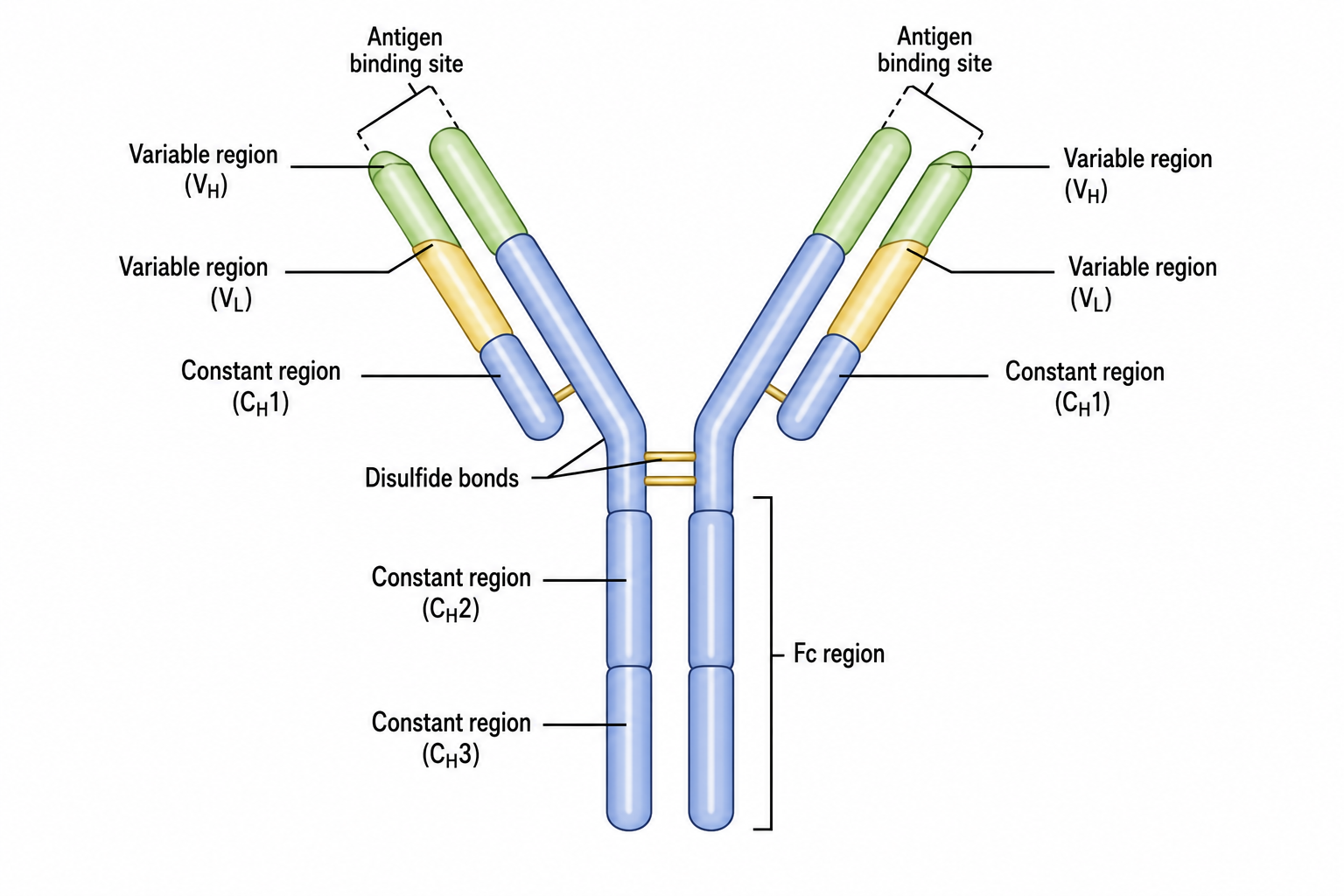
Antibodies are Y-shaped proteins produced by B lymphocytes. Each part of the antibody has a specialized function that helps recognize antigens and activate the immune response.

Structure of an Antibody

🧬 Heavy Chain

The two longer protein chains that form the main framework of the antibody and determine its class.

🧬 Light Chain

The two shorter protein chains attached to the heavy chains that assist in antigen recognition.

🎯 Antigen-Binding Site

Located at the tips of the Y-shaped antibody. This region specifically binds to matching antigens.

βš™οΈ Fc Region

The stem of the antibody that interacts with immune cells and activates complement proteins after an antigen is recognized.

Overview

Antigen vs Antibody

Antigens and antibodies work together during an immune response. An antigen is a foreign substance that triggers immunity, while an antibody is a protective protein produced by the immune system to recognize and neutralize that antigen.

🦠

Antigen

  • 🧫 A foreign substance or molecule.
  • ⚠️ Triggers an immune response.
  • 🦠 Usually found on bacteria, viruses, fungi, or parasites.
  • 🎯 Recognized as "non-self" by the immune system.
  • 🧬 Can be proteins, carbohydrates, toxins, or other molecules.
VS
🧬

Antibody

  • πŸ›‘οΈ A defensive protein (immunoglobulin).
  • 🧬 Produced by B lymphocytes (plasma cells).
  • 🎯 Specifically binds to matching antigens.
  • βš”οΈ Helps neutralize and eliminate pathogens.
  • πŸ’‰ Plays an important role in long-term immunity and vaccination.
Overview

Major Types of Pathogens

Pathogens are harmful microorganisms or organisms that invade the body and cause disease. The immune system constantly works to detect, destroy, and prevent these infectious agents from spreading.

🦠

Bacteria

Bacteria are microscopic single-celled organisms. While many bacteria are harmless or beneficial, some cause diseases such as tuberculosis, cholera, strep throat, and food poisoning. They multiply rapidly inside the body and can often be treated with antibiotics.

🧬

Viruses

Viruses are extremely small infectious particles that cannot reproduce on their own. They enter living cells and use the host cell's machinery to make more viruses. Common viral diseases include influenza, COVID-19, measles, hepatitis, and the common cold.

πŸ„

Fungi

Fungi are organisms that include yeasts and molds. Some fungi cause infections of the skin, nails, mouth, or lungs, especially in people with weakened immune systems. Athlete's foot and ringworm are common fungal infections.

πŸͺ±

Parasites

Parasites are organisms that live on or inside another organism, known as the host, and obtain nutrients at the host's expense. They include protozoa, worms, and ectoparasites such as lice. Diseases like malaria and tapeworm infections are caused by parasites.

Overview

How Memory Cells Protect the Body

Memory cells are produced after the body's first encounter with a pathogen. They remember the invader, allowing the immune system to respond much faster and more effectively if the same pathogen attacks again.

🦠

First Infection

A pathogen enters the body for the first time.

⬇️
🐒

Slow Immune Response

The immune system takes time to recognize the pathogen and produce antibodies.

⬇️
🧠

Memory Cells Form

Memory B cells and T cells remain in the body after the infection has been eliminated.

⬇️
🦠

Second Infection

The same pathogen enters the body again.

⬇️
⚑

Fast Immune Response

Memory cells recognize the pathogen immediately and trigger a rapid, powerful immune response, preventing serious illness.

Overview

Layers of the Immune Defense System

The immune system protects the body through multiple layers of defense. Each layer works together to prevent infection, destroy pathogens, and provide long-term immunity against future diseases.

πŸ›‘οΈ

First Line of Defense

Prevents pathogens from entering the body.

Skin Mucus Cilia Stomach Acid
⬇️
βš”οΈ

Second Line of Defense

Responds rapidly after pathogens enter the body.

Inflammation Macrophages Neutrophils Complement Proteins
⬇️
🎯

Third Line of Defense

Provides a highly specific immune response.

B Cells T Cells
⬇️
🧬

Antibodies

Bind specifically to antigens and help eliminate pathogens.

⬇️
🧠

Memory Cells

Remain in the body and provide rapid protection against future infections by the same pathogen.

Overview

Clinical Connections

These real-life situations help you apply your knowledge of the immune and lymphatic systems. Click each question to reveal its answer.

1. A child who has no thymus gland suffers from frequent infections. Why?

The thymus is where T lymphocytes (T cells) mature. Without a functional thymus, the body cannot produce enough mature T cells, making it difficult to recognize and destroy infected cells and pathogens.

2. Why do swollen lymph nodes usually indicate that the body is fighting an infection?

Lymph nodes filter lymph and trap pathogens. During an infection, white blood cells multiply rapidly inside the lymph nodes, causing them to enlarge and become tender.

3. Why are newborn babies protected against some diseases even before receiving vaccines?

Babies receive antibodies from their mother through the placenta before birth and through breast milk after birth. This provides temporary passive immunity.

4. A vaccinated person becomes infected with the same pathogen years later. Why is the illness usually much milder?

Vaccination creates memory B cells and memory T cells. These cells recognize the pathogen immediately and produce a much faster immune response, preventing severe disease.

5. Why are people who have had their spleen removed at greater risk of infection?

The spleen filters pathogens from the blood and contains many immune cells. Without it, bacteria and damaged blood cells are removed less efficiently, increasing the risk of infection.

6. Why should antibiotics be taken for the full prescribed course?

Stopping antibiotics too early may leave some bacteria alive. These bacteria can multiply again and may become resistant to antibiotics, making future infections harder to treat.

7. Why does HIV weaken the immune system?

HIV attacks and destroys helper T cells (CD4 cells), which coordinate many immune responses. As these cells decrease, the body becomes vulnerable to opportunistic infections.

8. Why do allergies occur even when pollen or dust is not actually dangerous?

In allergies, the immune system mistakenly identifies harmless substances as dangerous and releases chemicals such as histamine, producing symptoms like sneezing, itching, and swelling.

9. Why can transplanted organs sometimes be rejected?

The recipient's immune system recognizes proteins on the transplanted organ as foreign antigens and attacks them. Immunosuppressant medicines are used to reduce this response.

10. Why does inflammation cause redness, heat, swelling, and pain?

During inflammation, blood vessels widen and become more permeable. Increased blood flow brings immune cells to the injured area, while fluid leaks into tissues, causing swelling and pain.

11. Why do tonsils often become enlarged during a throat infection?

Tonsils contain large numbers of lymphocytes that trap and destroy pathogens entering through the mouth and nose. During infection, immune cells multiply inside the tonsils, causing them to swell.

12. Why can removing lymph nodes during cancer treatment cause swelling in an arm or leg?

Lymph nodes help drain excess tissue fluid. When they are removed, lymph cannot flow normally, causing fluid to accumulate in tissues. This condition is called lymphedema.

13. Why is bone marrow considered one of the most important immune organs?

Bone marrow produces all blood cells, including white blood cells. It is also where B lymphocytes develop before entering the bloodstream.

14. A patient has a very low neutrophil count. What health problem are they most likely to experience?

Neutrophils are the body's first line of defense against bacteria. A low neutrophil count greatly increases the risk of bacterial infections.

15. Why do vaccines usually provide longer-lasting protection than antibody injections?

Vaccines stimulate the body's own immune system to produce antibodies and memory cells. Antibody injections provide only temporary passive immunity because no memory cells are formed.

16. Why do autoimmune diseases attack healthy body tissues?

In autoimmune diseases, the immune system fails to recognize the body's own cells and mistakenly attacks them as if they were harmful pathogens.

17. Why are fungal infections more common in people with weakened immune systems?

A weakened immune system cannot effectively control fungal growth, allowing fungi that are normally harmless to cause infections.

18. Why are macrophages often called the "clean-up cells" of the immune system?

Macrophages remove bacteria, viruses, dead cells, and cellular debris through phagocytosis, helping keep tissues clean while also activating other immune cells.

19. Why are complement proteins important even though they are not cells?

Complement proteins help destroy pathogens by damaging their cell membranes, attracting immune cells to the infection site, and marking microbes so they can be engulfed more easily.

20. Why do doctors sometimes prescribe immunosuppressant drugs after an organ transplant?

Immunosuppressant drugs reduce the activity of the immune system, preventing it from attacking and rejecting the transplanted organ while allowing it to function normally.
Overview

Amazing Immune System Facts

The immune and lymphatic systems work continuously to protect the body from disease. Here are some fascinating statistics that highlight just how powerful these systems really are.

🩸

25 Trillion+

White Blood Cells

During a lifetime, the bone marrow produces an estimated 25 trillion white blood cells to help defend the body against infection.

🟒

600–700

Lymph Nodes

The human body contains approximately 600–700 lymph nodes, which filter lymph and help activate immune responses.

🦠

Millions

Microbes Encountered Daily

Every day, the immune system encounters millions of bacteria, viruses, fungi, and other microorganisms from food, air, and the environment.

🧬

Thousands

Different Antibodies

B lymphocytes are capable of producing thousands of different antibodies, allowing the immune system to recognize an enormous variety of pathogens.

❀️

150 Liters

Blood Filtered Daily

The spleen filters nearly 150 liters of blood each day, removing old blood cells, pathogens, and harmful microorganisms from circulation.

βšͺ

1 Trillion+

Immune Cells

The human body contains over 1 trillion immune cells that continuously patrol tissues and blood to detect and destroy harmful pathogens.

πŸ’§

2–4 Liters

Lymph Fluid

About 2–4 liters of lymph circulate through the lymphatic vessels every day, helping transport immune cells and maintain fluid balance.

🦴

100 Billion+

Blood Cells Produced Daily

Bone marrow produces approximately 100 billion new blood cells every day, including millions of white blood cells that protect the body.

🧠

Decades

Immune Memory

Some memory B and T cells can remain in the body for decades, providing long-term protection against previously encountered pathogens.

πŸ›‘οΈ

24/7

Continuous Protection

The immune system works 24 hours a day, 7 days a week, constantly monitoring the body for infections, damaged cells, and foreign invaders.

Did You Know?

πŸ’¨