OVERVIEW

What Is the Urinary System?

Urinary System

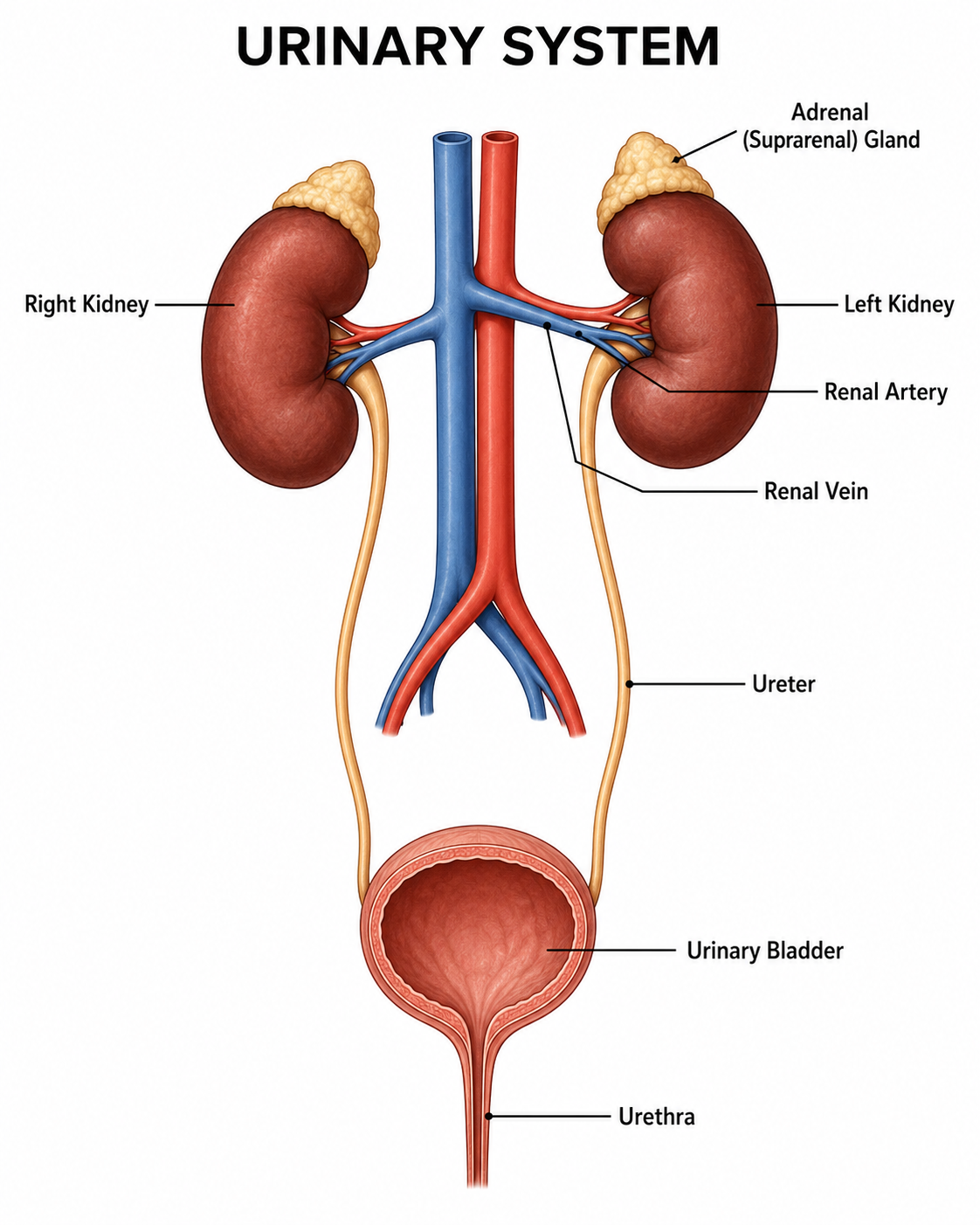
The urinary system, also known as the renal system, is the organ system responsible for filtering waste products and excess water from the blood to produce urine. It consists of four main organs: the kidneys, ureters, urinary bladder, and urethra. The kidneys continuously filter the blood, removing metabolic wastes while maintaining the proper balance of water, electrolytes, and minerals in the body. Besides eliminating waste, the urinary system helps regulate blood pressure, maintains the body's internal balance (homeostasis), supports acid-base balance (pH), and contributes to the production of red blood cells by releasing important hormones. Working continuously throughout life, the urinary system plays a vital role in keeping the body's internal environment clean, balanced, and healthy.
Interactive 3D Human Urinary System

Rotate, zoom and inspect the human Urinary System to explore its structure from every angle.

Urinary System Labelled Illustrations

Urinary System

Human Urinary System

Main Purpose

The urinary system is responsible for filtering the blood, removing wastes, and maintaining the body's internal balance. It helps keep the body healthy by regulating water, salts, and pH levels.

πŸ—‘οΈ

Removes Wastes

Eliminates harmful waste products and toxins from the body through urine.

🩸

Filters Blood

Kidneys continuously filter blood to remove wastes while keeping useful substances.

πŸ’§

Maintains Water Balance

Adjusts the amount of water retained or removed to keep the body properly hydrated.

βš–οΈ

Regulates Salts & pH

Maintains the correct balance of electrolytes and helps keep blood pH within a healthy range.

Major Components

Explore the four major parts of the urinary system to understand how blood is filtered, urine is formed, and wastes are removed from the body.

🫘

Kidneys

The body's natural filters that remove wastes, regulate water, electrolytes, and blood pH.

πŸ’§

Nephron

Discover the microscopic functional unit of the kidney where urine is actually formed.

🚻

Urinary Tract

Explore the ureters, urinary bladder, and urethra that transport, store, and remove urine.

🚰

Urine Formation

Learn how filtration, reabsorption, and secretion work together to produce urine.

🫘 Kidney Structure

Structure of a Kidney

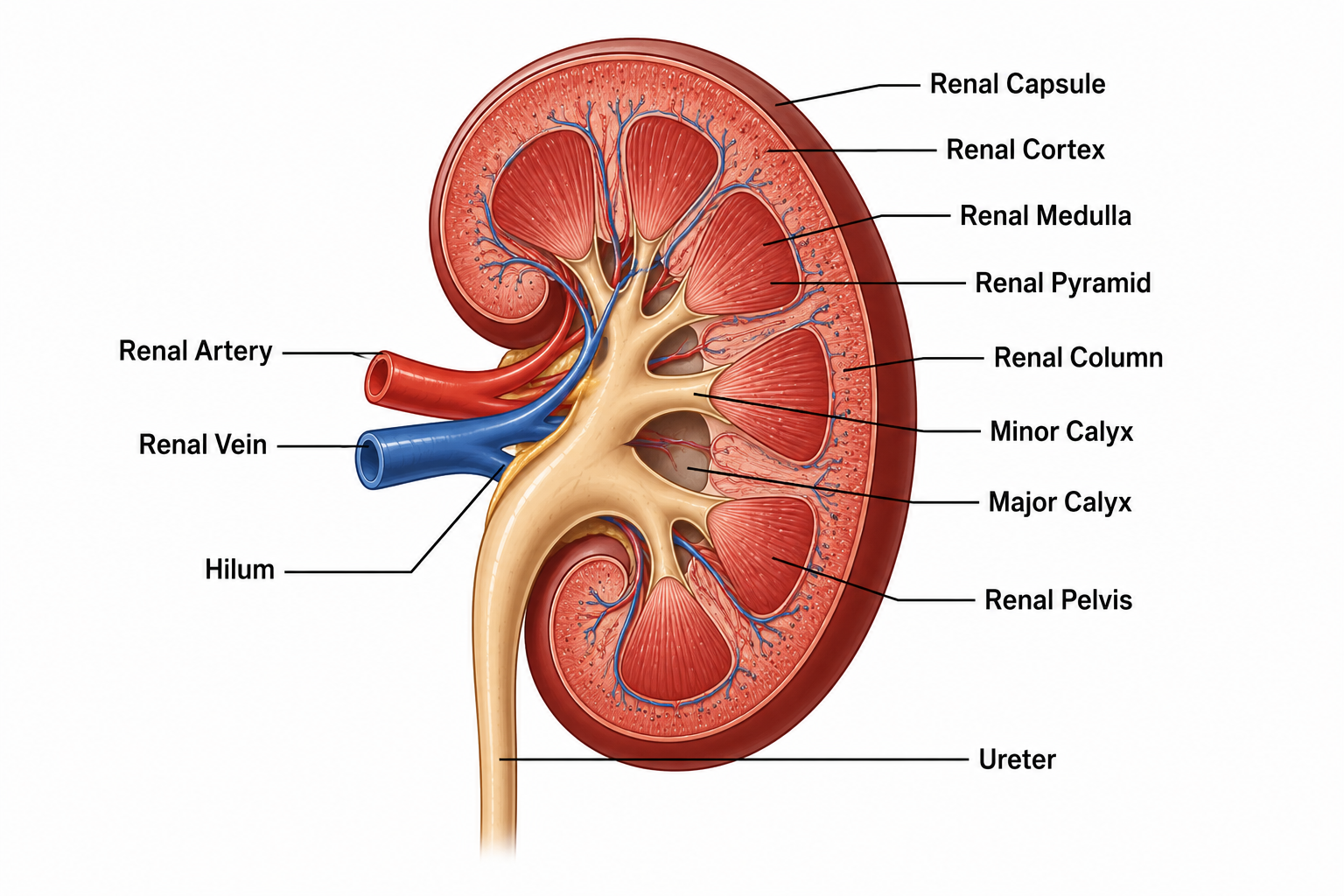
Each kidney is a bean-shaped organ specially designed to filter blood and produce urine. It consists of several important regions that work together to maintain the body's internal balance. The diagram highlights the major parts of the kidney, while detailed information can be explored on the dedicated Kidney page.

Renal Cortex

The outer protective region where blood filtration begins.

Renal Medulla

The inner region containing renal pyramids that help concentrate urine.

Renal Pelvis

A funnel-shaped chamber that collects urine before it enters the ureter.

Renal Artery

Supplies oxygen-rich blood carrying wastes to the kidney for filtration.

Renal Vein

Returns filtered blood from the kidney back to the circulation.

Ureter

A muscular tube that transports urine from the kidney to the urinary bladder.

Structure of the Human Kidney
πŸ”¬ Functional Unit

Nephron Structure

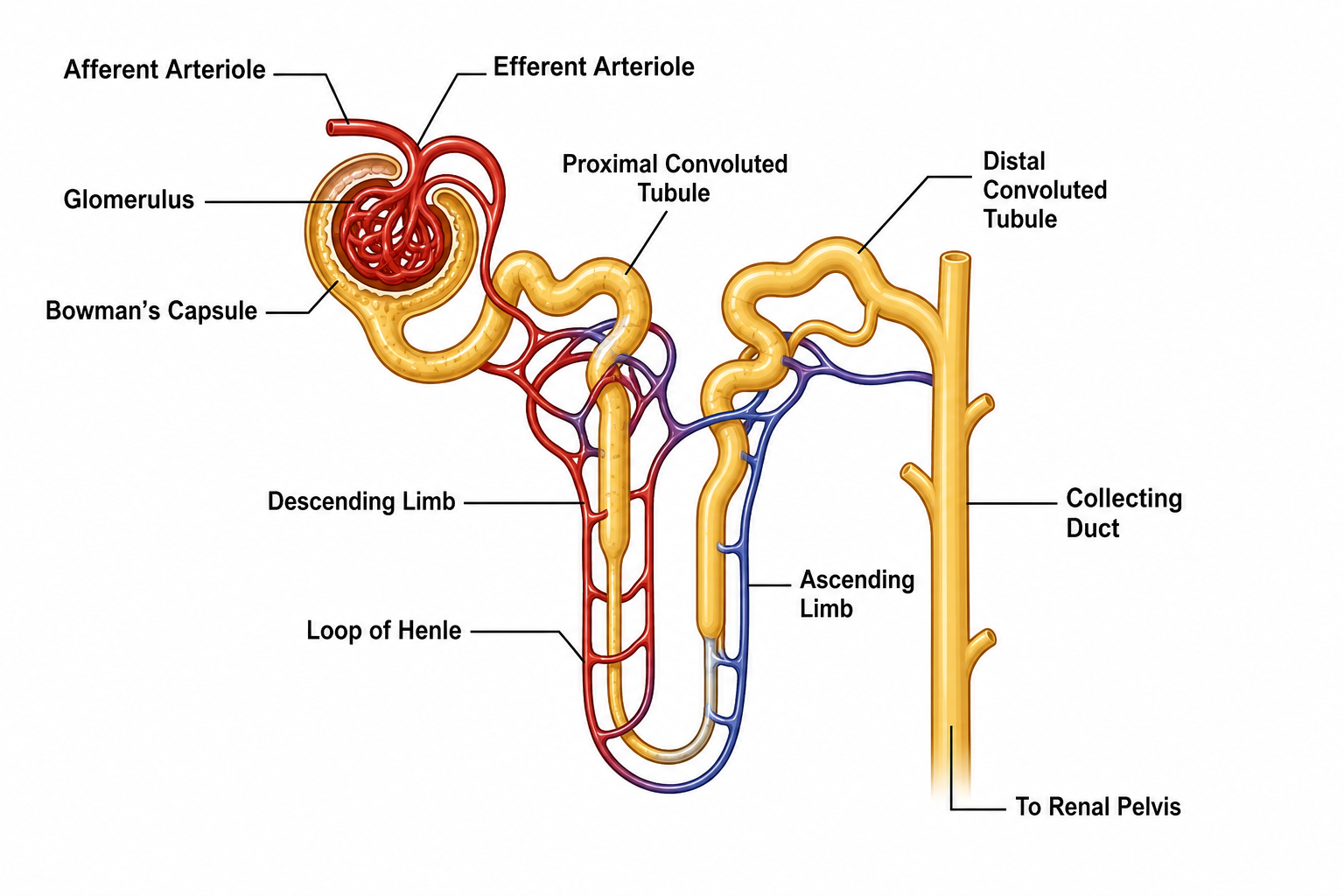
The nephron is the microscopic functional unit of the kidney where urine is formed. Each nephron performs filtration, reabsorption, secretion, and concentration of urine through a series of specialized structures. The illustration highlights the major parts, while complete details are available on the dedicated Nephron page.

πŸ”΄ Glomerulus

A network of tiny capillaries where blood filtration begins.

🟑 Bowman's Capsule

Surrounds the glomerulus and collects the filtered fluid.

🟠 Proximal Convoluted Tubule (PCT)

Reabsorbs most water, nutrients, and useful substances back into the blood.

πŸ”΅ Loop of Henle

Creates a concentration gradient that helps conserve water.

🟒 Distal Convoluted Tubule (DCT)

Fine-tunes the balance of salts, water, and pH.

🟣 Collecting Duct

Collects the final urine and carries it toward the renal pelvis.

Structure of a Nephron
πŸ’§ Urine Formation

How Urine is Formed

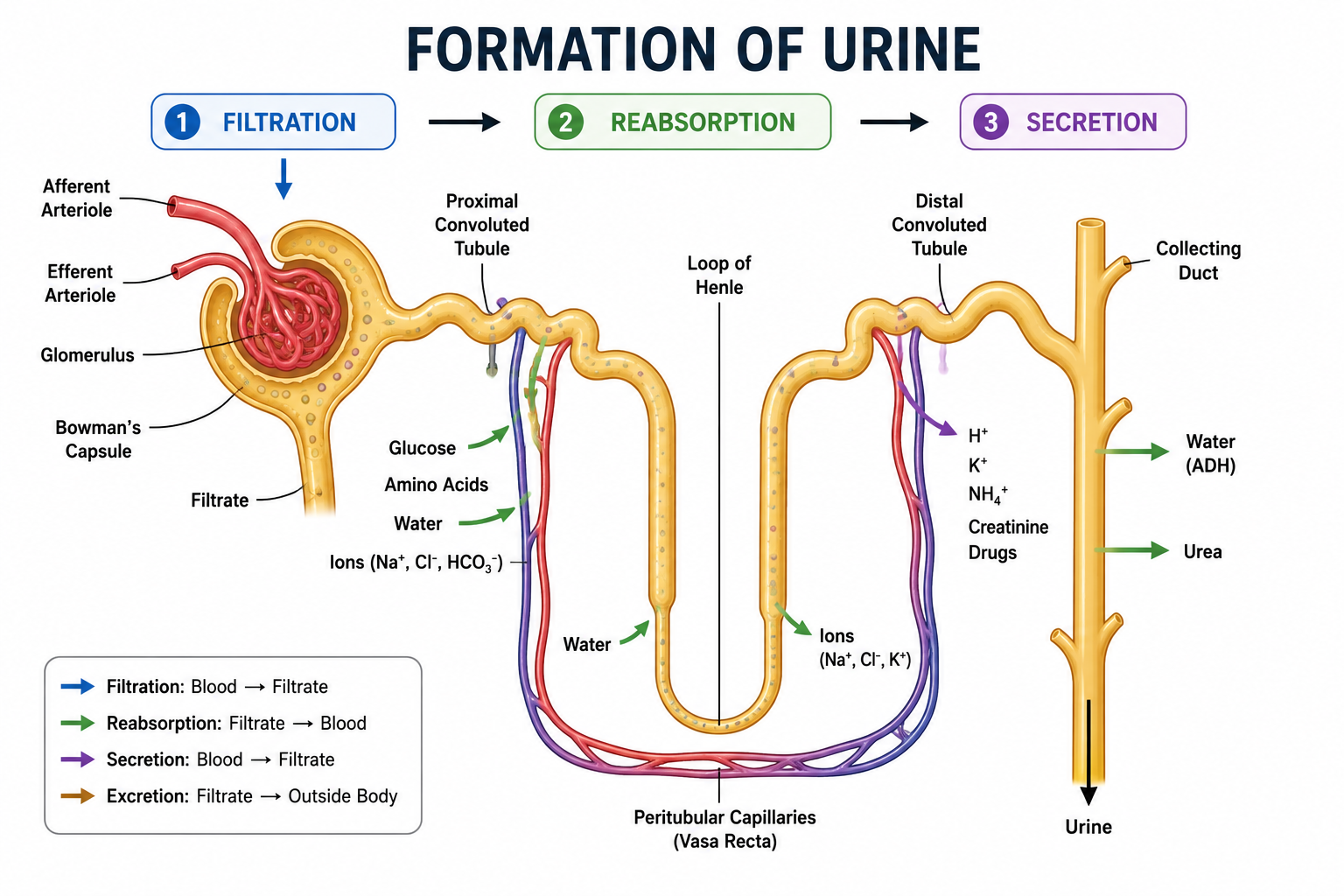
Urine formation takes place inside the nephron through three major steps. Together, these processes remove wastes while conserving useful substances such as water, glucose, and essential ions. The completed urine is then transported to the collecting ducts and eventually reaches the urinary tract.

πŸ§ͺ

Filtration

Blood is filtered inside the glomerulus to produce filtrate.

↓
♻️

Reabsorption

Useful substances are returned from the filtrate to the bloodstream.

↓
βš—οΈ

Secretion

Extra wastes and excess ions are added into the filtrate.

↓
πŸ’§

Urine

The final urine is formed and flows into the collecting duct.

Urine Formation Illustration
πŸ§ͺ Urine Composition

Composition of Normal Urine

Normal urine is mostly water with small amounts of dissolved waste products. These substances are removed from the blood by the kidneys to help maintain the body's internal balance.

Component Approximate Amount
πŸ’§ Water ~95%
πŸ§ͺ Urea ~2%
βš–οΈ Mineral Salts Small Amount
🧬 Uric Acid Trace
🧫 Creatinine Trace
βœ”οΈ

Healthy Urine

Healthy urine normally does not contain glucose, significant amounts of protein, or blood. Their presence may indicate an underlying medical condition and should be evaluated by a healthcare professional.

πŸ§ͺ Laboratory Test

Urinalysis

Urinalysis is one of the most common laboratory tests used to examine urine. It helps doctors evaluate kidney function, detect urinary tract infections, identify metabolic disorders, and monitor overall urinary system health.

🟑

Color

Healthy urine is usually pale yellow. Dark, cloudy, or unusual colors may indicate dehydration, infection, or certain medical conditions.

πŸ§ͺ

pH

Urine pH shows whether urine is acidic or alkaline. Abnormal values may suggest kidney disorders, infections, or dietary changes.

🍬

Glucose

Healthy urine normally contains no glucose. Its presence may indicate diabetes or problems with glucose regulation.

🩸

Blood

Blood is not normally present in urine. It may indicate infection, kidney stones, injury, or kidney disease.

🧫

Protein

Significant amounts of protein in urine may suggest kidney damage, since healthy kidneys usually prevent protein loss.

🩺 Why is Urinalysis Important?

Doctors use urinalysis to assess kidney health, detect urinary tract infections (UTIs), identify metabolic disorders such as diabetes, and monitor many diseases affecting the urinary system.

🩺 Real-Life Biology

Clinical Connections

The urinary system is closely connected to many everyday experiences. These examples show how normal body functions explain common situations that people encounter in daily life.

πŸ§‚

Why does eating too much salt make you thirsty?

Salt increases the concentration of dissolved substances in the blood. The brain responds by creating the sensation of thirst, encouraging you to drink water and restore balance.

πŸ’¦

Why is urine darker when you're dehydrated?

During dehydration, the kidneys conserve more water. As a result, urine becomes more concentrated and appears darker yellow.

β˜•

Why do caffeinated drinks make some people urinate more?

Caffeine has a mild diuretic effect in some people, meaning it may increase urine production by reducing water reabsorption.

πŸͺ¨

How do kidney stones form?

Kidney stones develop when minerals and salts crystallize inside the kidneys, often due to dehydration or high concentrations of certain substances in urine.

πŸ“Š Did You Know?

Interesting Statistics

The urinary system works continuously to maintain the body's internal balance. These fascinating numbers highlight just how efficient and powerful this organ system really is.

πŸ’§

180 L

Approximately 180 liters of filtrate are produced every day.

🫘

2

Healthy humans normally have two kidneys.

♻️

99%

Nearly 99% of filtered water is reabsorbed into the blood.

🩸

20–25%

The kidneys receive about 20–25% of the heart's blood output.

πŸ’¦

1–2 L

Only about 1–2 liters of urine are produced daily.

βš–οΈ

1 Million+

Each kidney contains over one million nephrons.

🚰

2

Two ureters transport urine to the urinary bladder.

🚻

1

The urethra carries urine outside the body.

πŸ§ͺ

24/7

The kidneys filter blood continuously, day and night.

❀️

Vital Role

The kidneys help regulate blood pressure and maintain homeostasis.

Did You Know?

πŸ’¦