Interactive Urinary Tract Labelled Illustration
Parts of the Urinary Tract
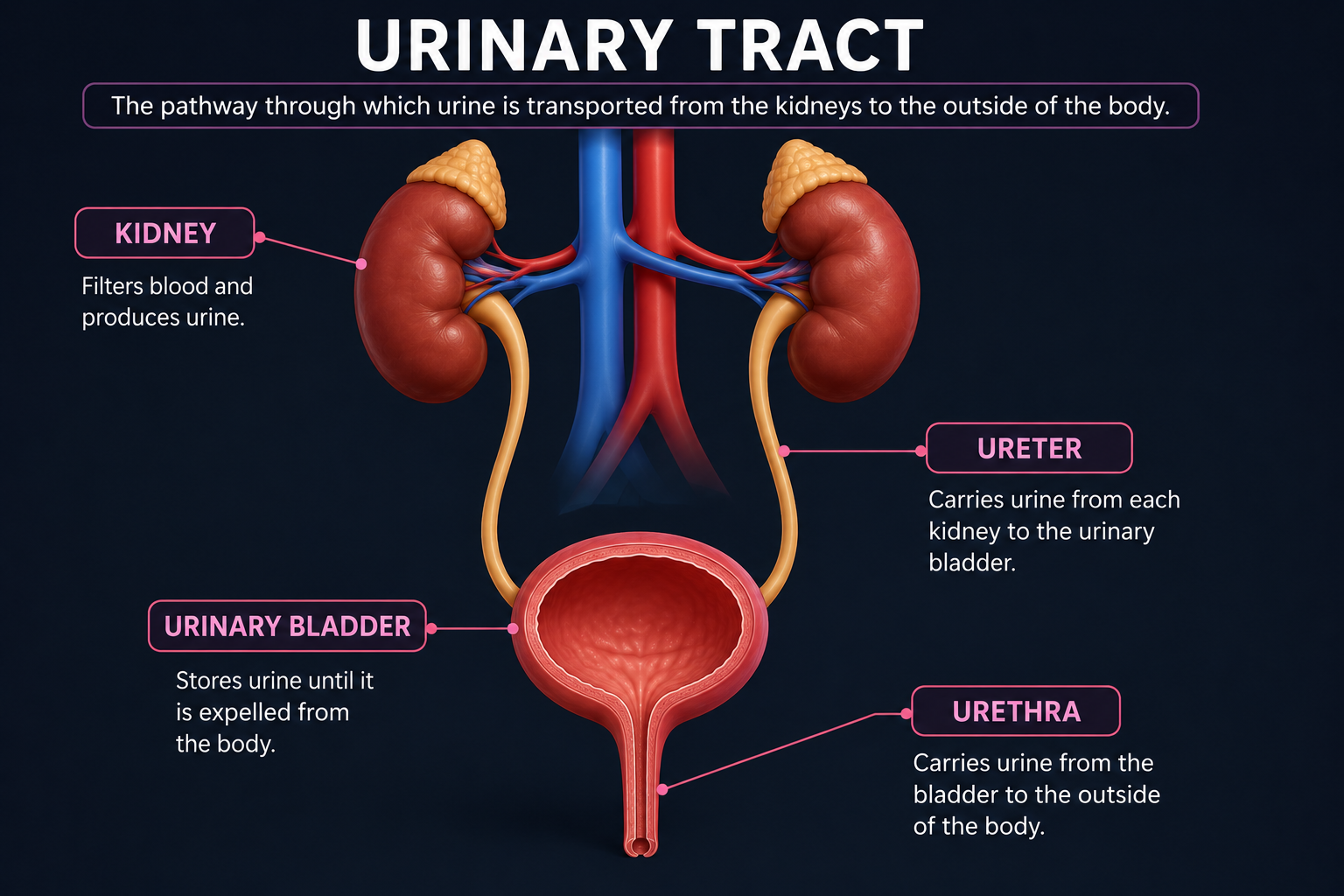
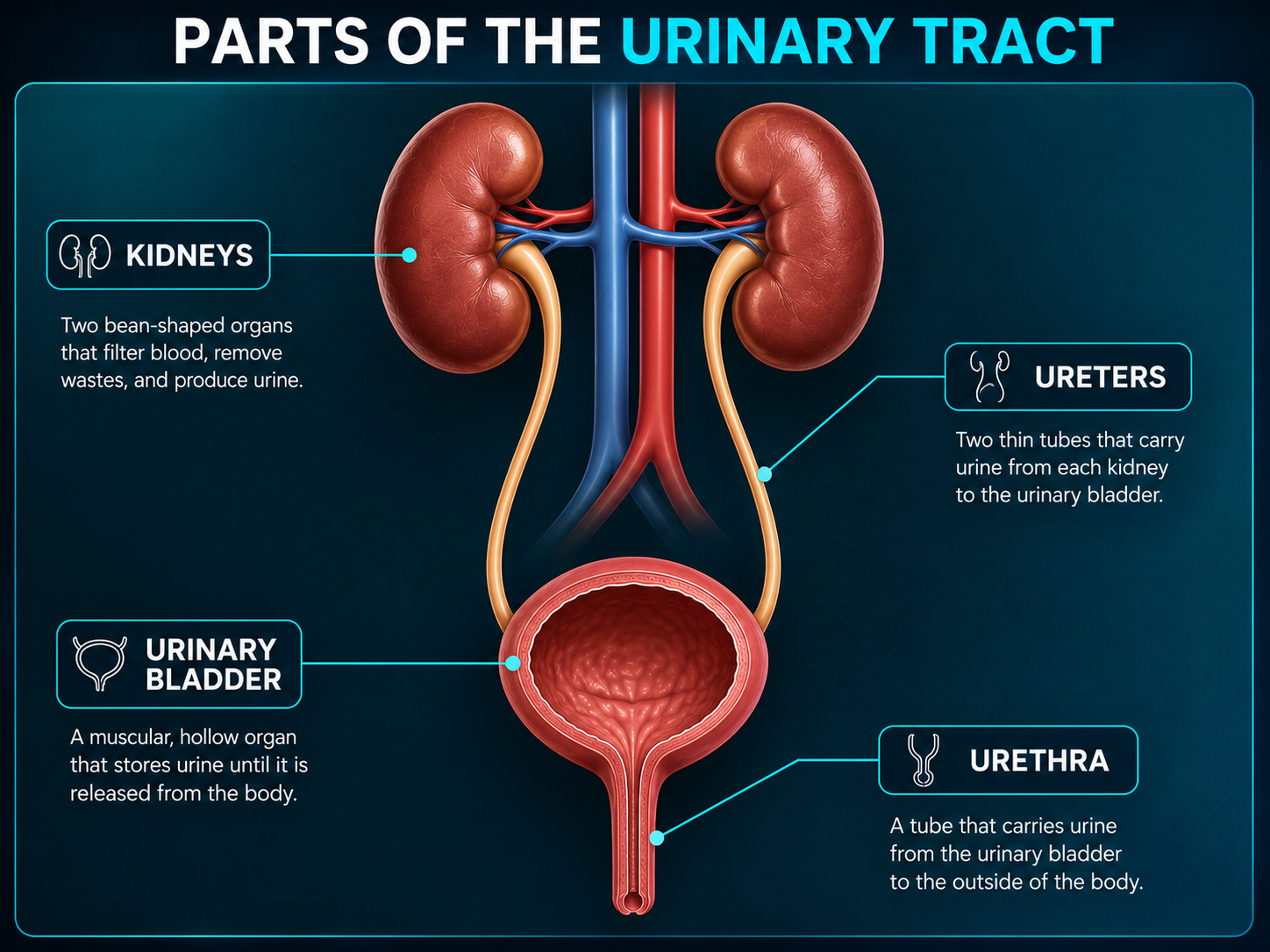
The urinary tract is made up of four main organs that work together to transport, store, and remove urine from the body. Each part has a specific role in ensuring that waste products are safely eliminated while maintaining the body's internal balance.
🫘 Kidneys
The kidneys are two bean-shaped organs that filter the blood, remove wastes and excess water, and produce urine.
🚰 Ureters
The ureters are two narrow muscular tubes that transport urine from each kidney to the urinary bladder through rhythmic contractions.
🫙 Urinary Bladder
The urinary bladder is a flexible, muscular organ that stores urine until it is ready to be released from the body.
🚻 Urethra
The urethra is the final passage through which urine leaves the body during urination.
Urine Pathway
Once urine is formed inside the kidneys, it follows a fixed pathway through the urinary tract before leaving the body. Each organ has a unique role in transporting, storing, or eliminating urine.
🫘 Kidneys
The kidneys continuously produce urine by filtering blood and removing excess water, salts, and waste products.
🚰 Ureters
Two narrow muscular tubes called ureters transport urine from each kidney to the urinary bladder using rhythmic contractions known as peristalsis.
🫙 Urinary Bladder
The urinary bladder temporarily stores urine until it becomes full. Stretch receptors in its wall signal the brain when it is time to urinate.
🚻 Urethra
During urination, urine passes through the urethra, the final tube that carries urine out of the body.
🌍 Outside the Body
After leaving the urethra, urine exits the body, completing the process of removing wastes and helping maintain homeostasis.
Functions of Each Part
Each organ of the urinary tract performs a unique function. Together, they ensure that urine is produced, transported, stored, and finally removed from the body safely and efficiently.
Kidneys
The kidneys filter the blood, remove wastes and excess water, regulate the body's fluid balance, and produce urine.
Ureters
The ureters are two muscular tubes that carry urine from the kidneys to the urinary bladder through rhythmic contractions called peristalsis.
Urinary Bladder
The urinary bladder temporarily stores urine until it becomes full and the body is ready to release it.
Urethra
The urethra is the final passage that removes urine from the body during the process of urination.
How Urination Occurs
Urination, also called micturition, is a carefully controlled process involving the kidneys, urinary tract, muscles, nerves, and the brain. The following timeline shows how urine is produced, stored, and finally released from the body.
🫘 Kidneys Produce Urine
The kidneys continuously filter the blood and produce urine by removing wastes, excess water, and unwanted substances.
🚰 Ureters Transport Urine
The ureters carry urine from each kidney to the urinary bladder using rhythmic muscular contractions called peristalsis.
🫙 Bladder Fills
The urinary bladder gradually fills with urine and stretches as more urine enters.
🧠 Stretch Receptors Send Signals
Stretch receptors in the bladder wall detect fullness and send nerve signals to the brain, indicating that the bladder is ready to be emptied.
✅ Brain Allows Urination
When it is an appropriate time, the brain sends signals that relax the urinary sphincters and contract the bladder muscles.
🚻 Urethra Releases Urine
Urine passes through the urethra and leaves the body, completing the process of urination.
Keep Your Urinary Tract Healthy
Healthy daily habits help protect the urinary tract, reduce the risk of infections, and keep the kidneys and bladder functioning efficiently.
Drink Enough Water
Drink plenty of clean water every day to help the kidneys produce urine, flush out wastes, and reduce the risk of urinary tract infections and kidney stones.
Don't Hold Urine
Empty your bladder whenever you feel the urge. Holding urine for long periods can increase the risk of bladder infections and discomfort.
Maintain Good Hygiene
Proper personal hygiene helps prevent bacteria from entering the urinary tract, lowering the chances of developing infections.
Eat a Healthy Diet
A balanced diet rich in fruits, vegetables, and whole grains supports kidney function and helps maintain a healthy urinary system.
Treat Infections Early
Seek medical advice if you experience symptoms such as burning during urination, frequent urination, or blood in the urine.
Use Medicines Wisely
Avoid taking unnecessary medicines without medical advice, as some drugs can damage the kidneys when used improperly or excessively.
Interesting Statistics
The urinary tract works continuously throughout your life. These amazing numbers show how efficiently it transports, stores, and removes urine every day.
25–30 cm
The average ureter is about 25–30 centimeters long.
400–600 mL
A healthy urinary bladder can comfortably store around 400–600 milliliters of urine.
6–8 Times
Most healthy adults urinate about 6–8 times per day.
Pale Yellow
Healthy urine is usually pale yellow, indicating proper hydration.
Few Seconds
Urine reaches the bladder within seconds after leaving the kidneys.
Highly Elastic
The bladder expands like a balloon while storing urine and shrinks after emptying.
2 Ureters
The body has two ureters, one connecting each kidney to the bladder.
~300 mL
The brain usually begins receiving signals to urinate when the bladder contains around 300 mL of urine.
Peristalsis
Ureters move urine using wave-like muscular contractions, not gravity.
24 Hours
The urinary tract works continuously day and night, even while you are sleeping.
Amazing Urinary-Tract Facts
Here are some fascinating facts about the Urinary-Tract!
The ureters move urine using peristalsis (wave-like muscle contractions), so urine reaches the bladder even when you're standing on your head!
The urinary bladder can expand several times its empty size without bursting.
Urination is controlled by both the nervous system and special muscles working together.
Your kidneys continue producing urine even while you are sleeping.
Both kidneys produce urine continuously, even if your bladder is already storing urine.
Ureters automatically push urine toward the bladder—you don't have to think about it.
The brain decides when you urinate, but only after receiving signals from the bladder.
Your bladder can stretch greatly while keeping its wall strong and leak-proof.
During sleep, your body usually produces less urine because of increased release of ADH.
A healthy person usually urinates 6–8 times each day.
Drinking enough water helps flush bacteria out of the urinary tract.
Holding urine for too long may increase the risk of urinary tract infections (UTIs).
Each kidney has its own ureter, so there are two ureters in the human body.
The bladder behaves much like a balloon—it expands while filling and shrinks after emptying.
The urinary tract removes waste while helping keep the body's water and salt levels balanced.
The color of urine can quickly change depending on how much water you drink.
Normally, urine flows only in one direction—from the kidneys to the outside of the body.
Special valves where the ureters enter the bladder help prevent urine from flowing backward.
The bladder wall is made of smooth muscle called the detrusor muscle, which contracts during urination.
Your urinary tract works 24 hours a day, every day of your life, without taking a break.
💡 Did you know?
Scientists have discovered that the ureters can push urine uphill. Even if a person is hanging upside down, urine still travels from the kidneys to the bladder because the ureters use powerful wave-like muscular contractions called peristalsis—not gravity.