OVERVIEW

What Is the Circulatory System?

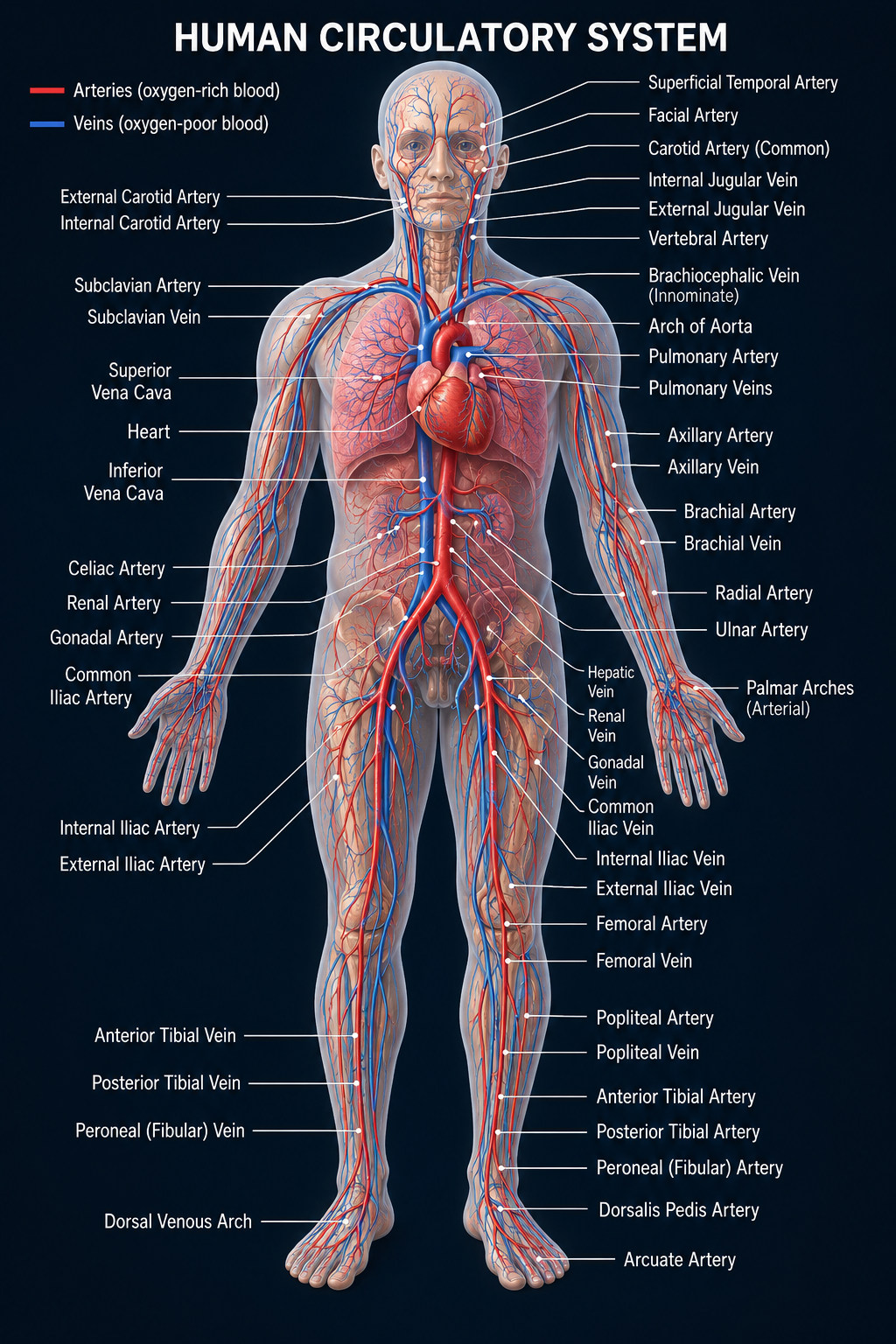
The circulatory system, also known as the cardiovascular system, is a vital organ system responsible for transporting oxygen, nutrients, hormones, and other essential substances to cells throughout the body while removing waste products such as carbon dioxide and metabolic wastes. It consists of three main components: the heart, blood, and a network of blood vessels, including arteries, veins, and capillaries. The heart acts as a powerful pump, continuously circulating blood to ensure that every cell receives the oxygen and nutrients it needs to function properly. In addition to transporting substances, the circulatory system helps regulate body temperature, maintains the body's internal balance (homeostasis), and supports the immune system by carrying disease-fighting cells throughout the body. Working continuously throughout life, it is essential for maintaining overall health and keeping every organ functioning efficiently.
Interactive 3D Human Circulatory System

Rotate, zoom and inspect the human Circulatory System to explore its structure from every angle.

Circulatory System Labelled Illustrations

Circulatory System

Human circulatory System

Main Organs of the Circulatory System

The circulatory system is made up of several organs that work together to transport oxygen, nutrients, hormones, and waste products throughout the body. Each organ has a unique role in keeping the body alive and maintaining homeostasis.

πŸ«€ Heart

The heart is a powerful muscular organ that acts as the body's pump. It beats continuously to circulate blood through the lungs and the rest of the body. The heart has four chambersβ€”two atria and two ventriclesβ€”that work together to ensure oxygen-rich and oxygen-poor blood remain separate.

🩸 Blood

Blood is a specialized connective tissue that transports oxygen, nutrients, hormones, and immune cells throughout the body. It also carries carbon dioxide and other waste products to organs where they can be removed. Blood consists of plasma, red blood cells, white blood cells, and platelets.

🫧 Arteries

Arteries are strong, elastic blood vessels that carry blood away from the heart. Most arteries transport oxygen-rich blood to body tissues, allowing cells to receive the oxygen and nutrients they need for energy and growth.

πŸ”΅ Veins

Veins return blood back to the heart after oxygen and nutrients have been delivered to body tissues. Most veins carry oxygen-poor blood and contain one-way valves that prevent blood from flowing backward.

πŸ•Έ Capillaries

Capillaries are the smallest and thinnest blood vessels in the body. Their extremely thin walls allow oxygen, nutrients, hormones, and waste products to move between the blood and surrounding body cells through diffusion.

Functions of Each Part

Every component of the circulatory system performs a unique function. Together, these parts ensure that oxygen, nutrients, hormones, and other essential substances reach every cell while carrying waste products away for removal.

πŸ«€ Heart

The heart acts as the body's central pump. It continuously pumps oxygen-poor blood to the lungs and oxygen-rich blood to the rest of the body, maintaining a constant circulation.

🩸 Blood

Blood transports oxygen, nutrients, hormones, immune cells, and waste products throughout the body. It also helps regulate body temperature and maintain the body's internal environment.

πŸ”΄ Arteries

Arteries carry blood away from the heart under high pressure. Most arteries transport oxygen-rich blood from the heart to body tissues.

πŸ”΅ Veins

Veins return blood back to the heart. They contain one-way valves that prevent blood from flowing backward, especially in the limbs.

πŸ•Έ Capillaries

Capillaries connect arteries and veins. Their thin walls allow oxygen, nutrients, hormones, carbon dioxide, and other wastes to be exchanged between the blood and body cells.

Explore the Circulatory System

The circulatory system is made up of several interconnected parts. Explore each section to learn how they work together to keep your body alive. Click buttons to explore properly πŸ‘‡

❀️ Cardiovascular System

Learn how the heart, blood, and blood vessels work together to circulate blood throughout the body.

🩸 Blood

Discover the composition of blood and how it transports oxygen, nutrients, hormones, and waste products.

πŸ«€ Heart

Explore the structure of the heart, its chambers, valves, conduction system, and cardiac cycle.

🩺 Blood Vessels

Learn about arteries, veins, capillaries, and how they transport blood throughout the body.

Main Purpose of the Circulatory System

The circulatory system works continuously to keep every cell alive by transporting essential substances throughout the body.

❀️

Keeping the Body Alive

The main purpose of the circulatory system is to transport oxygen, nutrients, hormones, and other essential substances to every cell while carrying away carbon dioxide and metabolic waste products. It also helps maintain body temperature, homeostasis, immunity, and supports the proper functioning of every organ.

Blood Circulation Overview

The circulatory system consists of two main circulation pathways that keep blood moving throughout the body.

🫁

Pulmonary Circulation

❀️ Heart ↓ 🫁 Lungs ↓ ❀️ Heart

Purpose: Oxygenates blood.

🌍

Systemic Circulation

❀️ Heart ↓ 🧍 Body ↓ ❀️ Heart

Purpose: Supplies oxygen and nutrients to body tissues.

πŸ“– Want to explore these pathways in detail? Visit the Cardiovascular System page.

Circulatory System in Numbers

Some incredible numbers that show how hard your circulatory system works every moment of your life.

❀️ 100,000+

Heartbeats every day

🩸 7,500 L

Blood pumped daily

🌐 100,000 km

Total blood vessel length

πŸ”΄ 25 Trillion

Red blood cells in the body

πŸ’§ 5 Liters

Average blood volume

⚑ 60–100

Normal resting heart rate (bpm)

🌍 1 Minute

Time for blood to circulate the body

πŸ«€ 4 Chambers

Heart chambers working together

🫁 2 Loops

Pulmonary & Systemic circulation

🧬 Trillions

Body cells supplied by circulation

Did You Know?

❀️