Interactive Blood Labelled Illustration
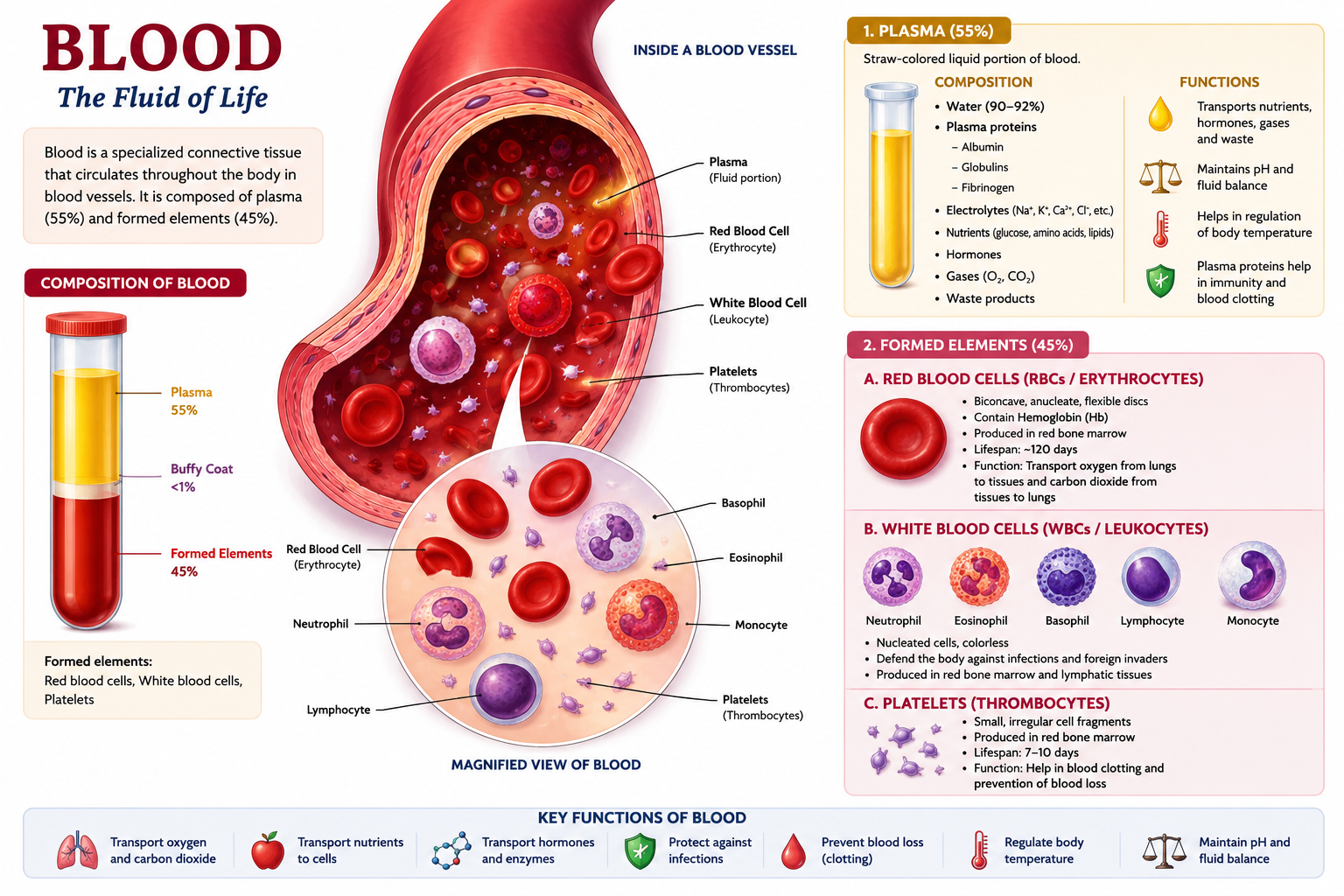
Blood is a specialized connective tissue that circulates throughout the body via the blood vessels. It is composed of a liquid component called plasma and formed elements, including red blood cells (RBCs), white blood cells (WBCs), and platelets. Blood transports oxygen, nutrients, hormones, and other essential substances to body cells while carrying carbon dioxide and waste products away for removal. It also helps regulate body temperature, maintains the body's internal balance (homeostasis), and plays a vital role in immunity and blood clotting, making it essential for life.
Blood is considered a connective tissue because it connects all parts of the body by transporting oxygen, nutrients, hormones, and waste products between different tissues and organs. Like other connective tissues, blood consists of specialized cells suspended in an extracellular matrix called plasma. Although this matrix is liquid rather than solid, it supports and carries the blood cells throughout the body. By linking different organs and maintaining the body's internal environment, blood performs the essential role of a connective tissue.
Blood is a specialized connective tissue composed of a liquid portion called plasma and solid components known as formed elements. Together, these components transport oxygen, nutrients, hormones, and waste products while protecting the body against diseases and helping maintain homeostasis.
Plasma is the pale yellow liquid portion of blood that makes up about 55% of its total volume. It consists mainly of water (about 90%), along with proteins, nutrients, hormones, salts, gases, and waste products. Plasma transports these substances throughout the body and helps regulate body temperature, pH, and fluid balance.
Formed elements make up about 45% of blood and include red blood cells (RBCs), white blood cells (WBCs), and platelets. Red blood cells transport oxygen, white blood cells protect the body against infections, and platelets play an essential role in blood clotting and wound healing.
Blood performs several vital functions that are essential for survival. It acts as the body's transportation system, defense mechanism, and regulatory medium, helping every organ work efficiently and maintaining a stable internal environment.
Red blood cells carry oxygen from the lungs to all body tissues and return carbon dioxide from the tissues back to the lungs for exhalation.
Blood delivers glucose, amino acids, vitamins, minerals, and other nutrients from the digestive system to body cells, providing the energy and materials needed for growth and repair.
Blood carries hormones from endocrine glands to their target organs, allowing different parts of the body to communicate and coordinate their activities.
White blood cells and antibodies present in blood protect the body by destroying harmful microorganisms and fighting infections.
Platelets and clotting proteins help stop bleeding by forming blood clots, preventing excessive blood loss and allowing damaged tissues to heal.
Blood distributes heat throughout the body and helps maintain a stable body temperature by carrying excess heat to the skin.
Blood contains buffer systems that help maintain the body's normal pH, ensuring cells function properly.
Plasma proteins help regulate the movement of water between the blood and body tissues, maintaining proper fluid balance.
Blood transports carbon dioxide, urea, and other metabolic wastes to the lungs, kidneys, and skin, where they are removed from the body.
Blood consists of four major components. Click on each component to learn more.
Blood consists of two major parts: Plasma and Formed Elements. Plasma is the liquid portion of blood, while formed elements include red blood cells, white blood cells, and platelets. Together, these components perform all the essential functions of blood.
Plasma is the straw-colored liquid portion of blood. It transports nutrients, hormones, proteins, gases, and waste products throughout the body while maintaining temperature, pH, and fluid balance.
Formed elements are the cellular components of blood and include:
Click on the component cards above to explore each one in detail.
Blood clotting, also known as coagulation, is the body's natural mechanism for preventing excessive blood loss after an injury. It involves a series of carefully coordinated steps that rapidly seal damaged blood vessels.
A blood vessel is damaged and bleeding begins.
Platelets stick to the damaged area and form a temporary platelet plug.
Clotting proteins become activated in a chain reaction.
Fibrin threads form a strong mesh around the platelets.
A stable clot seals the wound, preventing further bleeding while healing begins.
The ABO blood group system is based on the presence or absence of specific antigens on the surface of red blood cells and the antibodies present in plasma. It is the most important blood grouping system used in blood transfusions.
| Blood Group | Antigen Present | Antibody Present |
|---|---|---|
| 🅰 A | A | Anti-B |
| 🅱 B | B | Anti-A |
| 🆎 AB | A & B | None |
| 🅾 O | None | Anti-A & Anti-B |
Individuals with Rh-positive blood have the Rh (D) antigen present on the surface of their red blood cells. Approximately 85% of the world's population is Rh positive.
Individuals with Rh-negative blood do not have the Rh (D) antigen. Rh compatibility is extremely important during blood transfusions and pregnancy.
Select a blood group to discover which blood types it can donate to and receive from.
Click any blood group above to view its donation compatibility.
Select a blood group to learn an interesting fact.
Discover some fascinating facts about the incredible circulatory system and how it keeps your body alive every second.
During an average lifetime, your heart beats over 3 billion times and pumps enough blood to fill more than 200 Olympic-sized swimming pools!