Main Functions of the Cardiovascular System
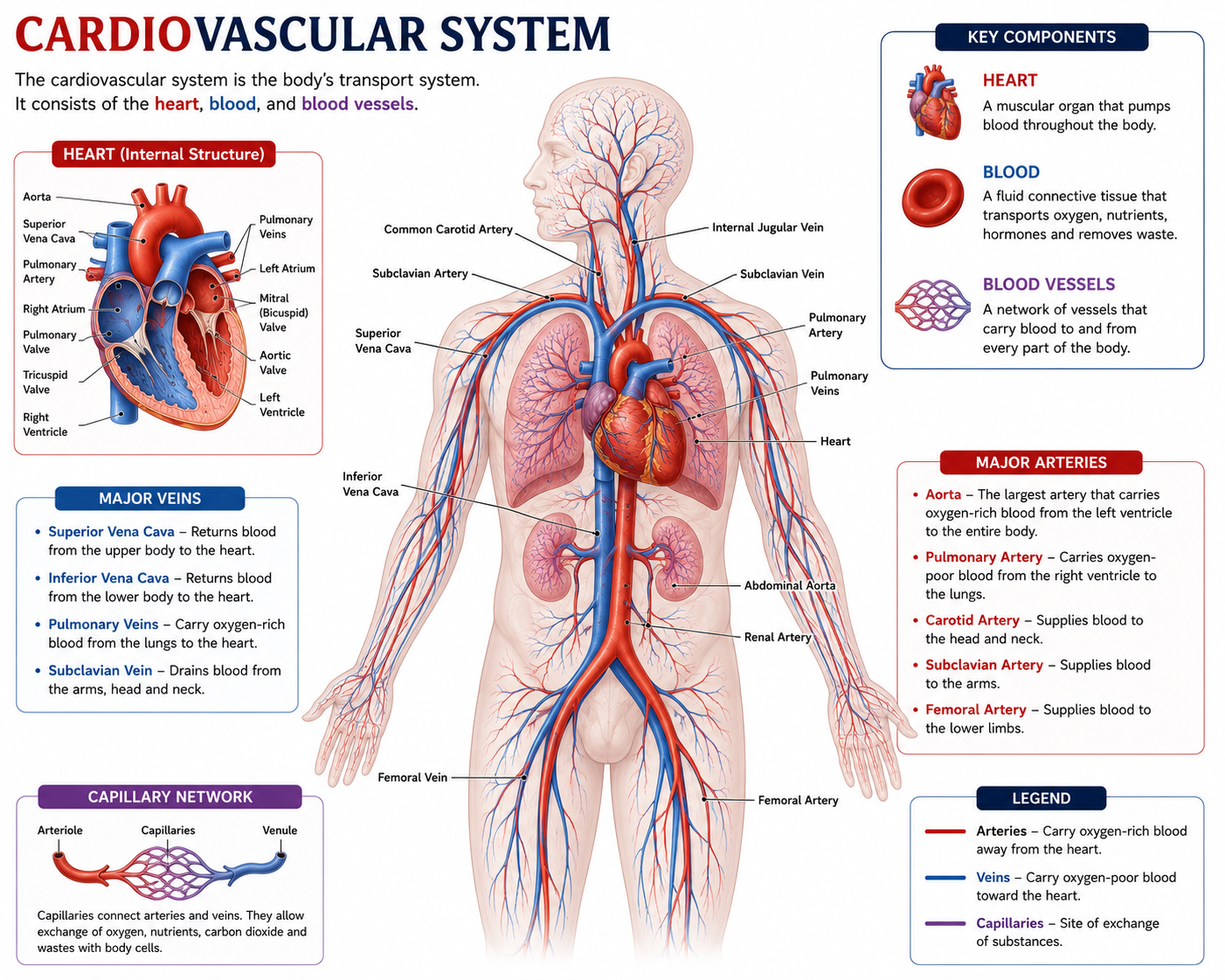
The cardiovascular system performs several essential functions that keep the body alive by transporting substances, maintaining balance, and protecting against disease.
Pump Blood
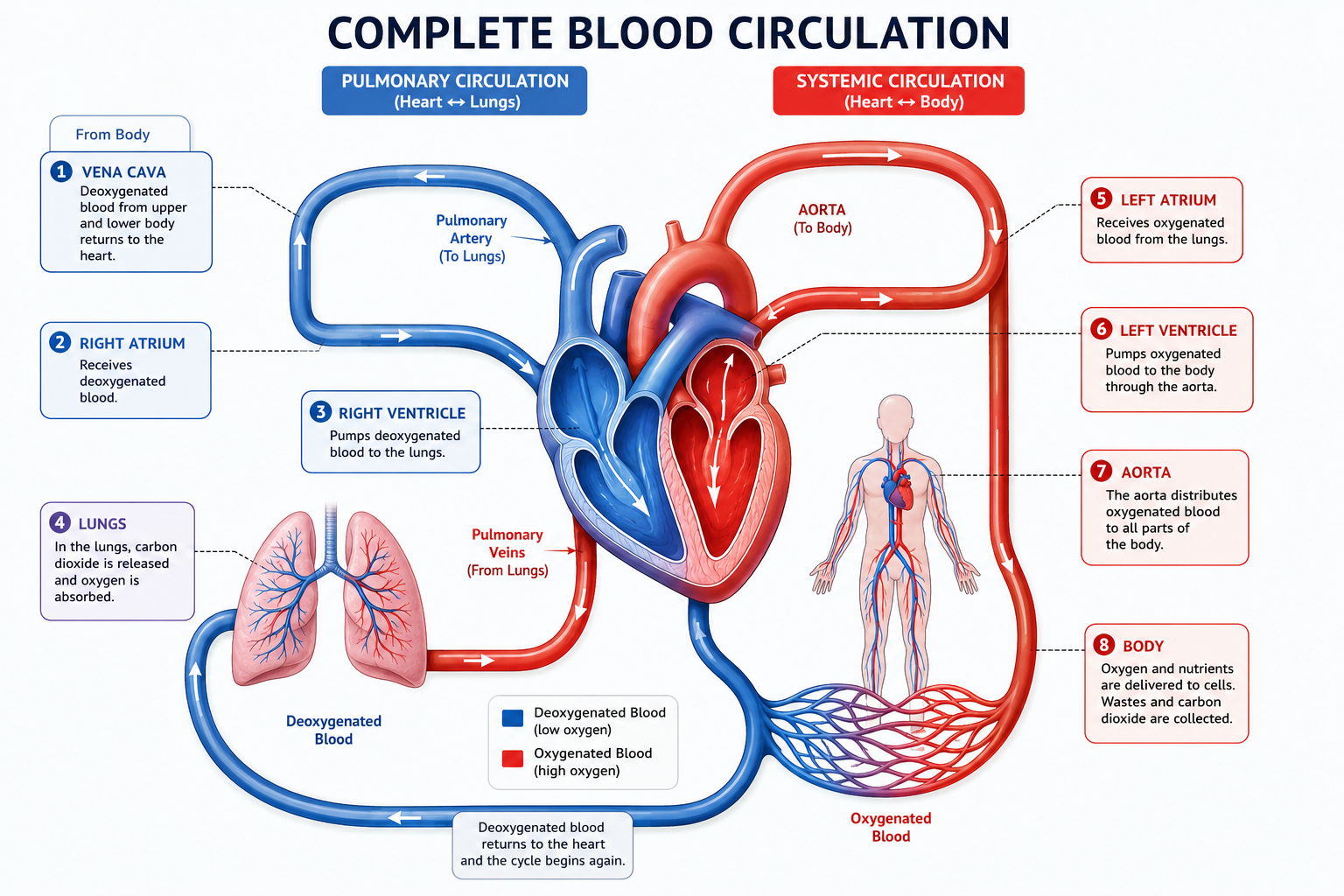
The heart continuously pumps blood throughout the body, supplying every organ with the circulation it needs.
Deliver Oxygen
Blood carries oxygen from the lungs to body tissues, supporting cellular respiration and energy production.
Deliver Nutrients
Nutrients absorbed from the digestive system are transported to cells for growth, repair, and energy.
Remove Wastes
Blood collects carbon dioxide and other metabolic wastes, carrying them to organs for removal.
Fight Infections
White blood cells and antibodies circulate in the bloodstream to protect the body from harmful pathogens.
Regulate Temperature
Blood distributes heat throughout the body, helping maintain a stable internal temperature.
Transport Hormones
Hormones released by endocrine glands travel through the bloodstream to reach their target organs.