OVERVIEW

What Is the Respiratory System?

Respiratory System

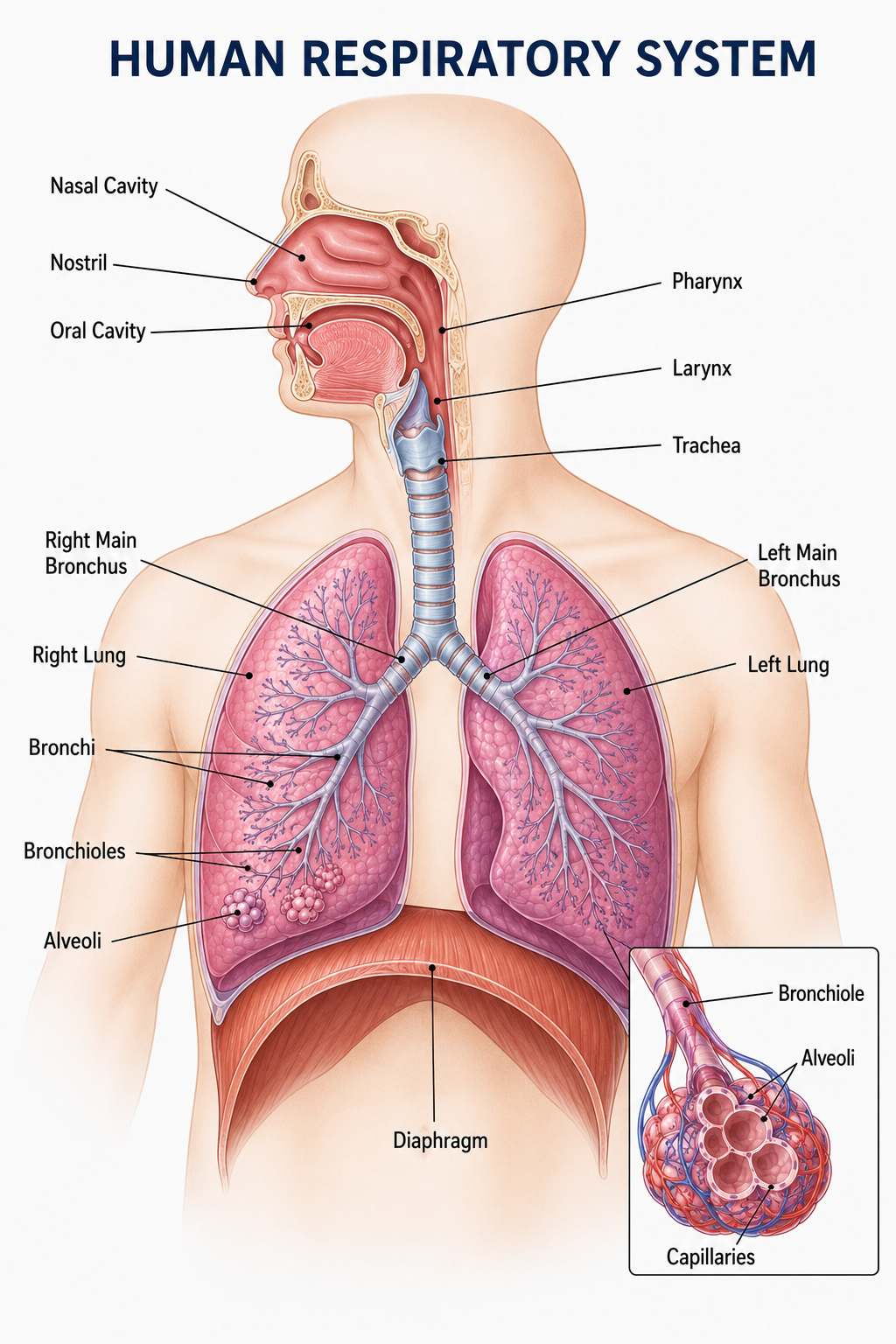
The respiratory system is a vital organ system responsible for the exchange of oxygen and carbon dioxide between the body and the environment. It consists of several organs, including the nose, pharynx, larynx, trachea, bronchi, lungs, and alveoli, which work together to carry out the process of breathing. During inhalation, oxygen-rich air enters the lungs, where oxygen diffuses across the thin walls of the alveoli into the bloodstream, while carbon dioxide diffuses from the blood into the alveoli to be exhaled. This continuous exchange of gases supplies the body's cells with the oxygen needed for cellular respiration and energy production while removing carbon dioxide, a waste product of metabolism. In addition to gas exchange, the respiratory system helps regulate the body's acid-base (pH) balance, enables speech through the larynx, supports the sense of smell, and filters, warms, and humidifies the air before it reaches the lungs. Working closely with the circulatory system, it ensures that oxygen is delivered to every cell and carbon dioxide is efficiently removed, making it essential for maintaining homeostasis, overall health, and life itself.
Interactive 3D Human Respiratory System

Rotate, zoom and inspect the human Respiratory System to explore its structure from every angle.

Respiratory System Labelled Illustrations

Respiratory System

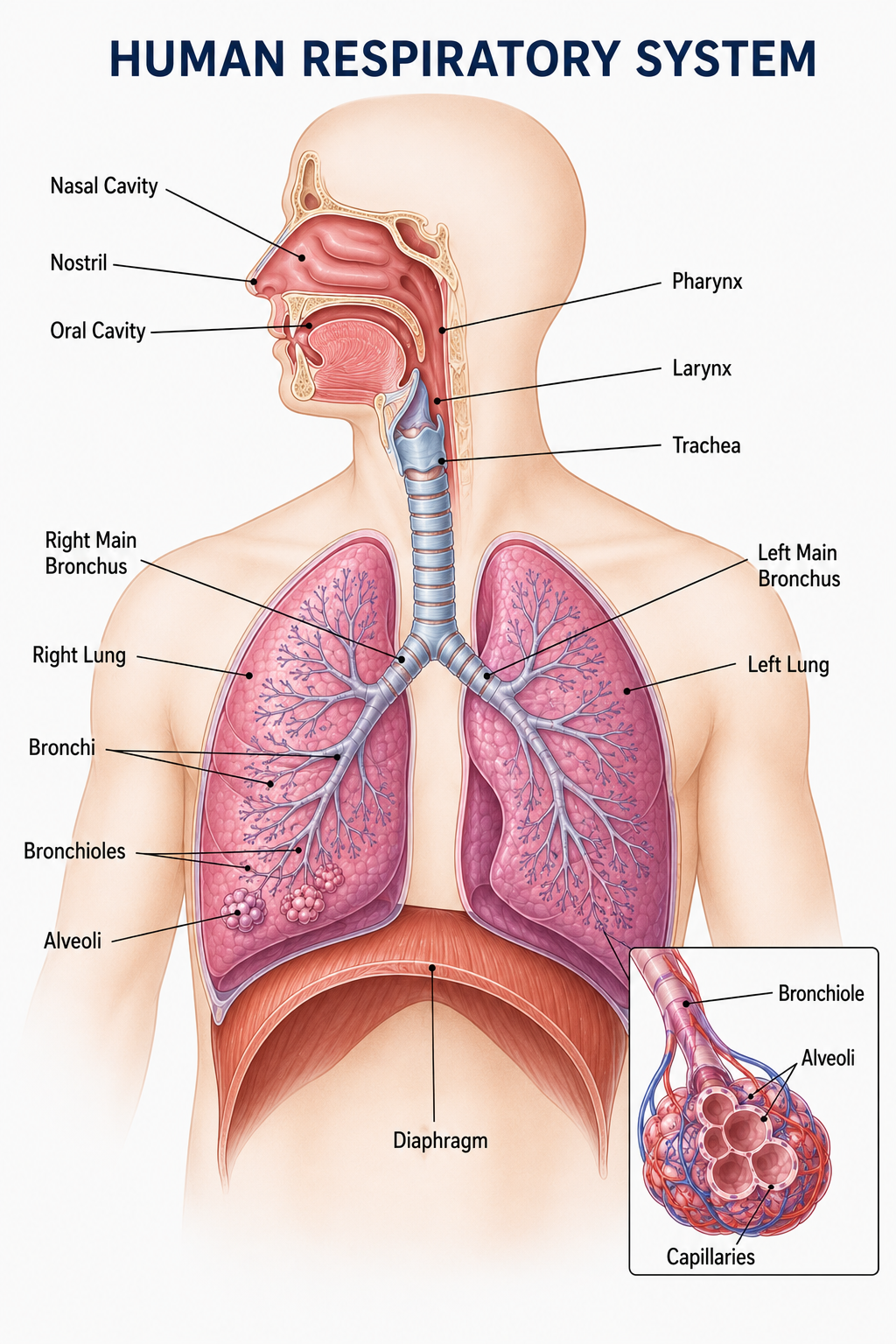
Human Respiratory System

🫁 Main Purpose of the Respiratory System

The respiratory system is responsible for supplying the body with oxygen (O₂) and removing carbon dioxide (CO₂). Every breath provides oxygen needed by body cells to produce energy and removes waste gases formed during cellular activities. It works closely with the circulatory system to transport oxygen to every part of the body and carry carbon dioxide back to the lungs for exhalation.

🫁

Supply Oxygen

Brings oxygen into the lungs, where it enters the bloodstream and is delivered to all body cells.

💨

Remove Carbon Dioxide

Removes carbon dioxide, a waste product of cellular respiration, from the body through exhalation.

❤️

Works with the Circulatory System

Oxygen enters the blood in the lungs, while carbon dioxide is carried back to the lungs to be exhaled.

Supports Cellular Respiration

Provides the oxygen required by cells to release energy from food, keeping the body alive and functioning.

Organs

🫁 Respiratory Organs

The respiratory system consists of several organs that work together to move air into the lungs, exchange gases, and remove carbon dioxide from the body. Each organ has a unique role in the breathing process.

Respiratory System
👃

Nose

The nose is the main entrance for air. It filters dust and germs, warms the air, and adds moisture before it reaches the lungs.

👄

Mouth

The mouth provides an alternate pathway for air, especially during heavy exercise or when the nose is blocked.

🗣

Pharynx

The pharynx, or throat, is a shared passage that carries air to the larynx and food to the esophagus.

🎤

Larynx

Also called the voice box, the larynx contains the vocal cords and directs air into the trachea.

🌬

Trachea

The trachea, or windpipe, carries air from the larynx to the bronchi. Rings of cartilage keep it open during breathing.

🌳

Bronchi

The trachea divides into two bronchi, one leading to each lung, carrying air deeper into the respiratory system.

🌿

Bronchioles

Bronchi divide into thousands of smaller bronchioles that distribute air evenly throughout the lungs.

🫧

Alveoli

Alveoli are tiny air sacs where oxygen enters the blood and carbon dioxide leaves the blood through diffusion.

🫁

Lungs

The lungs are the main organs of respiration. They contain millions of alveoli where gas exchange takes place.

🫀

Diaphragm

The diaphragm is a dome-shaped muscle beneath the lungs. It contracts during inhalation and relaxes during exhalation, helping move air in and out of the lungs.

Journey

🌬 Journey of Air

Every breath follows a specific pathway through the respiratory system. Along this route, the air is filtered, warmed, and finally reaches the alveoli, where oxygen enters the blood and carbon dioxide leaves the body.

🌬

Air

Breathing begins when air from the environment enters the respiratory system.

👃

Nose

The nose filters dust and microorganisms while warming and moistening the air.

🗣

Pharynx

The pharynx acts as a shared passage that carries air from the nose and mouth toward the larynx.

🎤

Larynx

The larynx, or voice box, directs air into the trachea while producing sound through the vocal cords.

🌬

Trachea

The trachea carries air safely toward the lungs and remains open with the help of cartilage rings.

🌳

Bronchi

The trachea divides into two bronchi, one entering each lung to deliver air.

🌿

Bronchioles

The bronchi branch into thousands of tiny bronchioles that spread air throughout the lungs.

🫧

Alveoli

Tiny air sacs where oxygen diffuses into the bloodstream and carbon dioxide diffuses out to be exhaled.

🌬 Breathing vs ⚡ Respiration

Although the terms breathing and respiration are often used interchangeably, they are actually two different processes. Breathing is the movement of air, while respiration is the chemical process that releases energy inside body cells.

🌬

Breathing

Breathing is the physical process of inhaling oxygen-rich air into the lungs and exhaling carbon dioxide-rich air out of the body.

Key Points
  • ✔ Physical process
  • ✔ Occurs in the lungs
  • ✔ Involves inhalation and exhalation
  • ✔ Brings oxygen into the body
  • ✔ Removes carbon dioxide

Respiration

Respiration is the chemical process inside body cells where oxygen is used to break down food and release energy needed for all life processes.

Key Points
  • ✔ Chemical process
  • ✔ Occurs inside cells
  • ✔ Uses oxygen
  • ✔ Releases energy (ATP)
  • ✔ Produces carbon dioxide and water

🫧 Gas Exchange

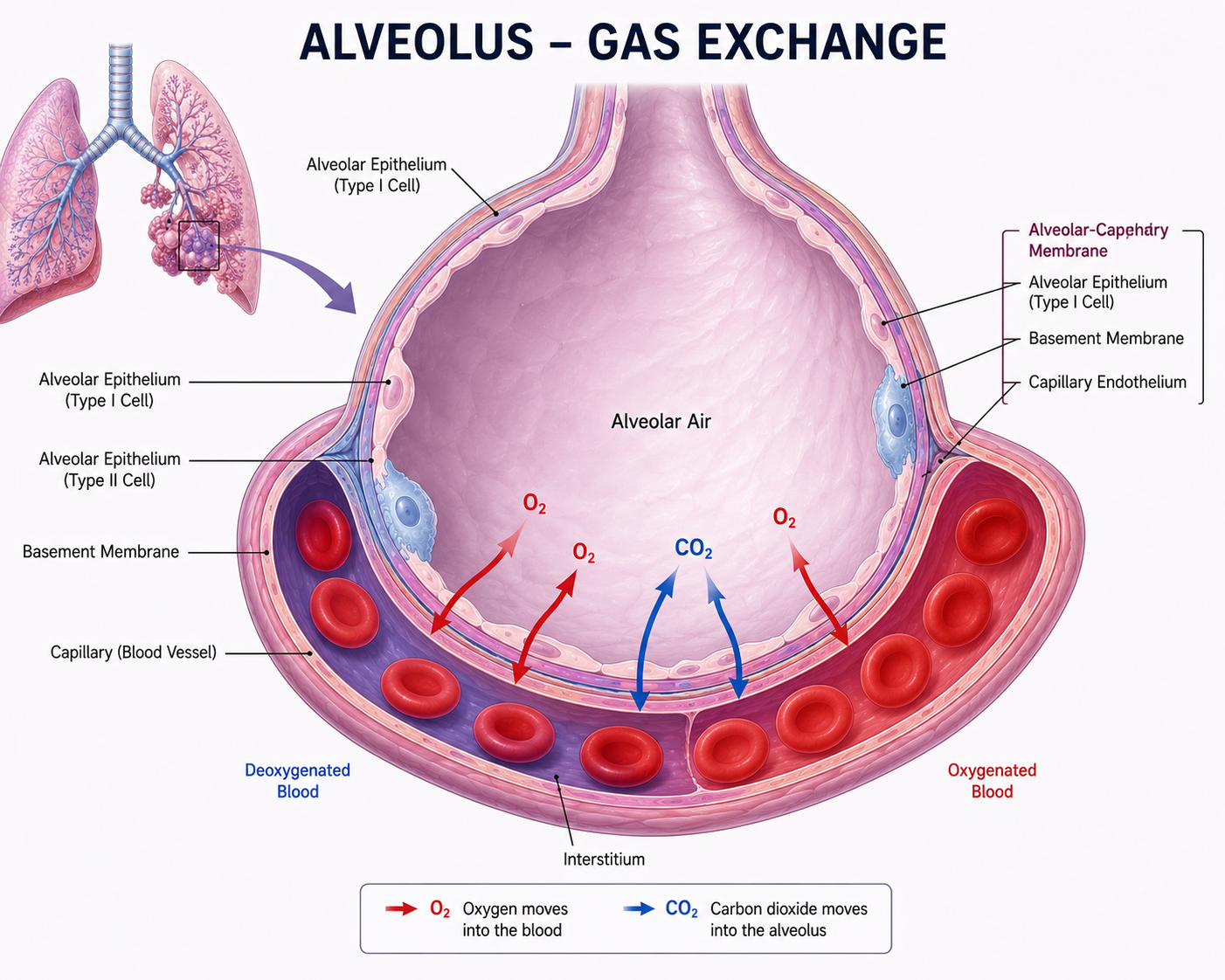
Gas exchange takes place inside the tiny alveoli of the lungs. Oxygen from the inhaled air diffuses through the thin walls of the alveoli into the surrounding blood capillaries, while carbon dioxide moves from the blood into the alveoli to be removed during exhalation.

Gas Exchange in Alveolus
🫧

Oxygen → Blood

Oxygen enters the alveoli during inhalation and diffuses through the thin alveolar walls into the surrounding blood capillaries. The oxygen then binds to hemoglobin inside red blood cells and is transported throughout the body.

🫧 O₂ ➜➜➜ 🩸 Blood
🩸

Carbon Dioxide → Alveoli

Carbon dioxide produced by body cells is carried by the blood back to the lungs. It diffuses from the blood capillaries into the alveoli, from where it is removed during exhalation.

🩸 Blood ➜➜➜ 🫧 CO₂

🫧 Alveoli

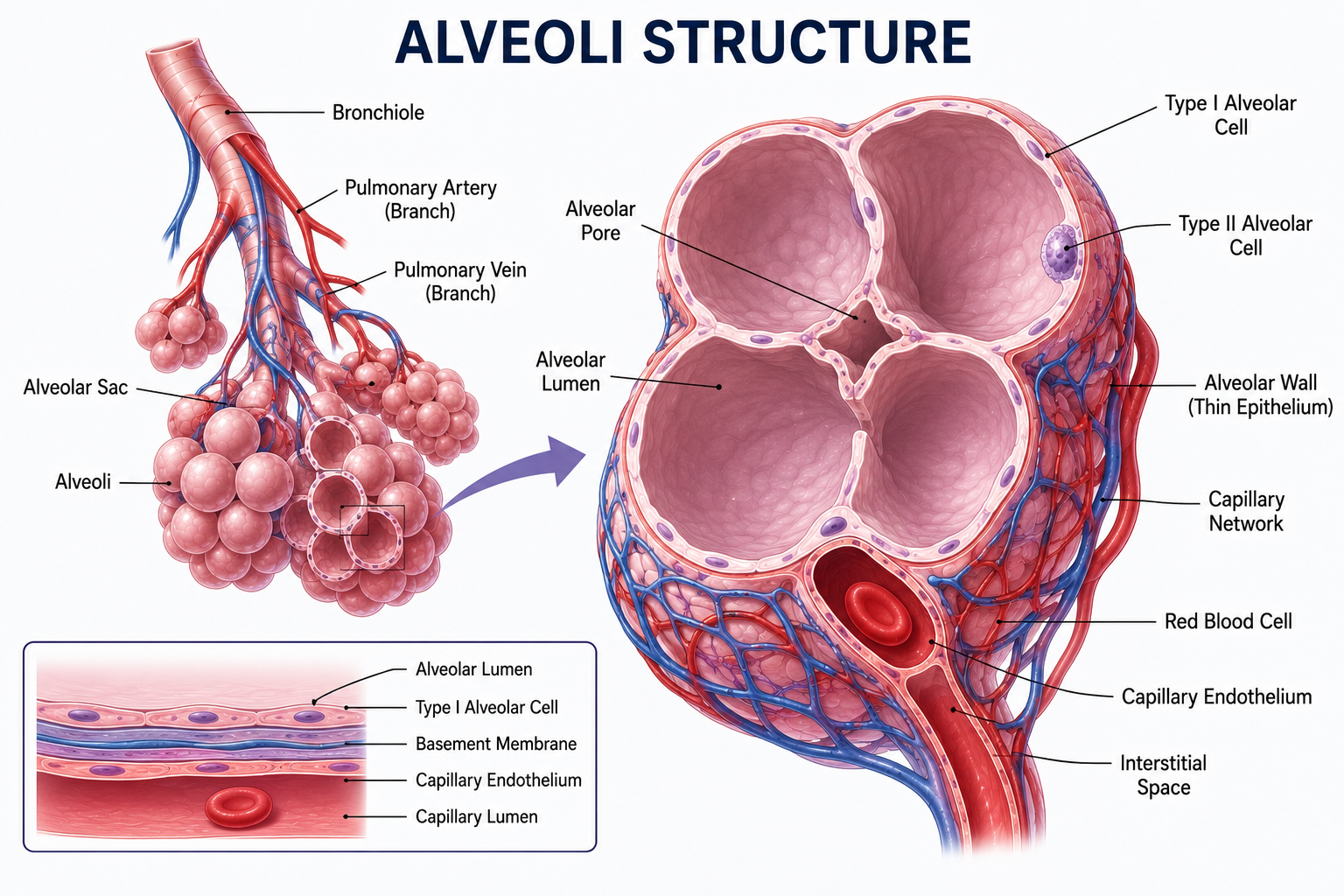
Alveoli are tiny balloon-like air sacs located at the ends of the bronchioles. They are the primary site of gas exchange, allowing oxygen to enter the bloodstream while carbon dioxide leaves the body. Millions of alveoli work together to provide a huge surface for efficient breathing.

Structure of an Alveolus
📄

Thin Walls

Each alveolus has walls that are only one cell thick, allowing oxygen and carbon dioxide to diffuse rapidly between the air and the blood.

🩸

Surrounded by Capillaries

Every alveolus is wrapped in a network of tiny blood capillaries, ensuring oxygen enters the blood while carbon dioxide is removed efficiently.

🫧

Large Surface Area

The lungs contain about 300 million alveoli, providing an enormous surface area for maximum gas exchange.

💧

Moist Lining

A thin layer of moisture lines the alveoli, allowing oxygen and carbon dioxide to dissolve easily before diffusing across the membrane.

🌬 Mechanism of Breathing

Breathing occurs in two continuous phases: inhalation and exhalation. These movements are controlled mainly by the diaphragm and the intercostal muscles, which change the size of the chest cavity to move air in and out of the lungs.

😮

Inhalation (Breathing In)

During inhalation, the diaphragm contracts and moves downward while the ribs move upward and outward. This increases the volume of the chest cavity, creating lower air pressure inside the lungs. As a result, air flows into the lungs.

What Happens?
  • ✅ Diaphragm contracts and flattens
  • ✅ Chest cavity expands
  • ✅ Lung volume increases
  • ✅ Air pressure decreases
  • ✅ Air enters the lungs
😤

Exhalation (Breathing Out)

During exhalation, the diaphragm relaxes and returns to its dome shape. The ribs move downward and inward, reducing the volume of the chest cavity. The increased air pressure forces carbon dioxide-rich air out of the lungs.

What Happens?
  • ✅ Diaphragm relaxes
  • ✅ Chest cavity becomes smaller
  • ✅ Lung volume decreases
  • ✅ Air pressure increases
  • ✅ Air leaves the lungs

🫁 Lung Capacity

Lung capacity refers to the different volumes of air the lungs can hold or move during breathing. These measurements help doctors understand how efficiently the lungs are functioning.

🫁

Tidal Volume (TV)

The amount of air inhaled or exhaled during a normal, relaxed breath. In adults, it is about 500 mL.

🌬

Vital Capacity (VC)

The maximum amount of air that can be exhaled after taking the deepest possible breath. It represents the working capacity of the lungs.

💨

Residual Volume (RV)

The amount of air that remains inside the lungs after a forceful exhalation. It prevents the lungs from collapsing completely.

🚭 Smoking & Lung Health

Healthy lungs efficiently exchange oxygen and carbon dioxide, allowing the body to function properly. Smoking introduces harmful chemicals that gradually damage the lungs, reducing their ability to breathe effectively and increasing the risk of serious respiratory diseases.

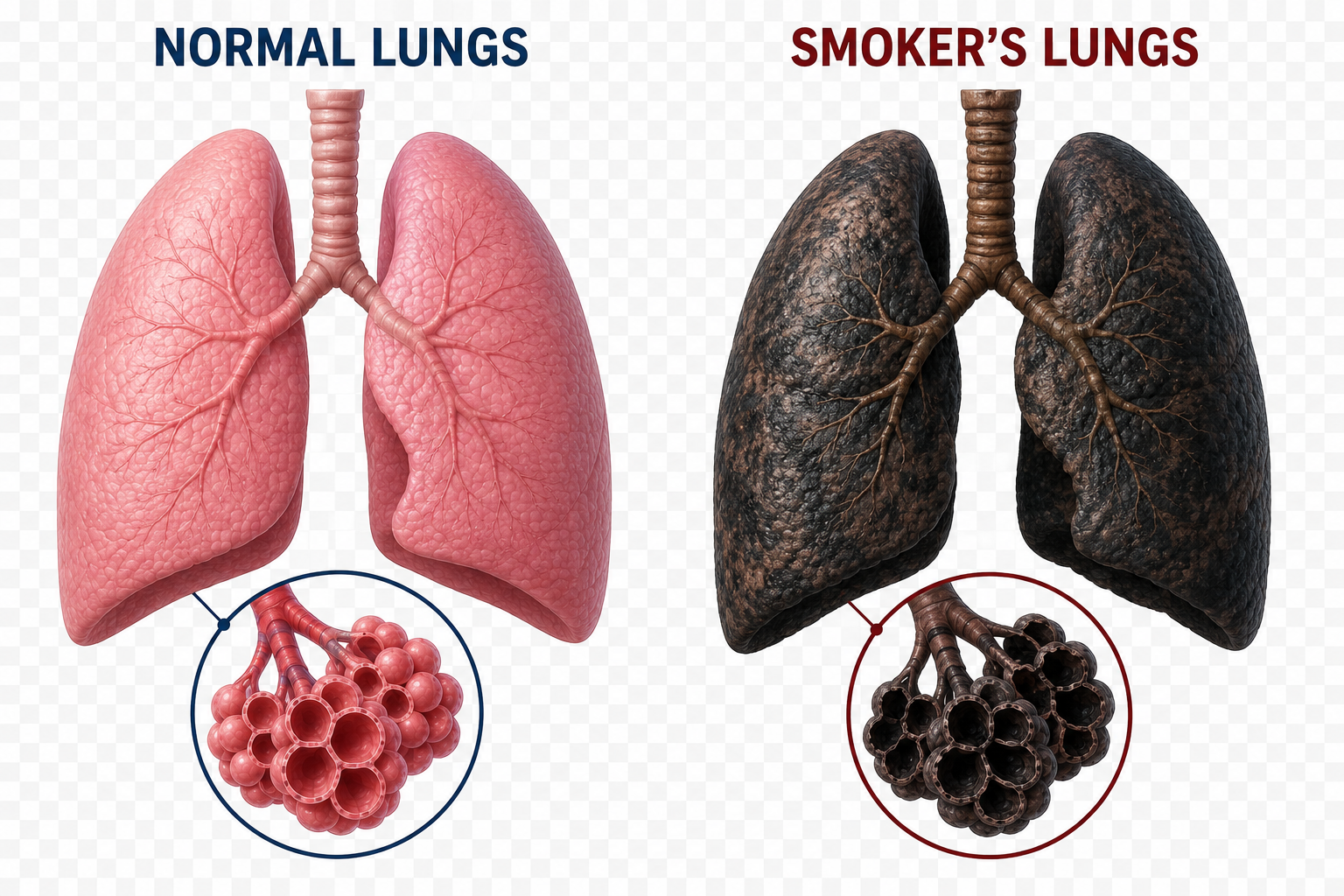
Healthy Lungs vs Smoker's Lungs
🫁

Healthy Lungs

Healthy lungs are pink, clean, and elastic. Their alveoli efficiently exchange oxygen with the blood, making breathing easy and supplying the body with enough oxygen for daily activities.

Characteristics
  • ✅ Clean airways
  • ✅ Healthy alveoli
  • ✅ Efficient gas exchange
  • ✅ Normal breathing
  • ✅ Better stamina
🚬

Smoker's Lungs

Smoking causes the lungs to become darker and damaged. Harmful chemicals destroy alveoli, increase mucus production, and reduce the lungs' ability to absorb oxygen efficiently.

Effects of Smoking
  • ❌ Damaged alveoli
  • ❌ Excess mucus
  • ❌ Persistent coughing
  • ❌ Difficulty breathing
  • ❌ Higher risk of lung diseases

🩺 Clinical Connections

Many everyday situations are directly connected to the respiratory system. Understanding these helps explain how our lungs respond to exercise, illness, pollution, and changes in the environment.

😮

Why do we breathe faster during exercise?

Exercising muscles require more oxygen and produce more carbon dioxide. To meet this demand, breathing becomes faster and deeper.

🏔

Why is breathing difficult at high altitudes?

At high altitudes, the air contains less oxygen. The body must breathe faster to obtain enough oxygen for normal function.

🤧

Why do we sneeze?

Sneezing is a protective reflex that forcefully removes dust, pollen, germs, and other irritants from the nasal passages.

😴

Why do we yawn?

Yawning is thought to increase airflow into the lungs and may help cool the brain or improve alertness, although its exact purpose is still studied.

🚬

Why is smoking harmful?

Smoking damages the airways and alveoli, reduces oxygen exchange, and greatly increases the risk of lung diseases and cancer.

😷

Why do masks reduce disease spread?

Masks help block respiratory droplets that may contain viruses or bacteria, reducing the spread of infections between people.

🫧

Why do deep breaths help calm the body?

Slow, deep breathing activates the parasympathetic nervous system, lowering stress, slowing the heart rate, and promoting relaxation.

🤒

Why does pneumonia affect breathing?

Pneumonia fills the alveoli with fluid or pus, making it difficult for oxygen to pass into the bloodstream.

🌫

Why is air pollution dangerous?

Polluted air contains harmful particles and gases that irritate the lungs, worsen asthma, and increase the risk of respiratory diseases.

🩺

Why is oxygen given to some patients?

Oxygen therapy increases the amount of oxygen available in the blood for people whose lungs cannot supply enough oxygen on their own.

📊 Amazing Statistics

The respiratory system works continuously throughout life, supplying oxygen to every cell of the body. These fascinating facts highlight just how powerful and efficient our lungs really are.

🫁

2 Lungs

Humans normally have two lungs that work together to supply oxygen to the body.

🌬

12–20 Breaths/Minute

A healthy adult breathes approximately 12–20 times every minute while resting.

💨

20,000 Breaths Daily

Most people take around 20,000 breaths every day without even thinking about it.

🫧

300 Million Alveoli

Both lungs together contain about 300 million alveoli for efficient gas exchange.

❤️

70 m² Surface Area

The alveoli provide an enormous gas exchange surface of approximately 70 square metres.

⚖️

Right Lung

The right lung has three lobes, making it slightly larger than the left lung.

⚖️

Left Lung

The left lung has two lobes to provide space for the heart.

🌳

Thousands of Bronchioles

The bronchi divide into thousands of bronchioles that carry air throughout the lungs.

🩸

Oxygen Transport

Oxygen absorbed in the lungs is transported by the bloodstream to every body cell.

Cellular Respiration

Every living cell requires oxygen to release energy through cellular respiration.

Did You Know?

💨