What is the Integumentary System?
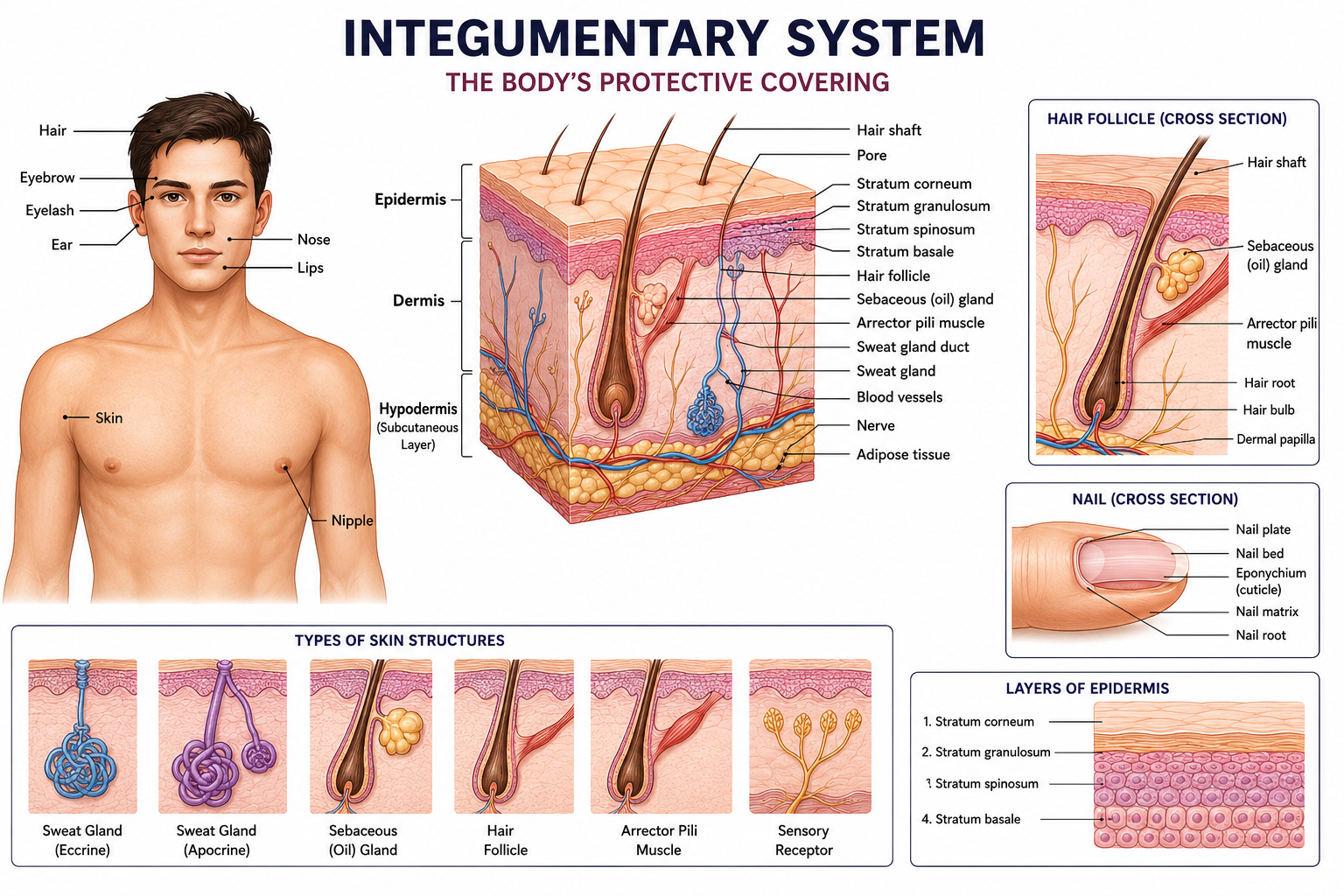
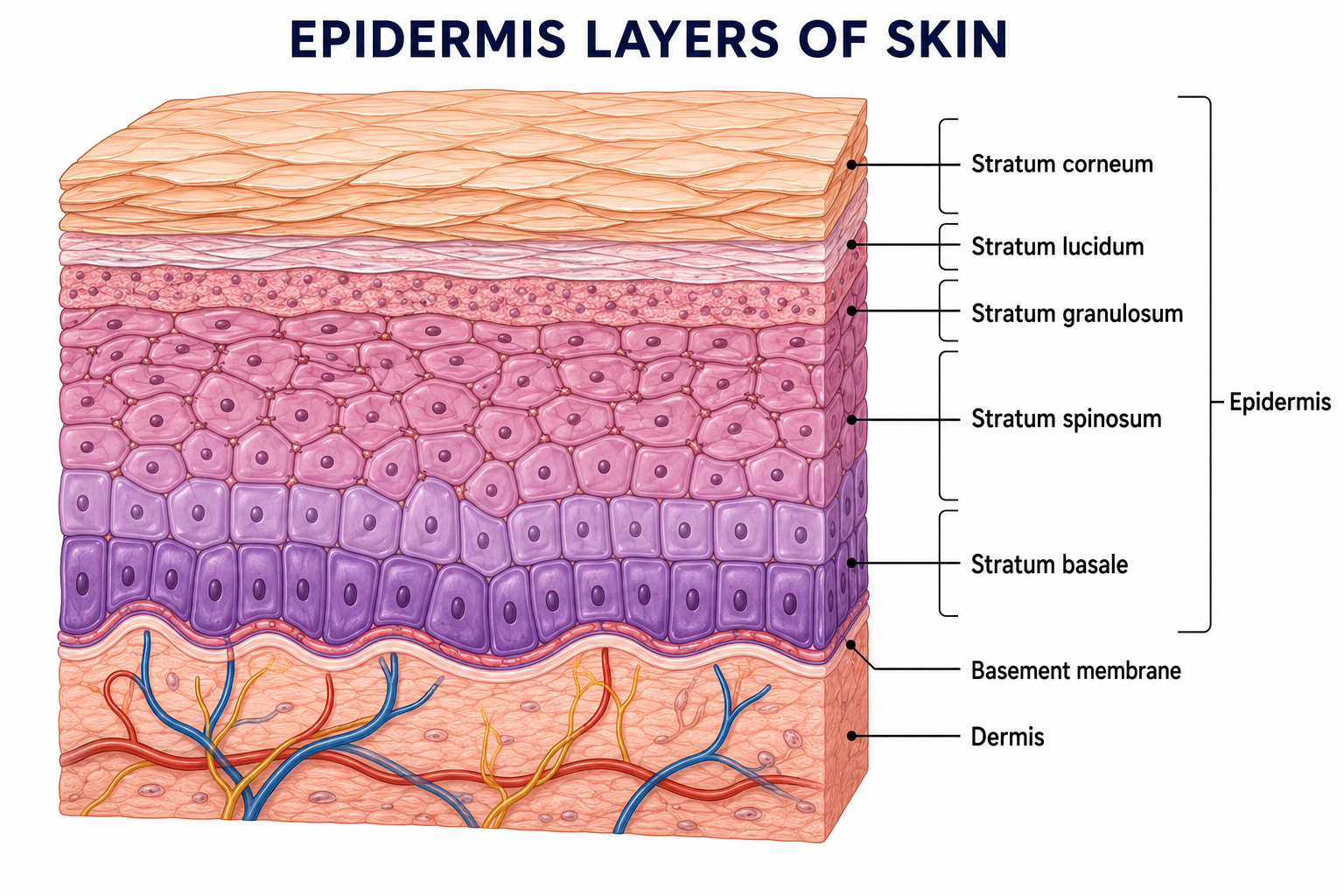
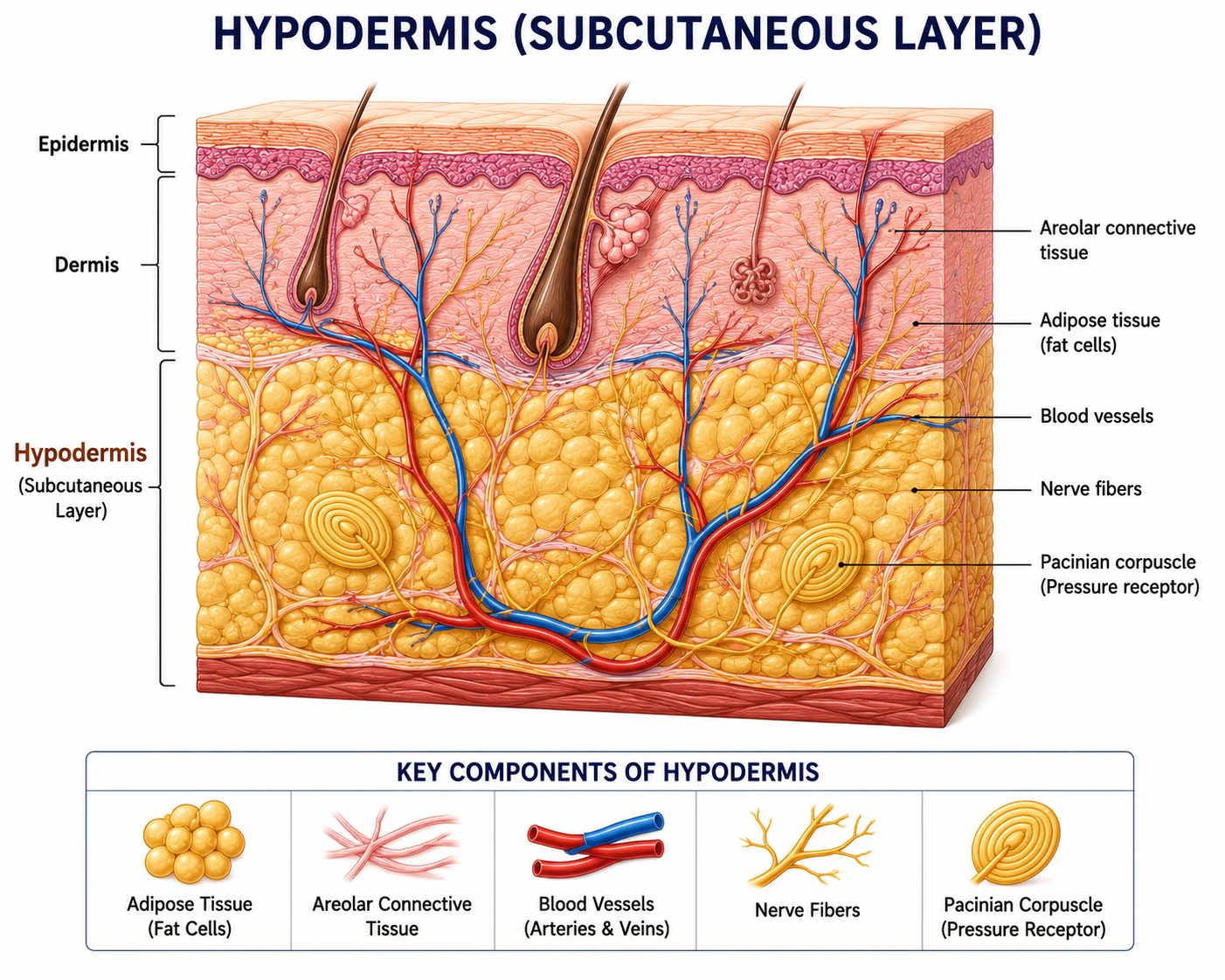
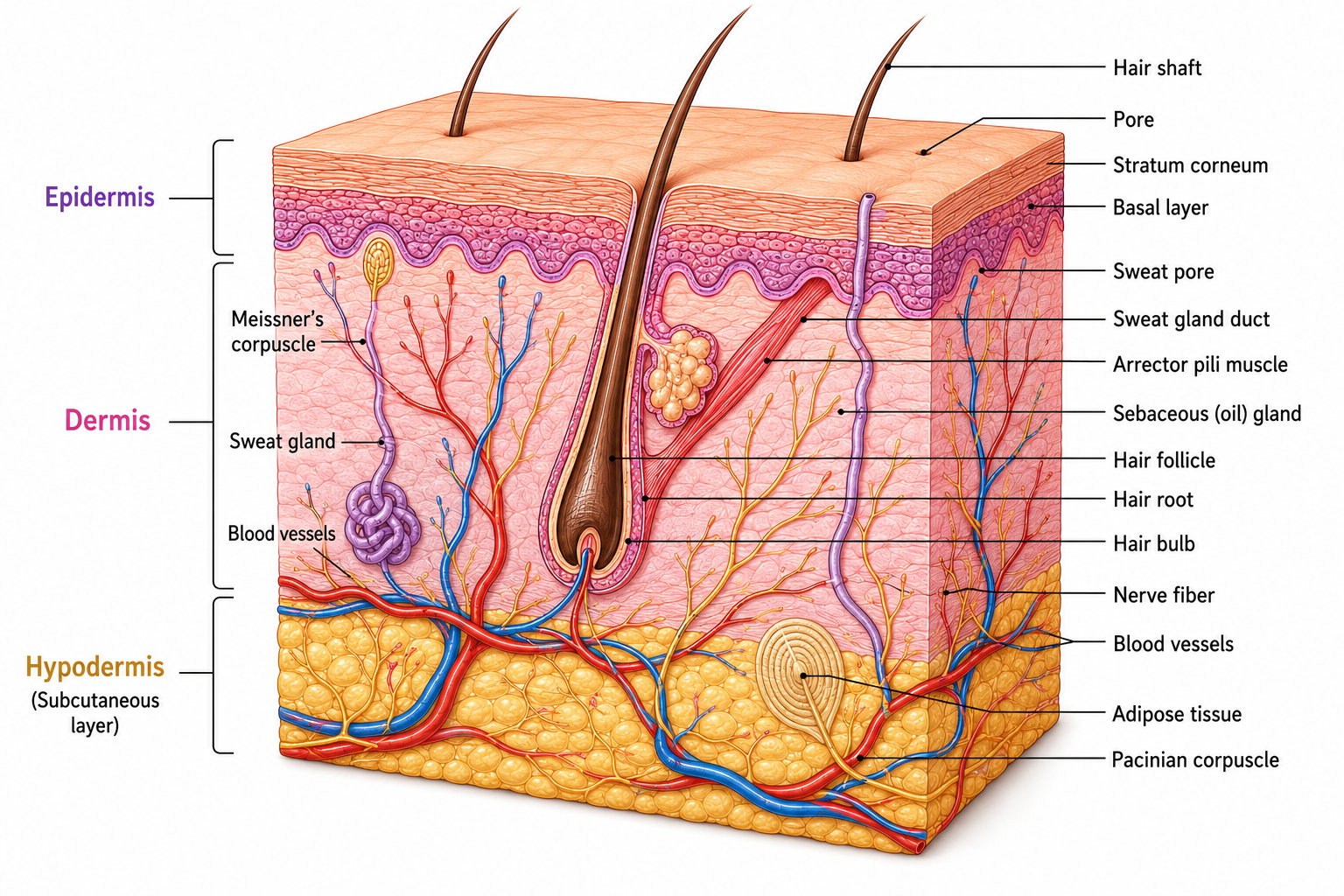
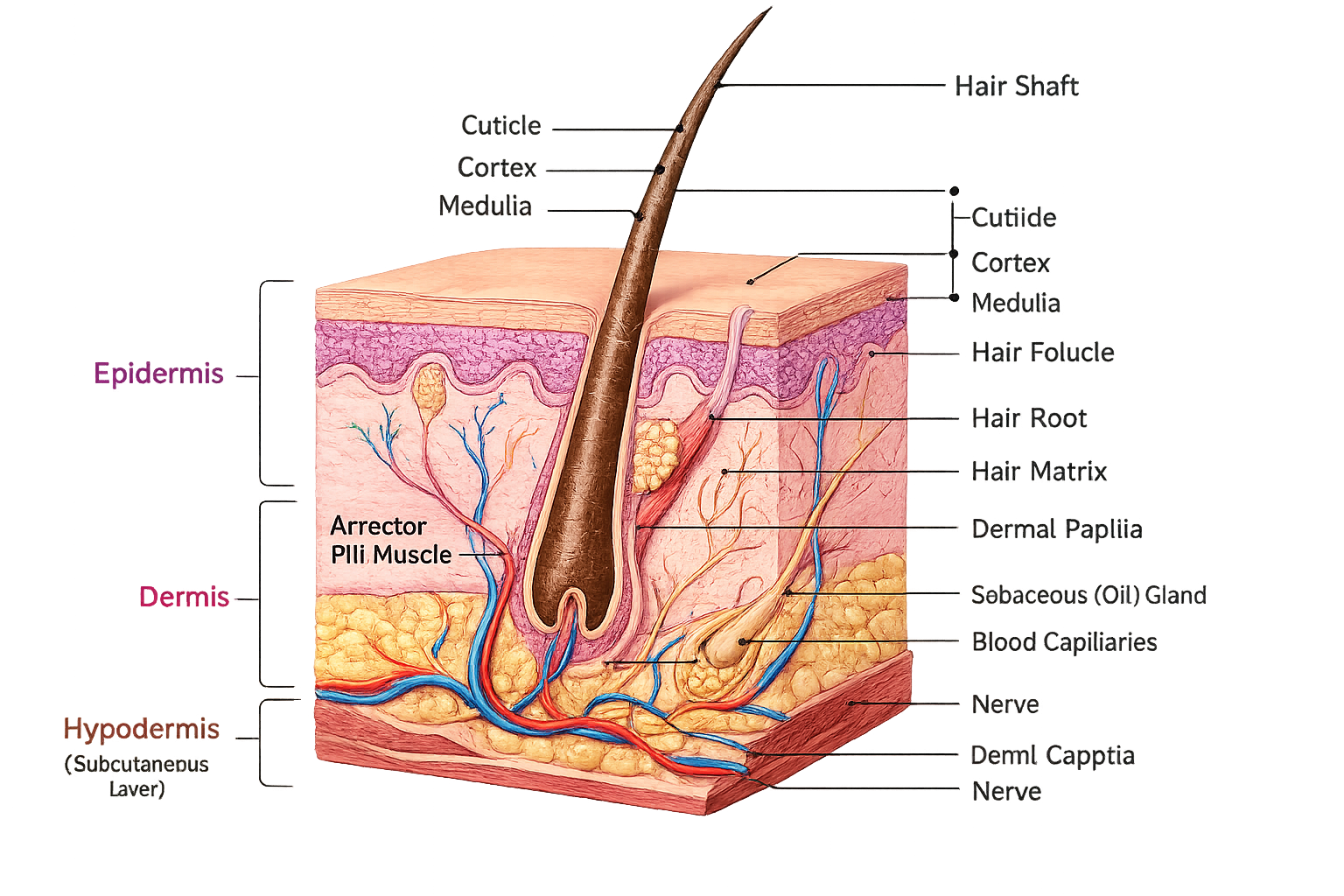
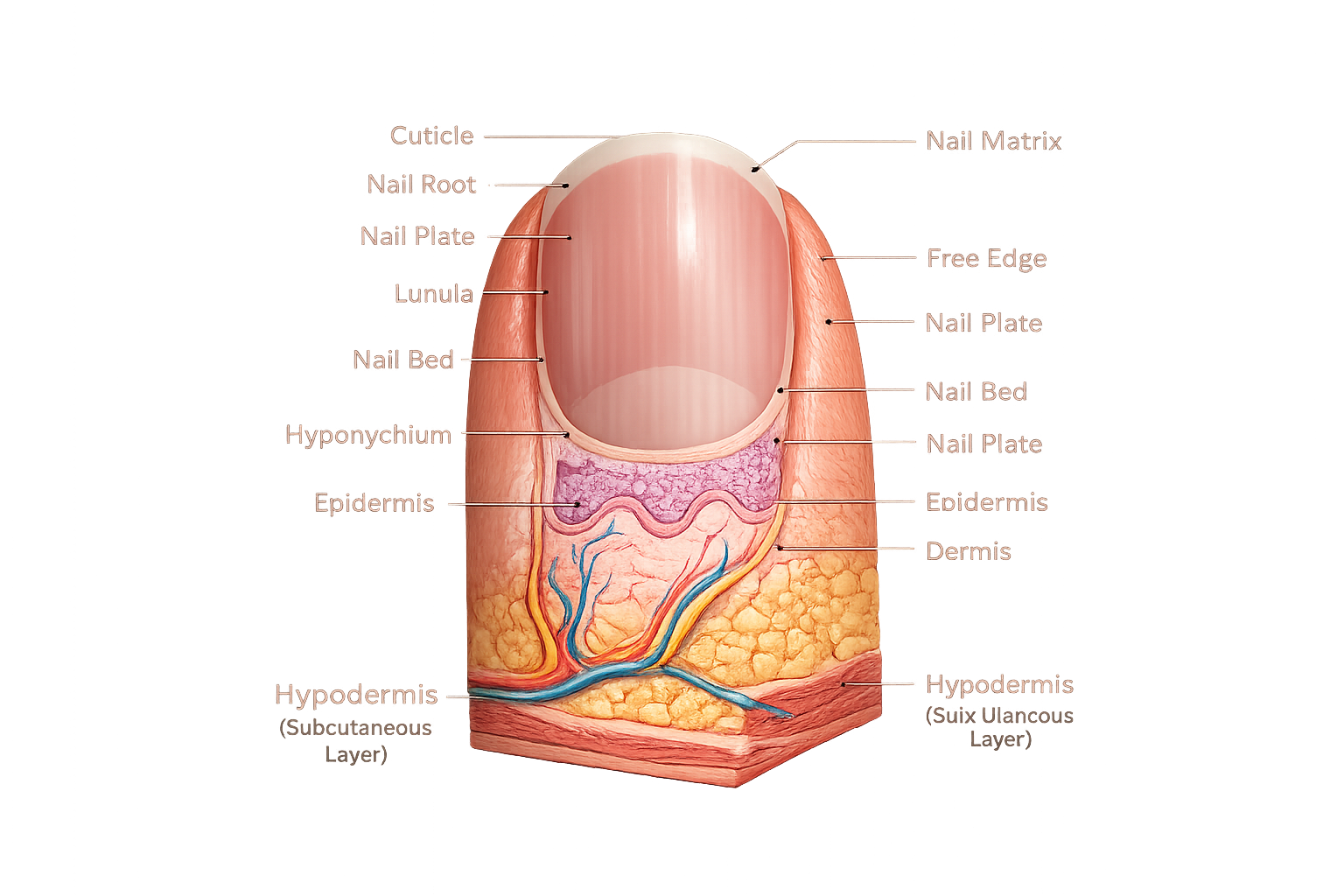
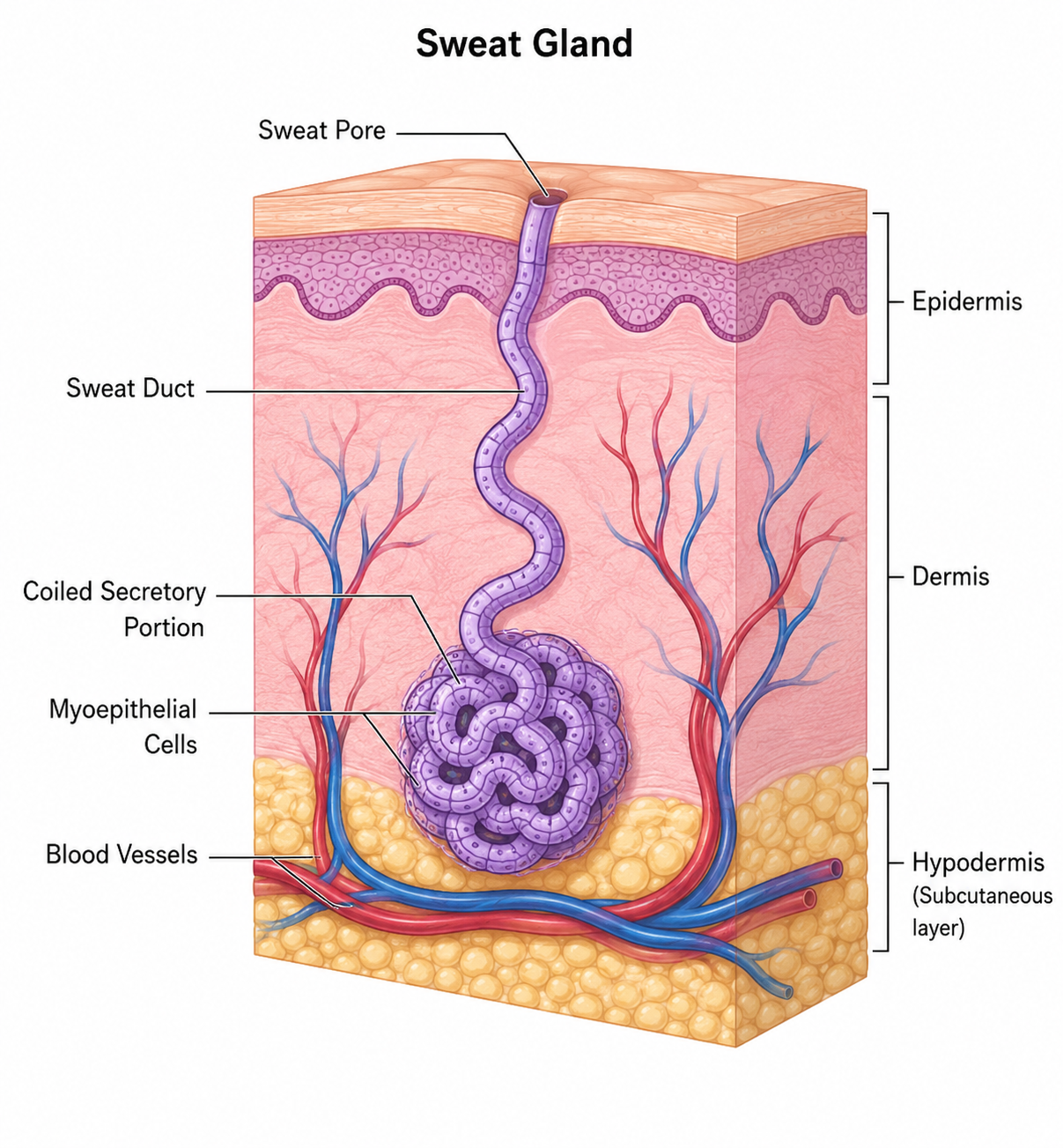
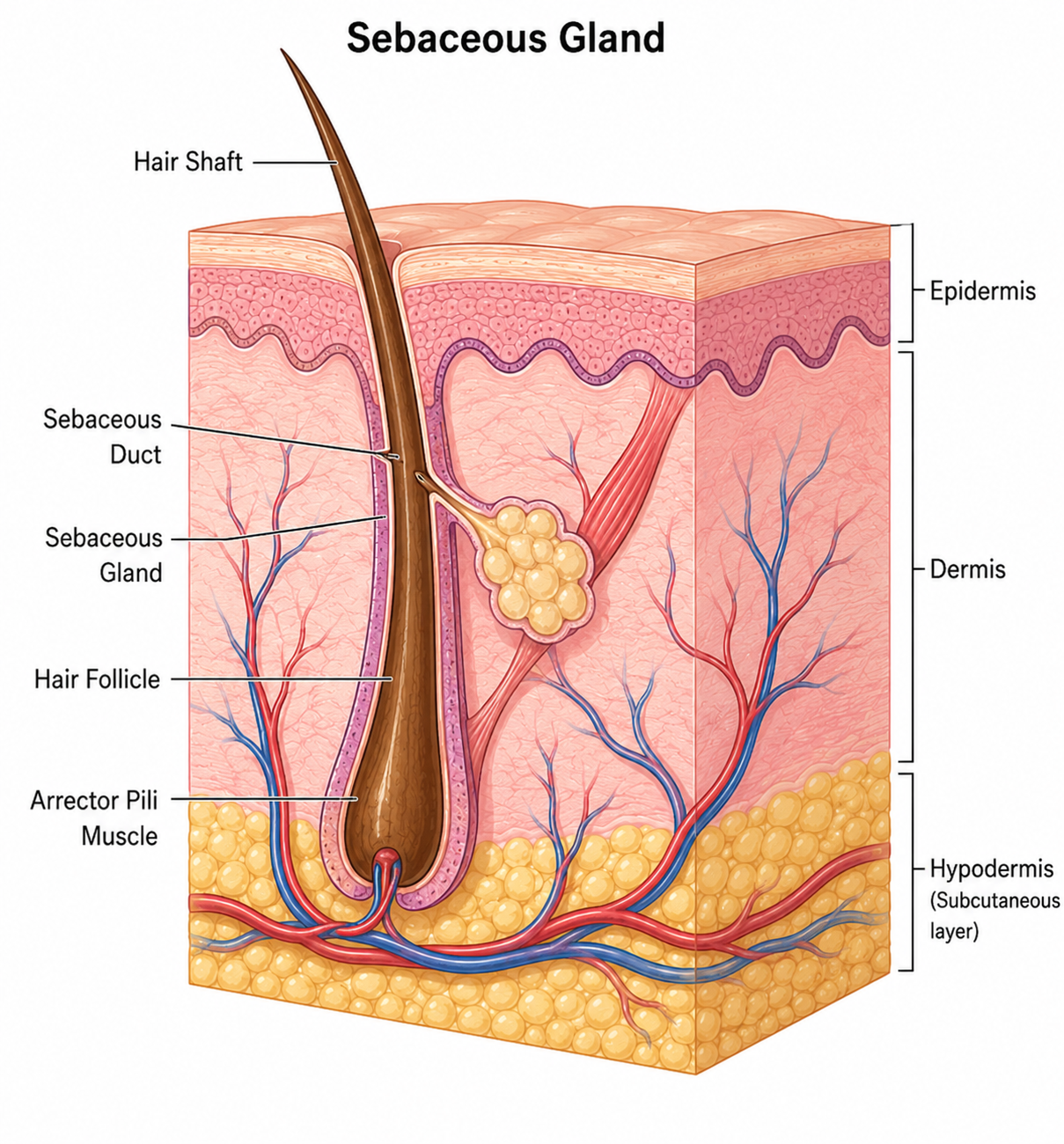
The integumentary system is the body's largest organ system, forming the outer protective covering of the body. It consists of the skin, hair, nails, and associated glands, including the sweat glands and sebaceous (oil) glands. Together, these structures create a strong physical barrier that protects the body from harmful microorganisms, injuries, harmful ultraviolet (UV) radiation, and excessive water loss. The integumentary system is the body's first line of defense against the outside environment and plays a crucial role in keeping the internal organs safe.
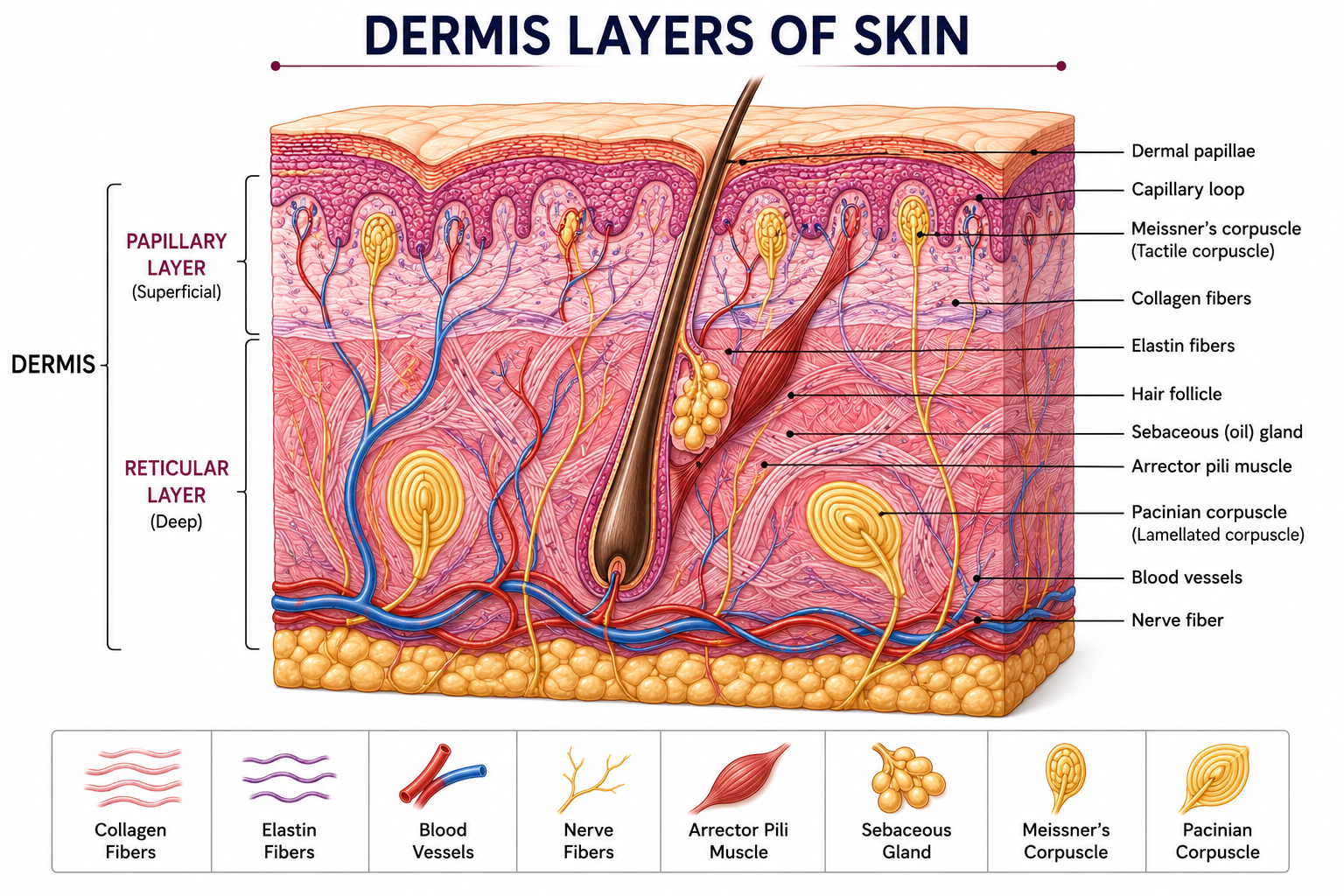
Beyond protection, the integumentary system performs many essential functions that help maintain homeostasis. It regulates body temperature through sweating and changes in blood flow to the skin, prevents dehydration by reducing water loss, houses sensory receptors that allow us to feel touch, pressure, pain, and temperature, and helps produce vitamin D when the skin is exposed to sunlight. By protecting the body and supporting temperature regulation, sensation, and overall internal balance, the integumentary system is essential for maintaining health and survival.